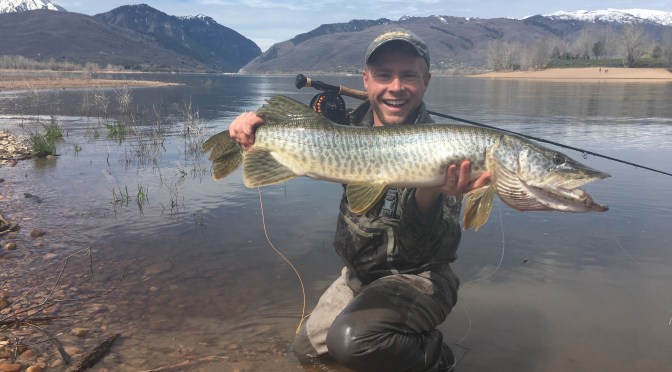
Yes, you read that title correctly. Big, toothy, ferocious beasts terrorizing prey opportunistically. Although they are hard to find and are beyond intelligent, these predators can be sought after on a fly. Tiger muskies provide a challenge like no other, and being able to catch them in a Rocky Mountain state is a sight to behold.
First things first, my experience with tiger muskies in Utah has been unreal. This was a fish species that had been on my bucket list to catch for years, and to be completely honest, I had not done much to educate myself with the species. Having fished for full-strain musky up in Wisconsin, I knew that these fish are the epitome of an aquatic predator, but I had not learned necessarily where and when to fish for tigers specifically. Let alone in a transplant environment (i.e. stocked reservoirs).
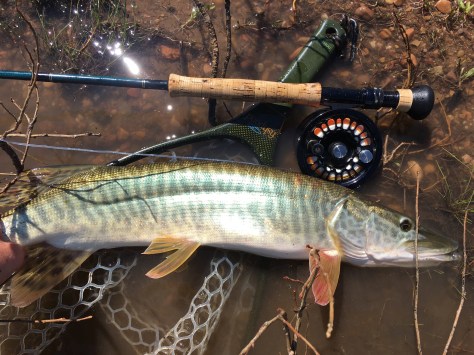
Although I am going to keep my locations personal and somewhat of a secret, I have found that the bigger the water body, the better. Tiger muskies are known to feast on a variety of fish species, and I have found that the most consistent locations to fish are those with a multitude of prey, and a variety of structure. This is because it allows fly fishermen to have a variety of options when it comes to fly choice. So whether the bait is bass, perch, suckers, catfish, or even ducks (scary right?), bigger water bodies provide more food. And then matching the hatch becomes more important than ever! As for structure, tigers love rocks, wood, weeds, and drop offs. Larger water bodies usually will have one of these four options, and if you can get a combination in one spot, get ready to see some fish follow.
Another aspect of fly fishing for tiger muskie revolves around the eat. These fish are infamously known for chasing a lure or fly all the way up to a boat, and as for me, I have had these fish eat a fly literally two feet away from me. Mind you, I also am solely wading…not in a boat. The adrenaline rush is something that is unforgettable, and the key here is to make sure to keep the fly in the water as long as possible. I have even had a fish physically jump out of the water to eat my fly when I am pulling it out to recast! Reading the body language of the fish is also critical, in that based on the level of aggression, the fly needs to be sped up, slowed down, or change in depth when a fish is chasing. Below is a picture of my personal best tiger – 38 inches on the dot. I watched it follow the fly all the way in before it ate less than five feet away from me.
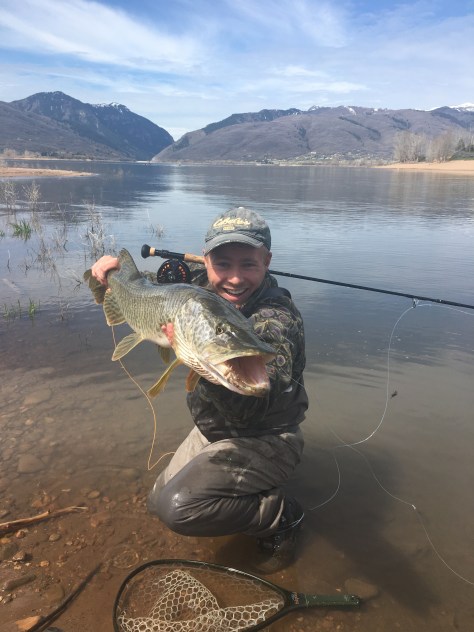
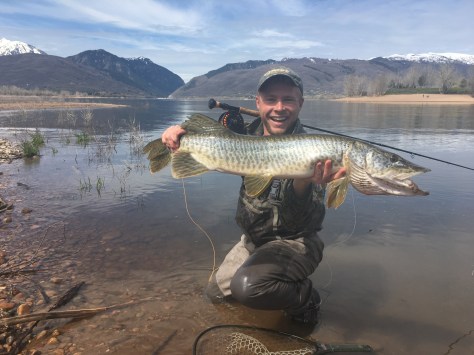
Keep in mind that muskies are known as the fish of 10,000 casts for a reason. They are difficult to find, and are very picky when it comes to their eating behavior. Although possible to catch on a fly, more often than not a proper “skunk” may occur, but don’t let this dissuade you. Keep at it, maintain the faith, and when doubt begins to sink in, change your fly and keep the brain engaged! These fish know when attention is not being paid, and will make you pay for it the hard way (see what I did there?!).
As always, tight lines, and I will continue to provide updates with my tiger encounters here in Utah.
Joe
 joepetrowflyfishing