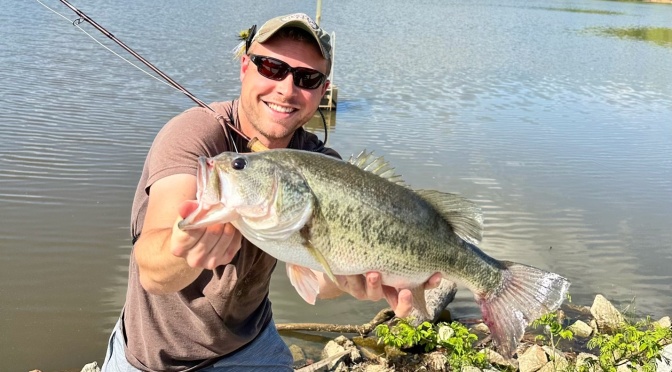
For those of you who have followed this blog for some time, you will know that I am a fan of A) convenience and B) simplicity. Although the annual trips to exotic locations chasing big fish will forever bring excitement to all of us that love the fly rod, the reality is that making the most of our opportunities close to home are crucial when needing a “quick fix” away from work, life, school, etc. Not only this, but we need to be able to fish whether it’s rain, shine, or lord knows whatever else might be brewing out there. When I lived in Utah and Colorado, trout were my year round local fish to go after. Now that I have lived in Georgia for 5+ years, I have had to learn to treat bass as a year round option, and this past year was paramount in getting more familiar with the winter to spring transition periods.
For a quick summary – Georgia has a plethora of bass species. Everything from Largemouth, Spotted, Smallmouth, Shoal, and even Redeye bass. Although the Shoal, Smallmouth, and Redeye bass are a blast, these typically are “warmer” weather fish that are easiest to catch in Georgia during the late spring to early fall months. So for the “colder” weather in winter and early spring, it’s all about the Spotted and Largemouth bass for me in the local lakes.
Let’s start with the winter (I’m talking late November through end of February). After countless hours on the water (with no boat) exploring the best bass fishing lakes that Georgia has to offer, I have found that there are really three (3) keys to success during this season:
- Find the rocks and the sun
- Smaller flies > bigger flies
- Deeper is better
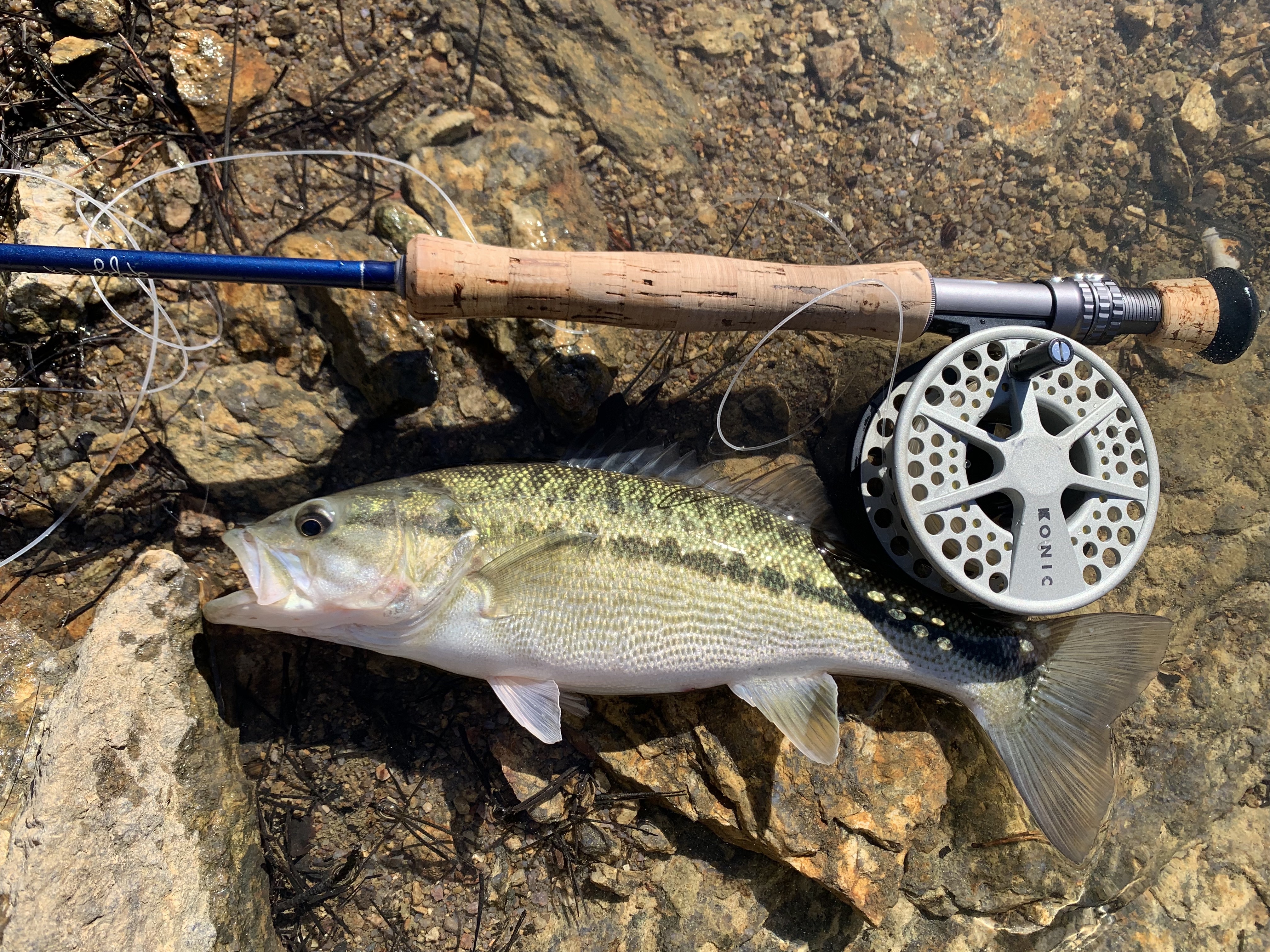
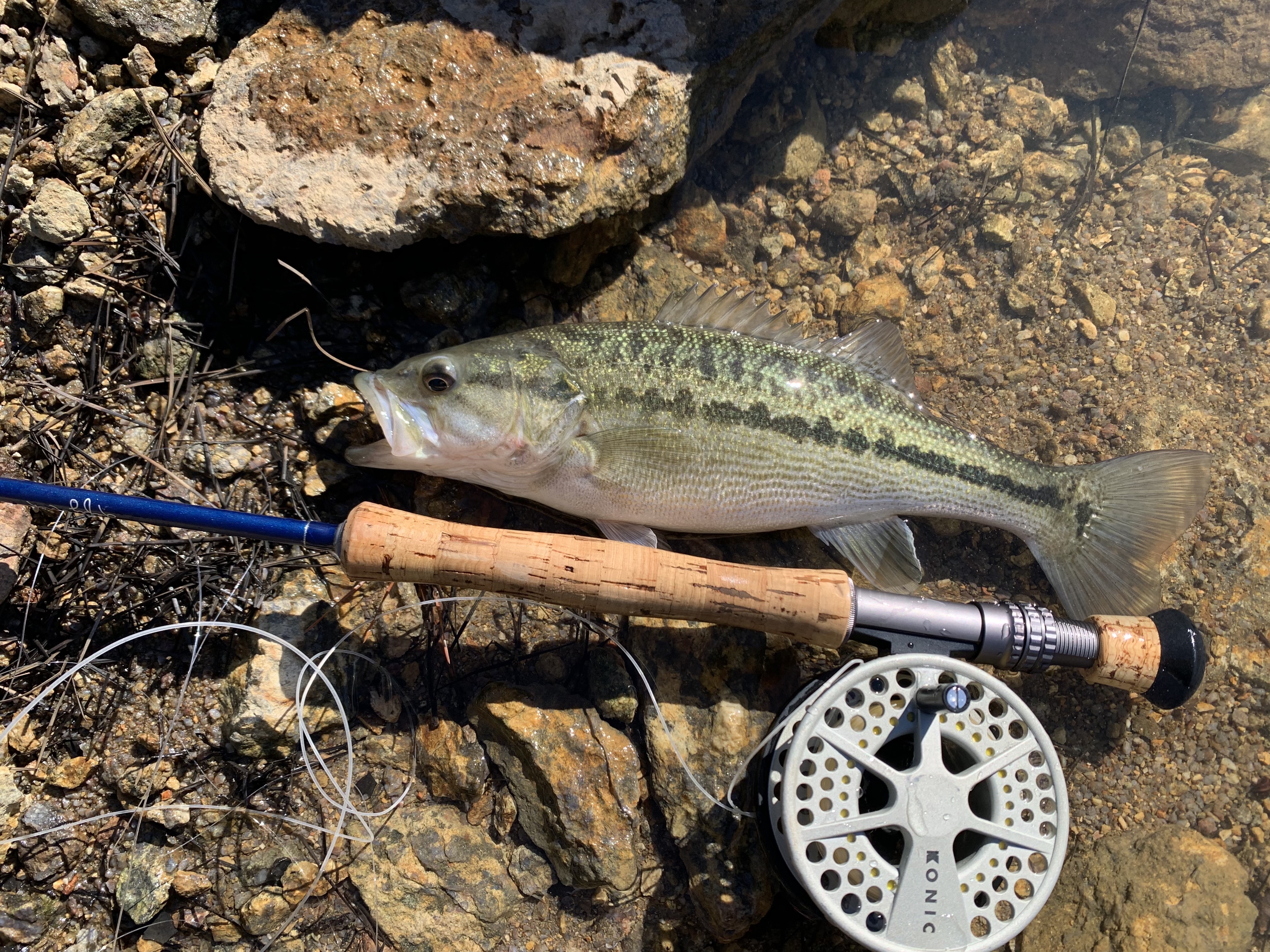
In the winter, Bass are trying to find any spot on a lake where they can collect some warmth. Even if the water temp is just a few degress warmer, these areas are bound to have more fish than the cooler areas of the lakes. I have found that large boulders and rocks majorly assist in providing some “sunning” opportunities for these fish, and would go so far to say that 90+% of the bass I catch in the winter are associated with large rocks, rock ledges, or rocky points on the lakes. In addition to this, I would say that 75+% of my winter bass are caught on smaller flies (no bigger than a size 2 hook) and on intermediate sinking fly lines. These fish really don’t want to put in overtime to eat during the cold, so make the “meal” of a fly as manageable and convenient as possible to them. Get the fly deeper into the strike zone, and make it a bite sized snack.
Here are just some examples of the beautiful bass I have caught in the winter:

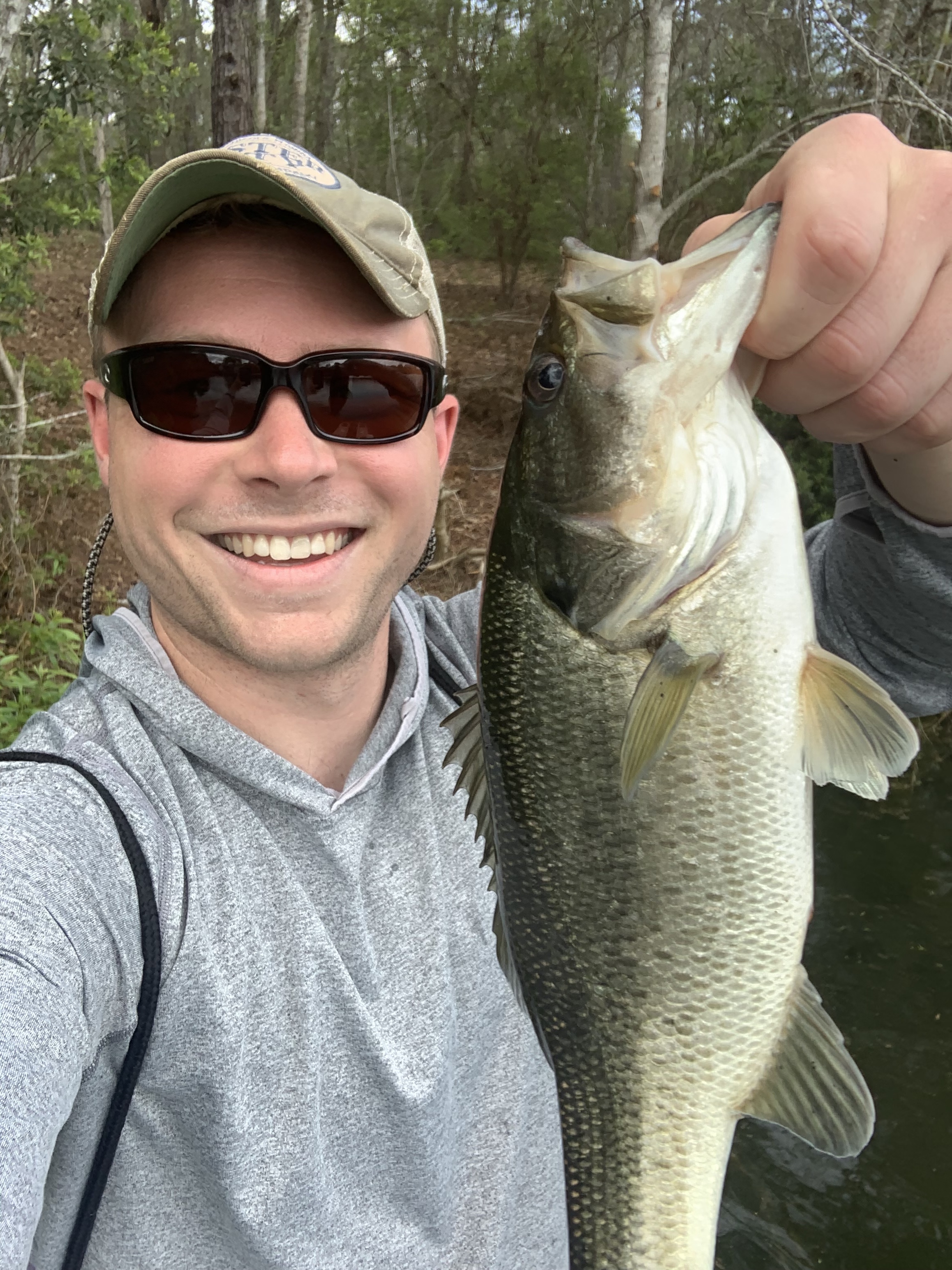
Now for the real fun…SPRING! It is warm, birds are chirping, the sunfish are out again, life is good. Hands down (in my opinion) this is the best time to target bass in Georgia/the south. For those of you that are keen on sight fishing and didn’t want to brave the winter, this is the time for you to dust off the fly rod and get after it. In 2023, the spawn took place earlier than usual it seemed, as I was finding huge Largemouth on their beds by mid-March. With that being said, April was a record for the amount of spawning bass I was seeing, and it actually led to my largest Largemouth I have ever caught (easy 8 pounds).

I tried some newer techniques this year for spawning bass that proved to be productive, and some that also overcomplicated the situation. Similar to how I provided three keys for winter bass, I would say these are three keys for spring bass on the fly:
- No such thing as too shallow
- Don’t be afraid to Super Size that fly selection
- If you see one bass, there probably is a second (or third) that you can’t see
This past spring, I caught countless bass sitting in less than 2 feet of water. Moral of the story here is to use caution by the bank…don’t go clunking up right to the water’s edge as there might be a fish sitting there. You don’t need to be a psychopath and crawl up the bank (like some ridiculous trout guides will preach back West), but definitely give yourself 10 feet of space from the bank to monitor the situation. In addition to this, if you do find an aggressive bass that is sitting on a bed (or is just ravenously patrolling an area attacking sunfish), don’t be afraid to tie on a larger fly. Get their attention, strip fast, and hold on. Lastly, I have found that more often that not the bass will school up a bit shallow in the spring. So if you are sight fishing to one bass that is being spooky/difficult, make it a point to throw some blind casts around it as another might be lurking. OR even better, be prepared for another bass to come side-swipe your fly while you are sight fishing a different fish, as this is how I caught my largest Largemouth ever this year (was throwing a larger bunny strip, olive looking leach thing).

As always, thanks for the read and hope that this provides some insight into how to get on the bass before the dog days of summer kick in. Tight lines!
Joe
 joepetrowflyfishing