All posts by tcujsp303

Rock Hopping for Stripers

Many times later in life, you will discover something new and so valuable that it will cause you to stop and think “I wish I would have know about this years ago.” For fly fishermen specifically, I believe this happens even more frequently, as there are so many new waters to fish but limited time/opportunities to get out there and make it happen. For me specifically, I’ve had plenty of my “I wish I would’ve been doing this sooner” moments when it comes to fly fishing for Striped Bass up in Maine.

For a little background, my first trip to Maine was less than 2 years ago. Upon arrival, I was immediately amazed with the amount of water, nature, and overall beauty that the state had to offer. After this first visit, I vowed that I would at least make it a point to return annually, and fortunately for me in 2023 this consisted of some prime DIY opportunities to catch some Striped Bass.

This year we visited Maine in May, which turned about to be great from both a weather and fish perspective. We were fortunate enough to stay on a resort near the cliffs of Ogunquit, where the water was as royal blue as it comes. Immediately upon exploring town, I was investigating the water below the rocky bluffs for any big striper patrolling the rocks looking for a snack, and within a couple hours was finding fish.

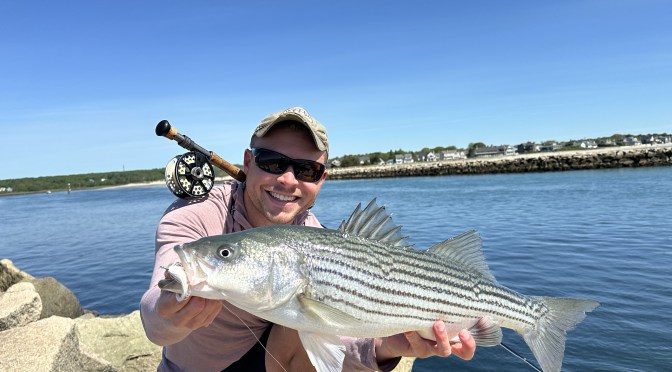
Although I have not fished for striper to the degree of other predatory species, I have learned over the years (for both fresh and saltwater striper) that structure and moving water and key critical. The more rocks and deep ledges you can find, the better, and the more the current is moving, the better. On our first day in Maine this year, I found an area that had a heavy outgoing tide in clear water surrounded by rocks, and this led to my large clousers getting smoked by nice fish. Huge runs in the surf, backing making an appearance, these fish were an absolute hoot and made the blueberry beer that Maine is famous for taste better that evening. Successful results were yielded in just a couple of hours of fishing, and the next day produced more of the same in the same spot.

Joe Petrow – Striped Bass
As with many trips to special places, fishing is not always the main focus, so on the final day I challenged myself to try and find some fish near the rocks by the hotel we were staying at (rather than doing continued excursions out of town and completely going missing in action for the day). Luckily enough for me, there was some prime looking water where we were staying, and it was just a matter of waiting for the right incoming tides to make throwing a line worthwhile in the surf. Although navigating the rocks requires an immense amount of focus and attention (so that you don’t eat sh*% and slip), if you do it the right way you can find some amazing fishing opportunities.

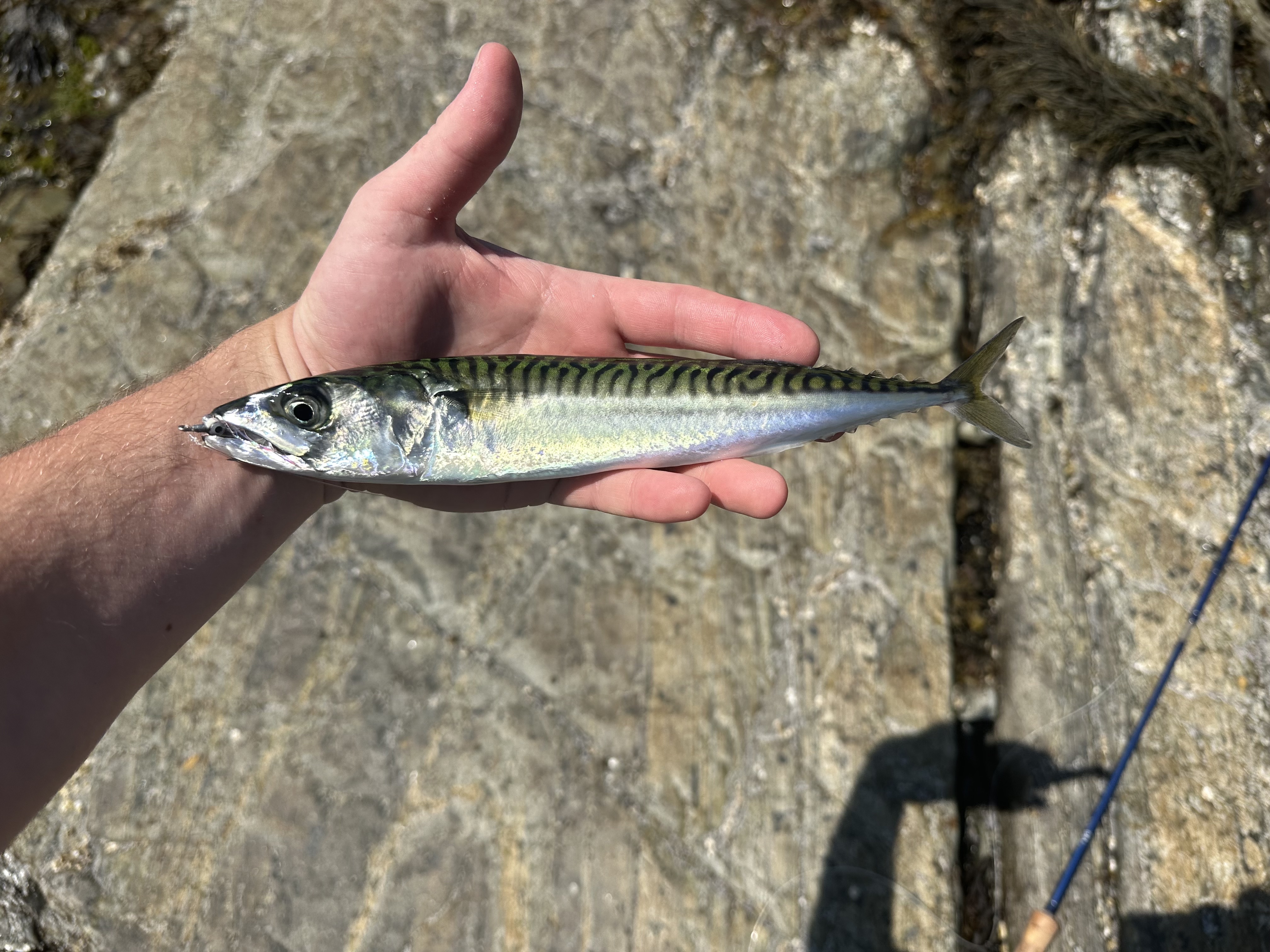
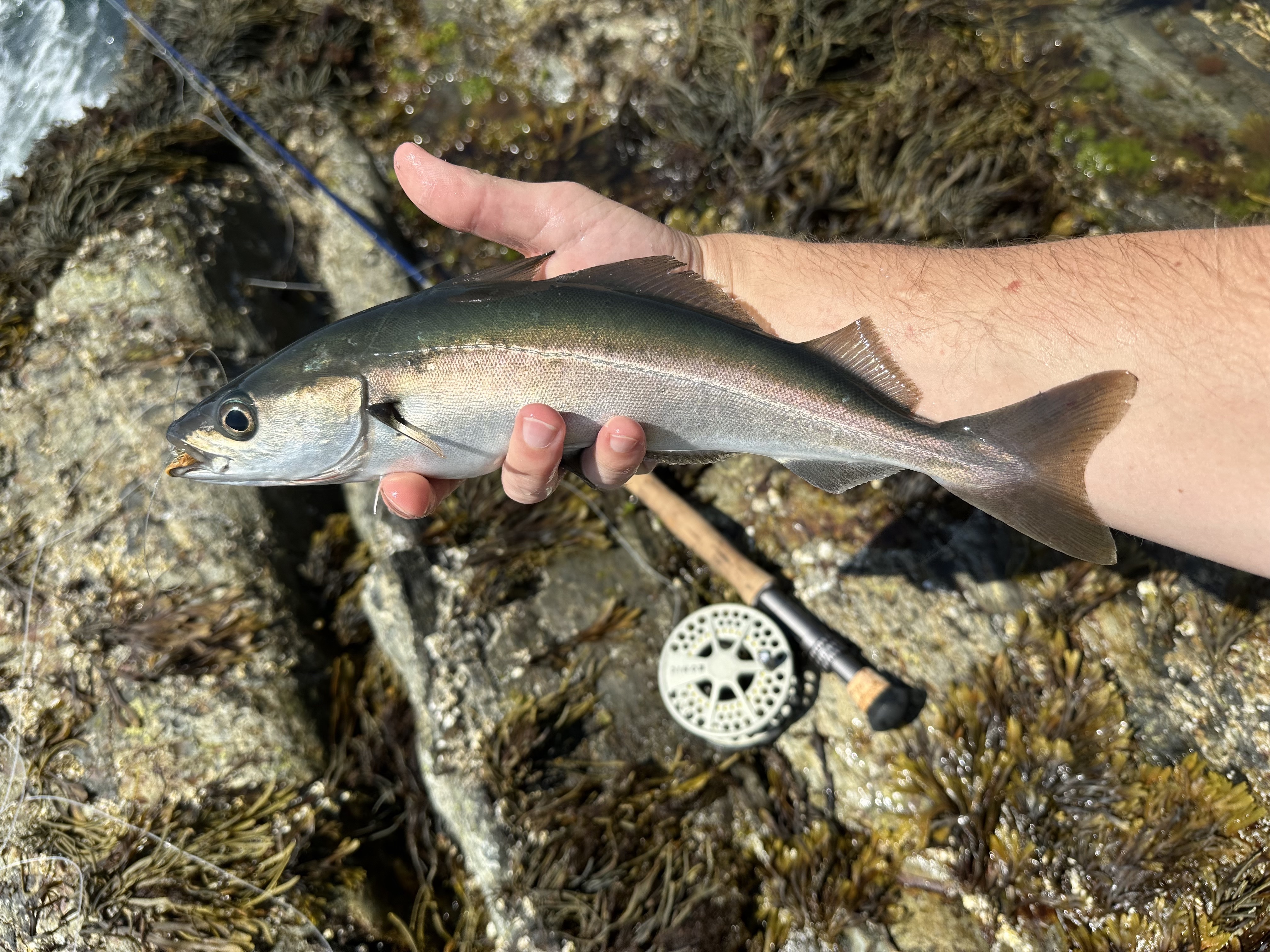
While investigating the water below the bluffs, I saw heavy movement by the rocks and was taken aback by my eyes – a large group of stripers on the prowl. Although none of “cow” size proportions, there were plenty of nice Stripers accompanied by a plethora of smaller slot fish. After dozens of throws with larger bucktail flies I had tied, I wasn’t getting any attention from these fish, and decided to downsize majorly to a small white clouser/deceiver type fly to see if that would do the trick. After my first cast with this, boom…fish on, and it didn’t stop. These fish appeared to be keyed in on extremely small baitfish right up against the rocks, and it was a blast watching the chase the fly all the way up to the rock walls before smashing it. Within a 1-hour window, easily landed 4-5 stripers, countless Atlantic Pollock, and a new species with the Atlantic Mackerel. Hands down the most difficult part of this was being able to safely land the Stripers for a safe release and quick self-photo opp. Overall, it was one of those evenings on the water that you won’t forget as the conditions, fish, and gear were all cooperating according to plan.

Joe Petrow – Striped Bass
Can’t forget about the other species that day:

Very much looking forward to returning to Maine this year, and who knows, maybe it will yield my largest Striper yet to come. Tight lines!

Joe

Keeping it simple with small-water Trout

If I’m being honest, this post might come with a few trigger warnings and might not be for everyone. Not because I’m going to say something R rated or get someone in trouble, but because I’m going to give my honest views on what it takes to find success catching trout (that are contrary to what most of the fly fishing industry would say).

To begin with and as followers of this blog know, I have very deep roots when it comes to fly fishing for trout. Growing up in Colorado and living in Utah for an extended period of time, this has been a staple throughout my life, and I’ve continued to enjoy chasing these fish no matter the occasion. All of this to say, I want to make it clear that I know what it’s like to fish for some of the spookiest trout out there – 6x tippet, 22 sized midges, deep indicator rigs, waders and boots required. I absolutely have done it and have caught fish this way. I also don’t shame it because to each their own, and sometimes catching that 20+ inch fish requires a mid-winter small nymph in some deep water. BUT…I genuinely have found over the years that the best trout fishing comes when I can avoid all of these things, and 2023 had some great examples of this.

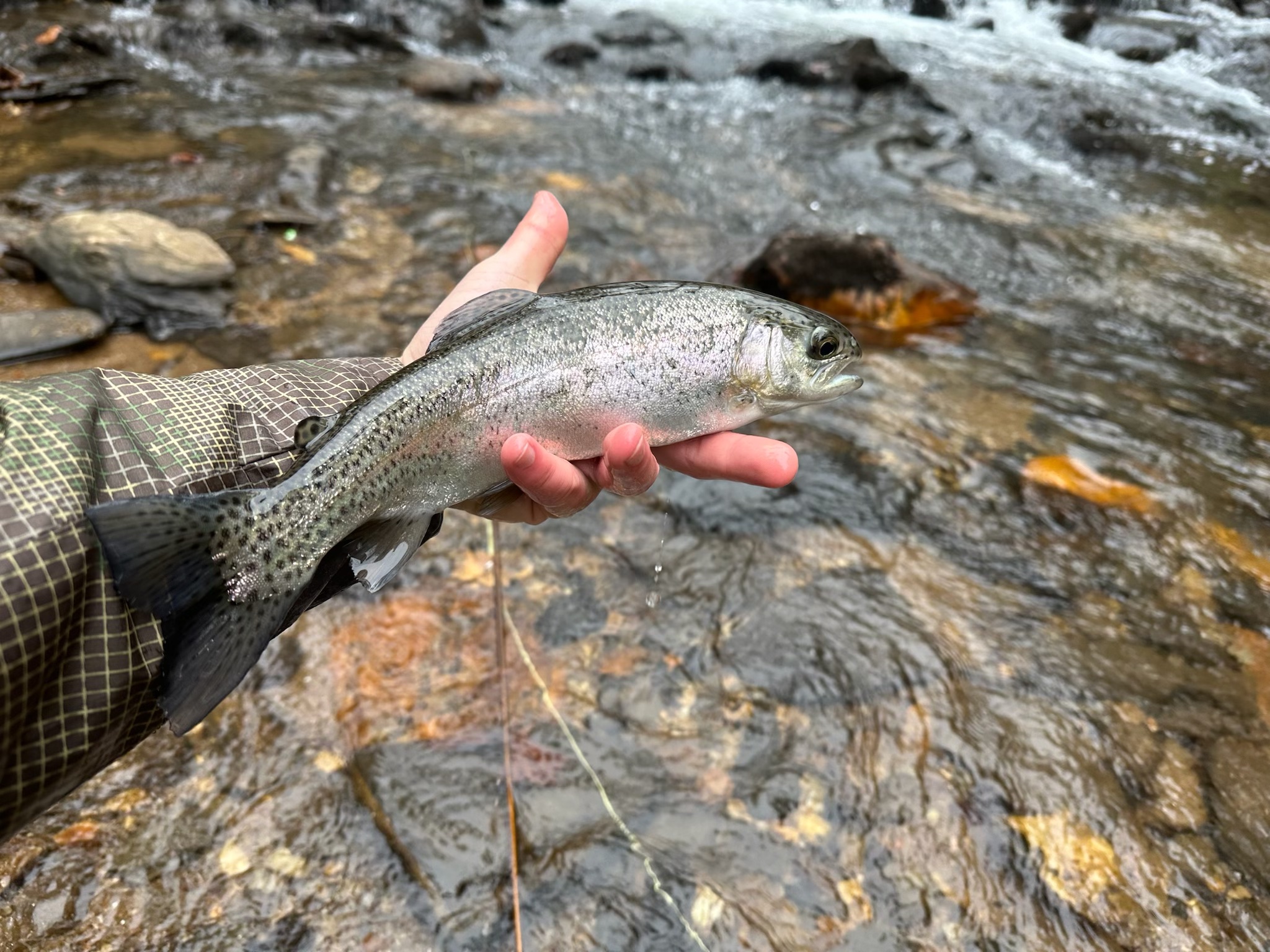
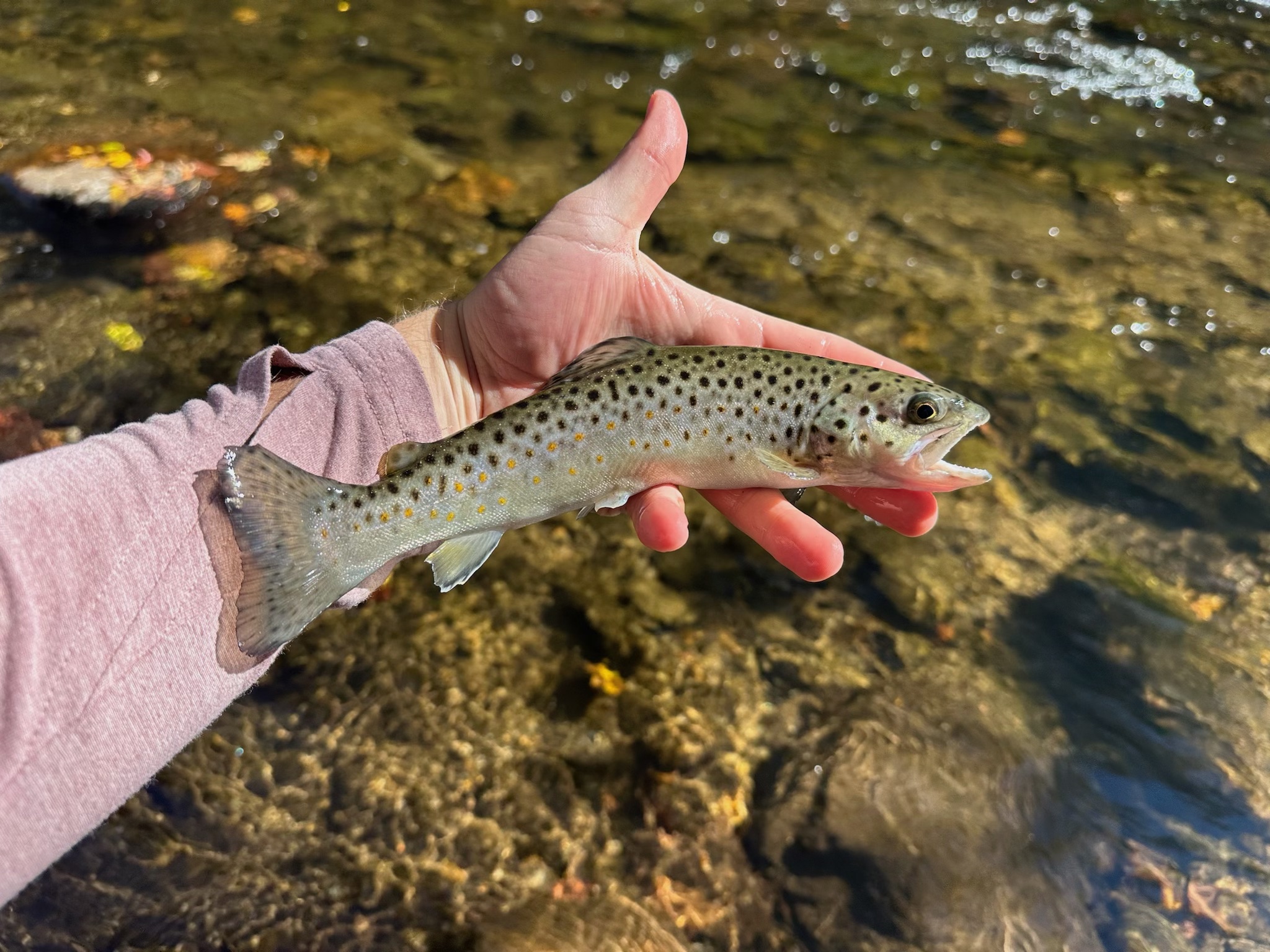
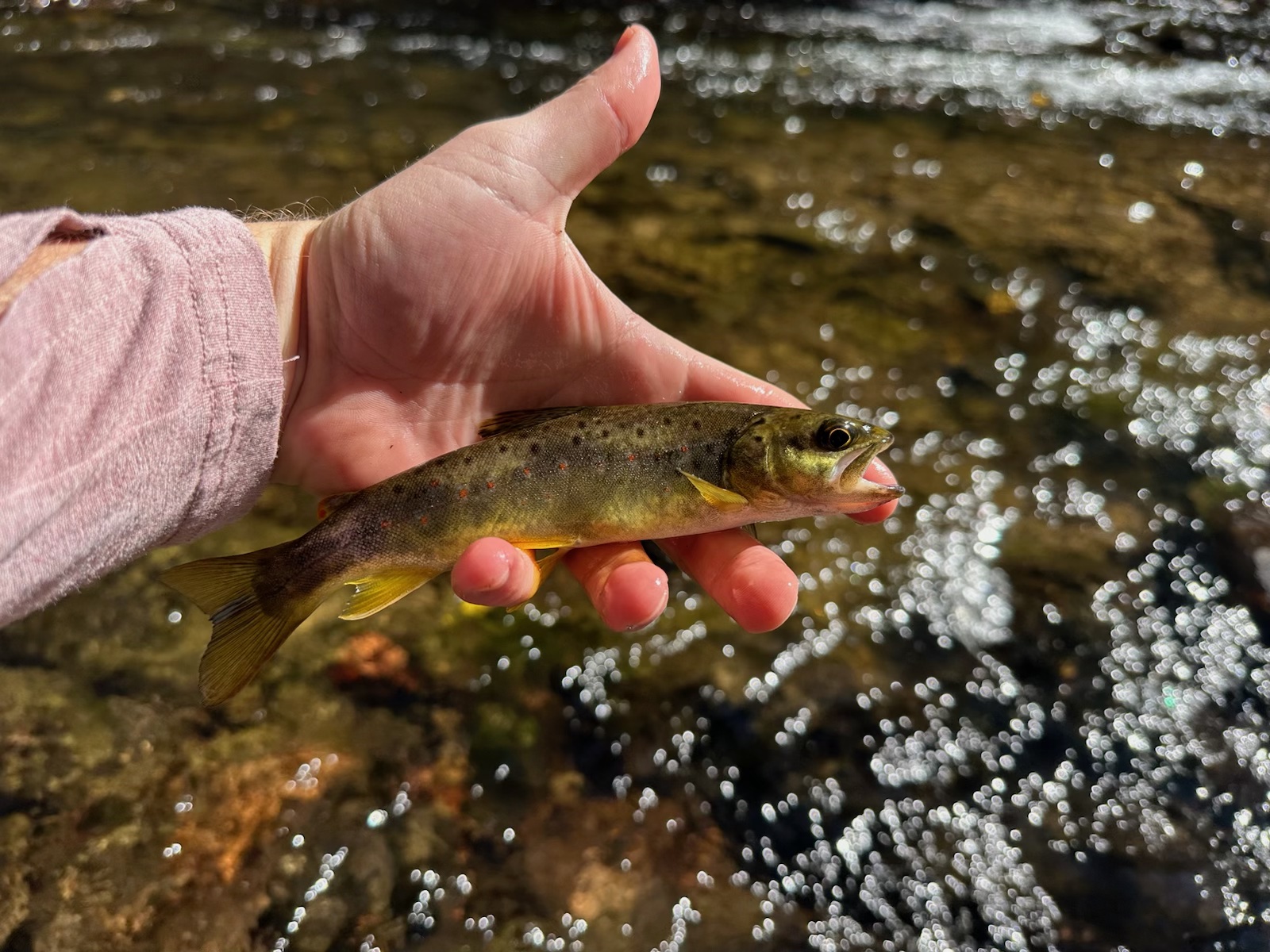
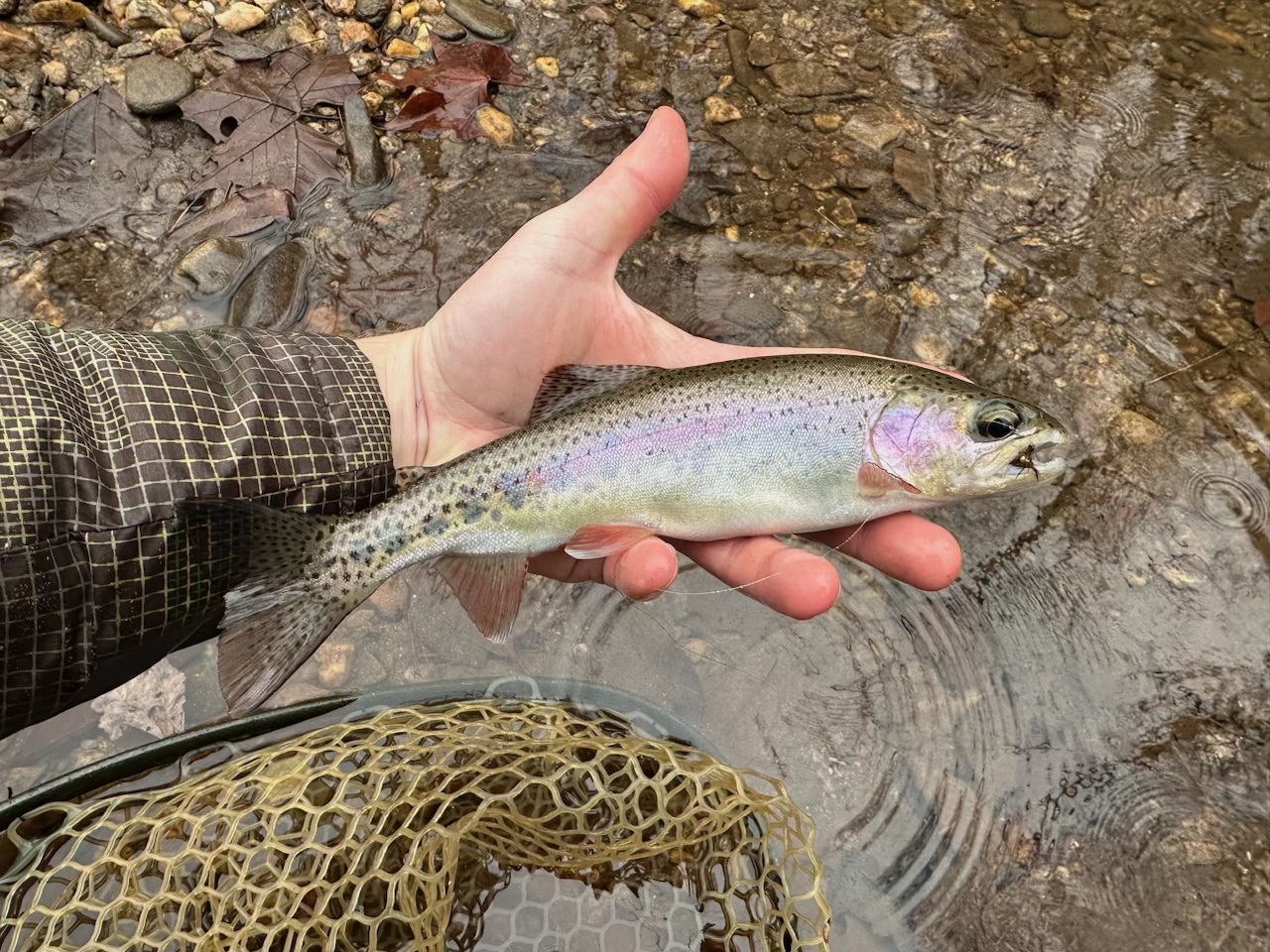
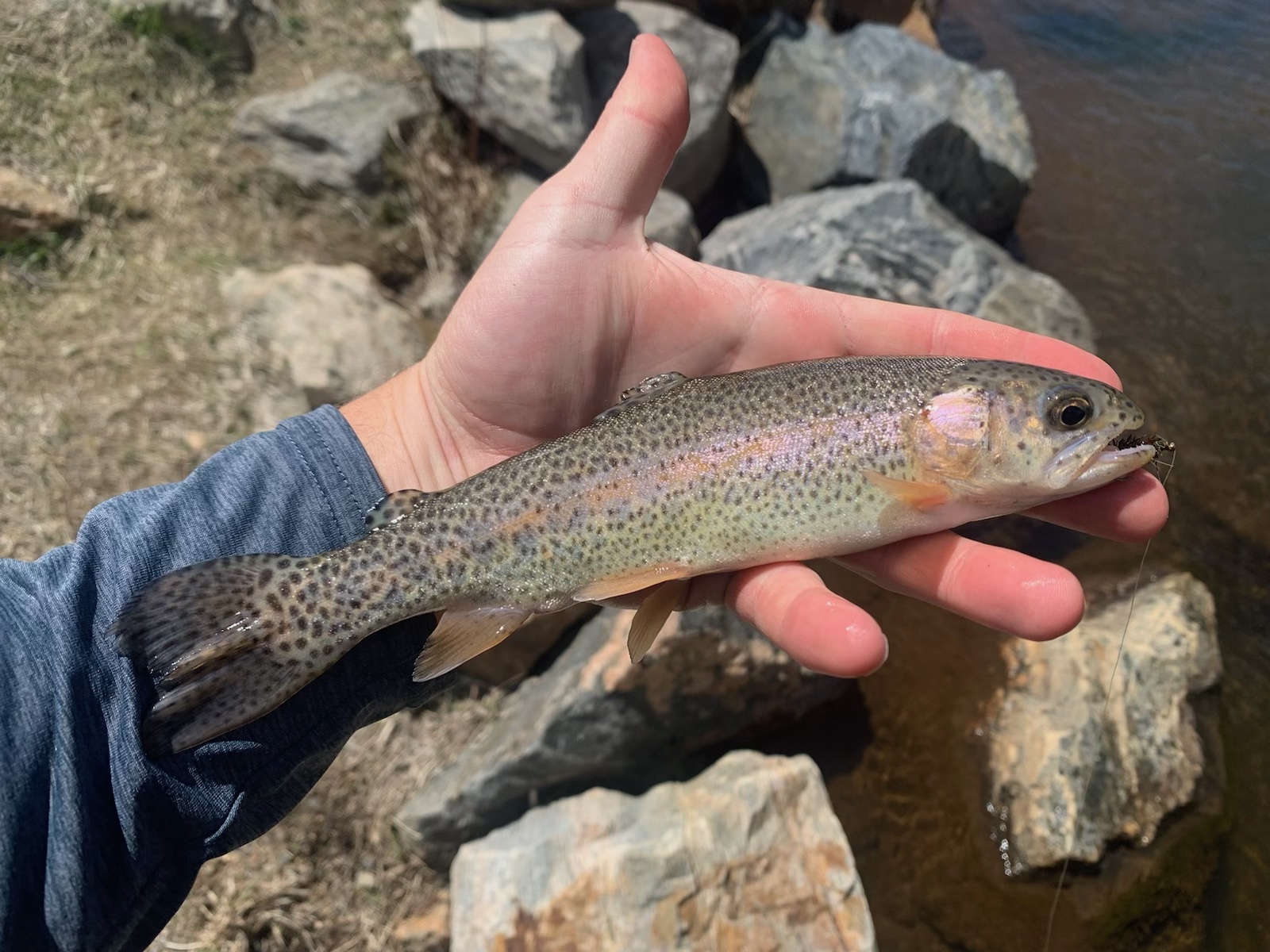
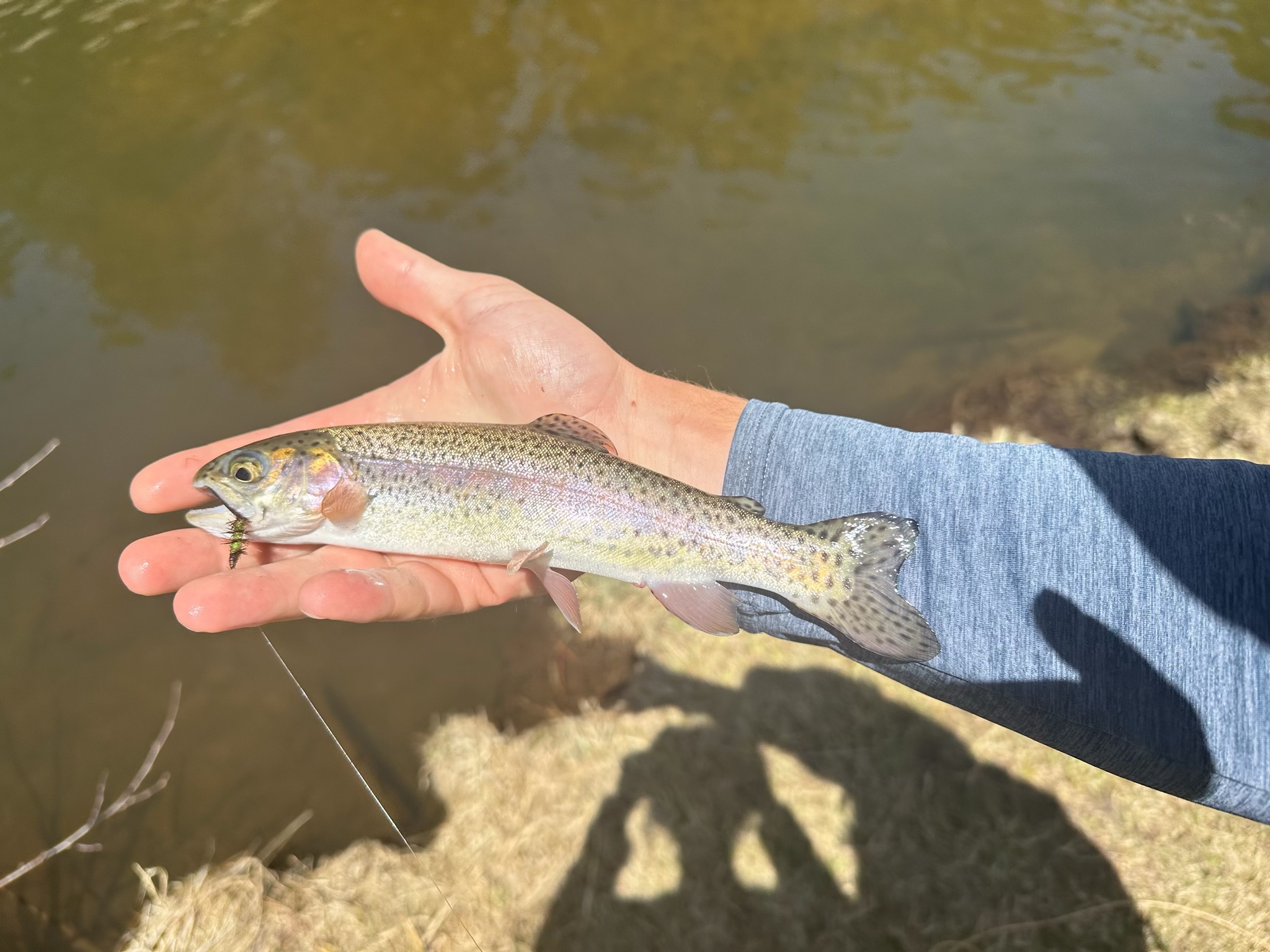
For starters, I think that with a 5-weight rod, 4X leader/tippet, and 3 types of flies in your box, you can have success. I put this to practice this year while visiting both the mountains of Colorado and Georgia. Had some beautiful creeks right in town that I wanted to explore and see if the fish were active, and was able to find success by keeping it simple. All I essentially fished with were small brown/gold wooly buggers, prince nymphs, and royal wulffs (in case the fish were looking up). In these small mountain creeks, the fish are extremely opportunistic with pocket water. By pocket water, I’m referring to any calmer/slower areas of a creek that are usually directly behind a fast moving current, rock, or other structure. These pockets are typically no more than a couple feet wide in these types of creek, but usually will hold the best fish around as they wait in an ambush point for passing insects and bait fish to eat. As for me this year, the majority of my success came from fast stripping a wooly bugger through these pockets of water, and getting ready to strip-set if a fish came to grab it. Often times this is visual and very exciting, so always be ready for a take you might see the action taking place before feeling anything on the line.

When the wooly buggers weren’t the ticket, I would do a quick dry-dropper set up with a royal wulff and prince nymph. This allowed the fish keyed in on insects to feel a bit more comfortable, and on occasion provided the historic rising trout image that the world has come to love.

Although I did not spend much time this year on chasing any “bruiser” trout specifically, below are a handful of the fish I brought to hand “keeping it simple this year”. My goal in documenting some of these simple strategies is to encourage myself and others out there to always give it a try when it comes to trout. Sure those float trips are a blast (some of my favorite memories fishing come from floating thee Green and Colorado rivers), but sometimes all you need is a moving current and a few flies in a zip lock baggy. I also at times feel like some people will be hesitant to even try catching a fish on the fly because they think they need all the bells and whistles when it comes to gear to even have a chance. We are all for making the most out of your fishing opportunities when presented, and I was glad to give it a go this year when I saw some moving water around me!

Tight lines.

Joe

Transitions – Year Round Bassin’

For those of you who have followed this blog for some time, you will know that I am a fan of A) convenience and B) simplicity. Although the annual trips to exotic locations chasing big fish will forever bring excitement to all of us that love the fly rod, the reality is that making the most of our opportunities close to home are crucial when needing a “quick fix” away from work, life, school, etc. Not only this, but we need to be able to fish whether it’s rain, shine, or lord knows whatever else might be brewing out there. When I lived in Utah and Colorado, trout were my year round local fish to go after. Now that I have lived in Georgia for 5+ years, I have had to learn to treat bass as a year round option, and this past year was paramount in getting more familiar with the winter to spring transition periods.

For a quick summary – Georgia has a plethora of bass species. Everything from Largemouth, Spotted, Smallmouth, Shoal, and even Redeye bass. Although the Shoal, Smallmouth, and Redeye bass are a blast, these typically are “warmer” weather fish that are easiest to catch in Georgia during the late spring to early fall months. So for the “colder” weather in winter and early spring, it’s all about the Spotted and Largemouth bass for me in the local lakes.

Let’s start with the winter (I’m talking late November through end of February). After countless hours on the water (with no boat) exploring the best bass fishing lakes that Georgia has to offer, I have found that there are really three (3) keys to success during this season:

  1. Find the rocks and the sun
  2. Smaller flies > bigger flies
  3. Deeper is better

In the winter, Bass are trying to find any spot on a lake where they can collect some warmth. Even if the water temp is just a few degress warmer, these areas are bound to have more fish than the cooler areas of the lakes. I have found that large boulders and rocks majorly assist in providing some “sunning” opportunities for these fish, and would go so far to say that 90+% of the bass I catch in the winter are associated with large rocks, rock ledges, or rocky points on the lakes. In addition to this, I would say that 75+% of my winter bass are caught on smaller flies (no bigger than a size 2 hook) and on intermediate sinking fly lines. These fish really don’t want to put in overtime to eat during the cold, so make the “meal” of a fly as manageable and convenient as possible to them. Get the fly deeper into the strike zone, and make it a bite sized snack.

Here are just some examples of the beautiful bass I have caught in the winter:

Now for the real fun…SPRING! It is warm, birds are chirping, the sunfish are out again, life is good. Hands down (in my opinion) this is the best time to target bass in Georgia/the south. For those of you that are keen on sight fishing and didn’t want to brave the winter, this is the time for you to dust off the fly rod and get after it. In 2023, the spawn took place earlier than usual it seemed, as I was finding huge Largemouth on their beds by mid-March. With that being said, April was a record for the amount of spawning bass I was seeing, and it actually led to my largest Largemouth I have ever caught (easy 8 pounds).

Joe Petrow – Largemouth Bass
I tried some newer techniques this year for spawning bass that proved to be productive, and some that also overcomplicated the situation. Similar to how I provided three keys for winter bass, I would say these are three keys for spring bass on the fly:

  1. No such thing as too shallow
  2. Don’t be afraid to Super Size that fly selection
  3. If you see one bass, there probably is a second (or third) that you can’t see

This past spring, I caught countless bass sitting in less than 2 feet of water. Moral of the story here is to use caution by the bank…don’t go clunking up right to the water’s edge as there might be a fish sitting there. You don’t need to be a psychopath and crawl up the bank (like some ridiculous trout guides will preach back West), but definitely give yourself 10 feet of space from the bank to monitor the situation. In addition to this, if you do find an aggressive bass that is sitting on a bed (or is just ravenously patrolling an area attacking sunfish), don’t be afraid to tie on a larger fly. Get their attention, strip fast, and hold on. Lastly, I have found that more often that not the bass will school up a bit shallow in the spring. So if you are sight fishing to one bass that is being spooky/difficult, make it a point to throw some blind casts around it as another might be lurking. OR even better, be prepared for another bass to come side-swipe your fly while you are sight fishing a different fish, as this is how I caught my largest Largemouth ever this year (was throwing a larger bunny strip, olive looking leach thing).

Joe Petrow – Largemouth Bass
As always, thanks for the read and hope that this provides some insight into how to get on the bass before the dog days of summer kick in. Tight lines!

Joe

Swamp Monster

Any life-long fly fisherman has stories. Some of these stories may at times be over-exaggerated, but some might be so unique that no explanation can do it justice. Although any fish is a “good” fish, there might only be a handful of times during a year when a “holy #$%^” fish is caught that makes you wonder if something like that will ever happen again. I’m talking a less than 1% chance of even happening once to begin with.

To say the least, I have a story that might never be replicated ever again.

Every summer for the past three years, I have made it a point to fly fish in the remote backwater swamps of South Carolina. Although from the road this water can look dark, mystifying, and even intimidating, I have found it unbelievable as to what often is swimming in theses areas. These areas took some time to learn, but through some trial and error, I have started to see some successful results. I typically target bowfin, bass, and gar in these areas, but as this story will tell, consistently am amazed with what catches me off guard (and I’m not talking about just the gators).

For this trip, I decided to ditch the stand up micro-skiff and just fish from shore. The water was extremely high (and even strongly flowing) into one of the rivers that it connects to, and thought that some fish might be tight to the bank looking for structure. With my 8-weight and bowfin fly in hand, I started to through parallel casts to structure. After about two casts, I put a throw right behind a giant tree stump and some lily pads. One strip in, and my rod nearly gets jerked out of my hand. Fish on.

The beast I had hooked immediately had my rod hauled over, and for the life of it did not want to budge from the bottom. Even thought I had foul hooked a “small” gator as it was not moving no matter what I did. After about one-minute, the creature realized that it had been hooked and took off like a bonefish into the middle of the lake. At this point, I knew I had an actual fish on and it confirmed my beliefs with a giant tail slap on the surface. After the first major run, the fish got me wrapped around a submerged stump, causing me to get into the water to try and change the rod angle to free it up. Fortunately for me, this worked and the fish decided to do a close-range fight after this.

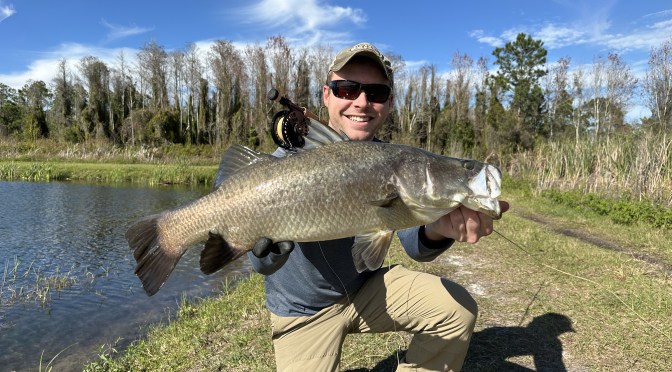
After about a 10-minute fight (and even needing to stand on top of a submerged picnic table to pass my rod between trees to fight the fish), I pulled up the second largest catfish I had ever seen (only to be topped by my 150+ pound Wels catfish on the fly I caught in Italy). With my fly buried in the side of its mouth, I grabbed the fish with both hands, realized it was my first blue catfish, and proceeded to carefully take pictures and release this beast back to its home.

Joe Petrow – Blue Catfish
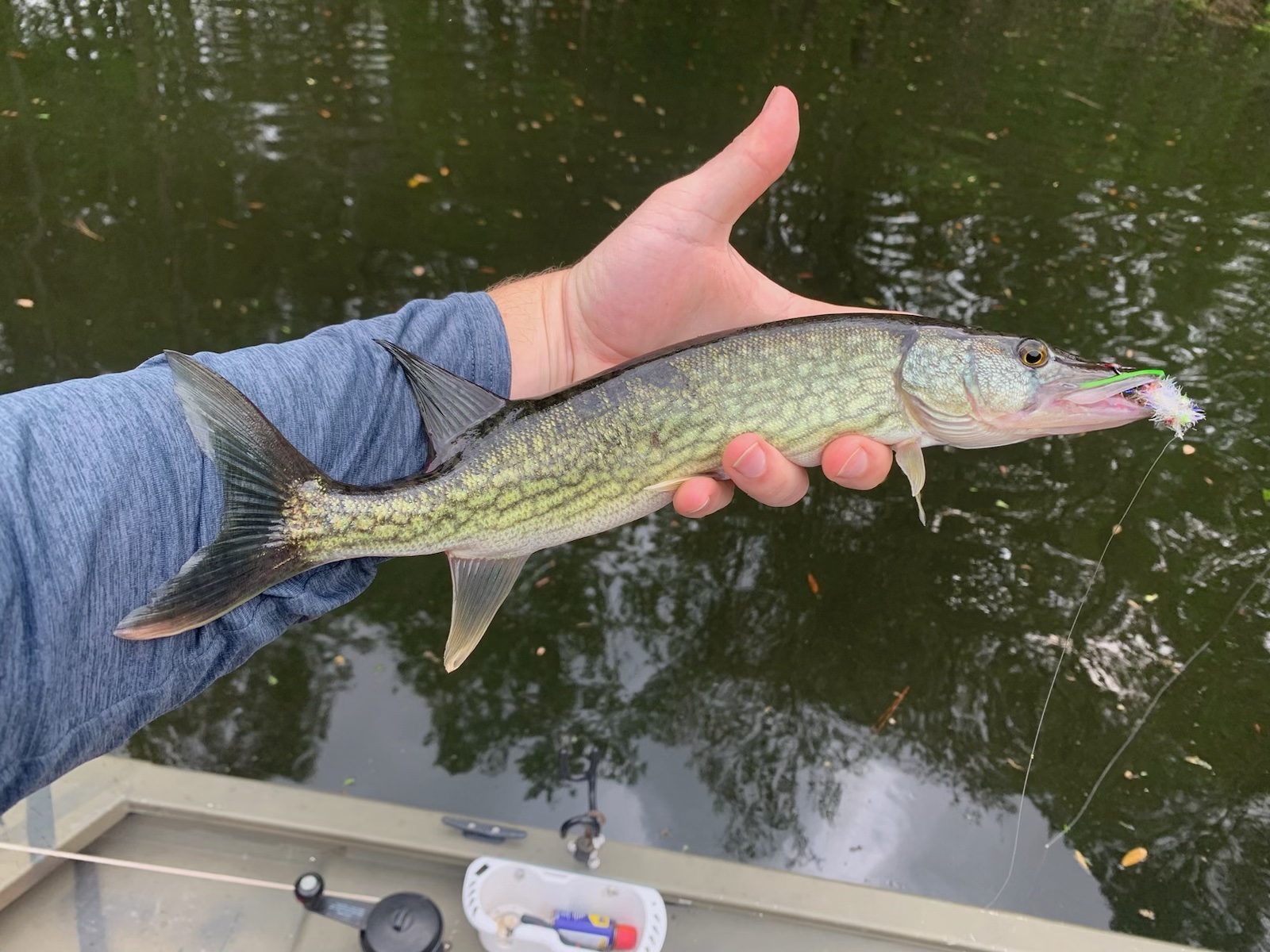
Goes to show that no matter what you think you might run into, the fishy world has a way of surprising us. Tight lines and thanks for reading!

Joe

September in the Salt Marsh

The fall. One of the fishiest times of the year. Weather cooling off, turning on the feedbag, life is good. This past fall, was fortunate enough to return to one of our favorite places to get on some beastly redfish. Lousiana.

Over the years, we have fished Louisiana during the majority of the seasons. Louisiana truly is a year round fishery for redfish, but each season has its benefits and disadvantages. As for the fall specifically, the benefit is that the weather is still warm and there are large reds fo be found (assuming the fish are not in full spawn mode offshore).

During our past trip, we ran into both some excellent and difficult days. Day 1 specifically was a grind, with little fish even seen (which is very rare for a day in Louisiana). We took a chance on trying to go find some large bull redfish along the beaches, but with the spawn in full effect, and it appeared that most of the fish were still offshore. Still a fun day and we were able to hook into some redfish and gar, but the money days were coming on Day 2 and 3.

On Day 2, we got on ’em. Adjusted our tactics to stay deep in the marsh and search for any redfish that were either done with the spawn, or were not partaking for whatever reason. After about 30-minutes of searching, we found them. Good-sized tailers, pods of several fish, you name it. On this day, the water quality was terrific and the sight fishing opportunities were in full effect. The fish were active on most flies, but tan and gold seemed to be a winner.

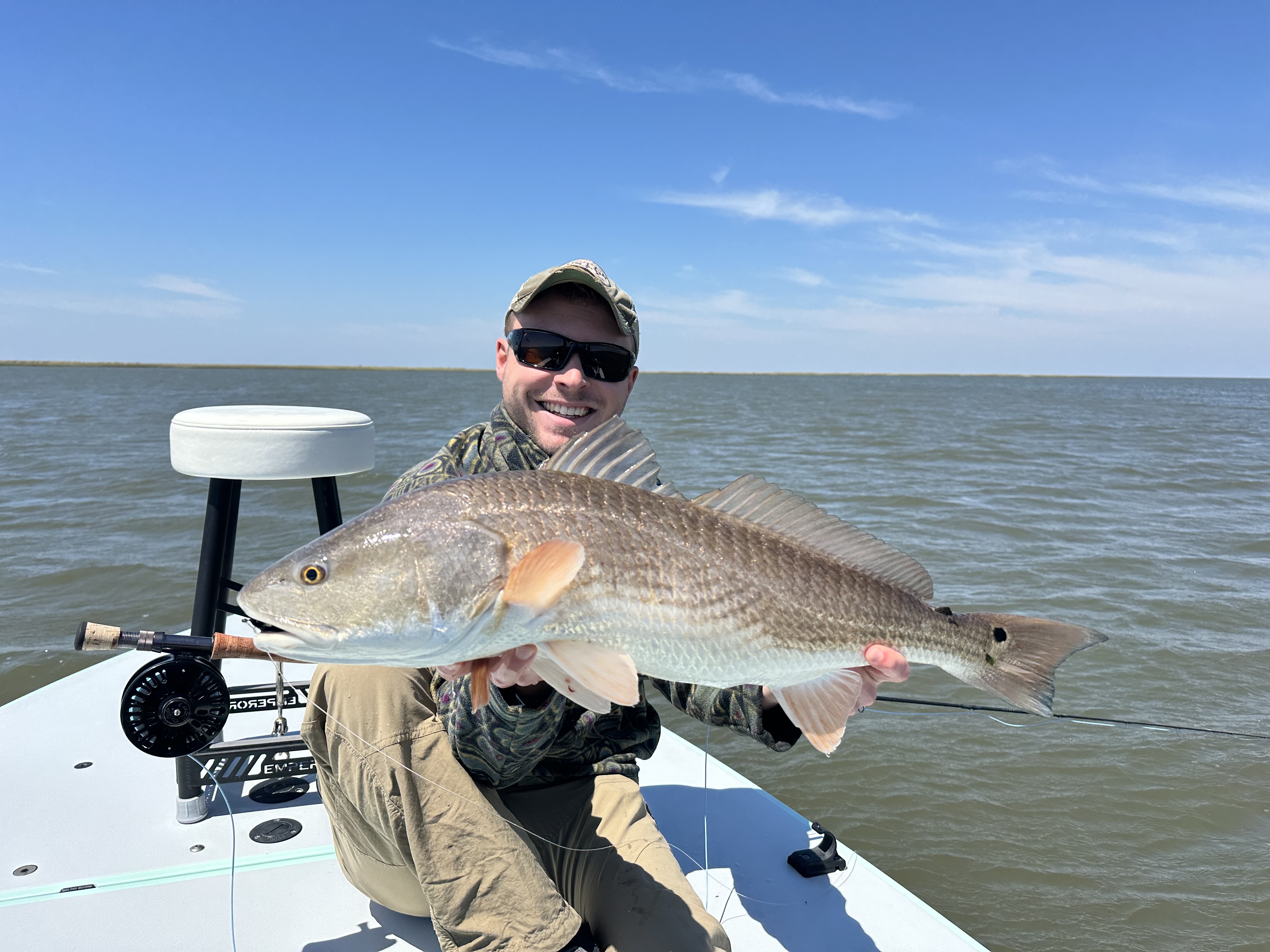
Joe Petrow – Redfish
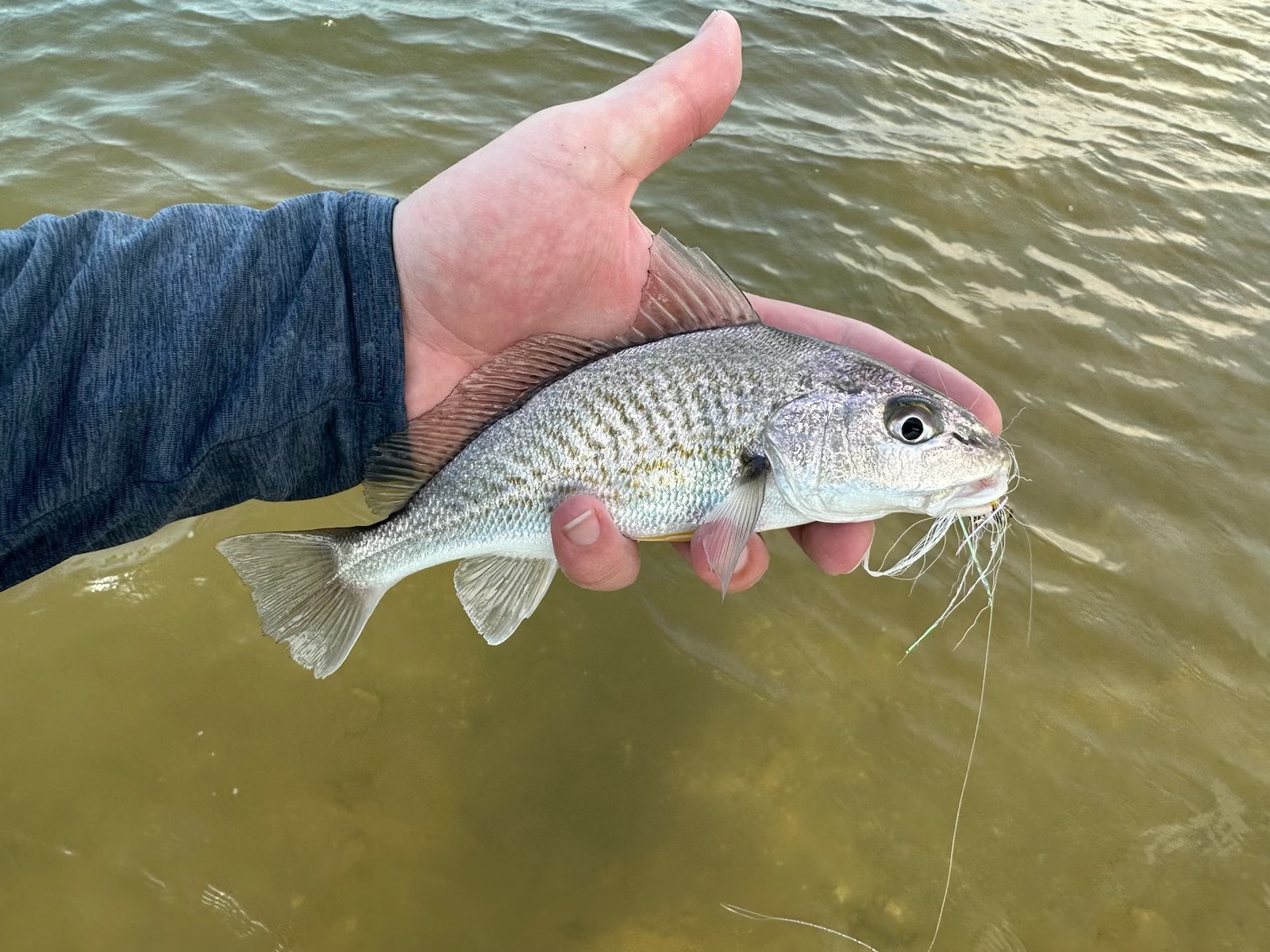
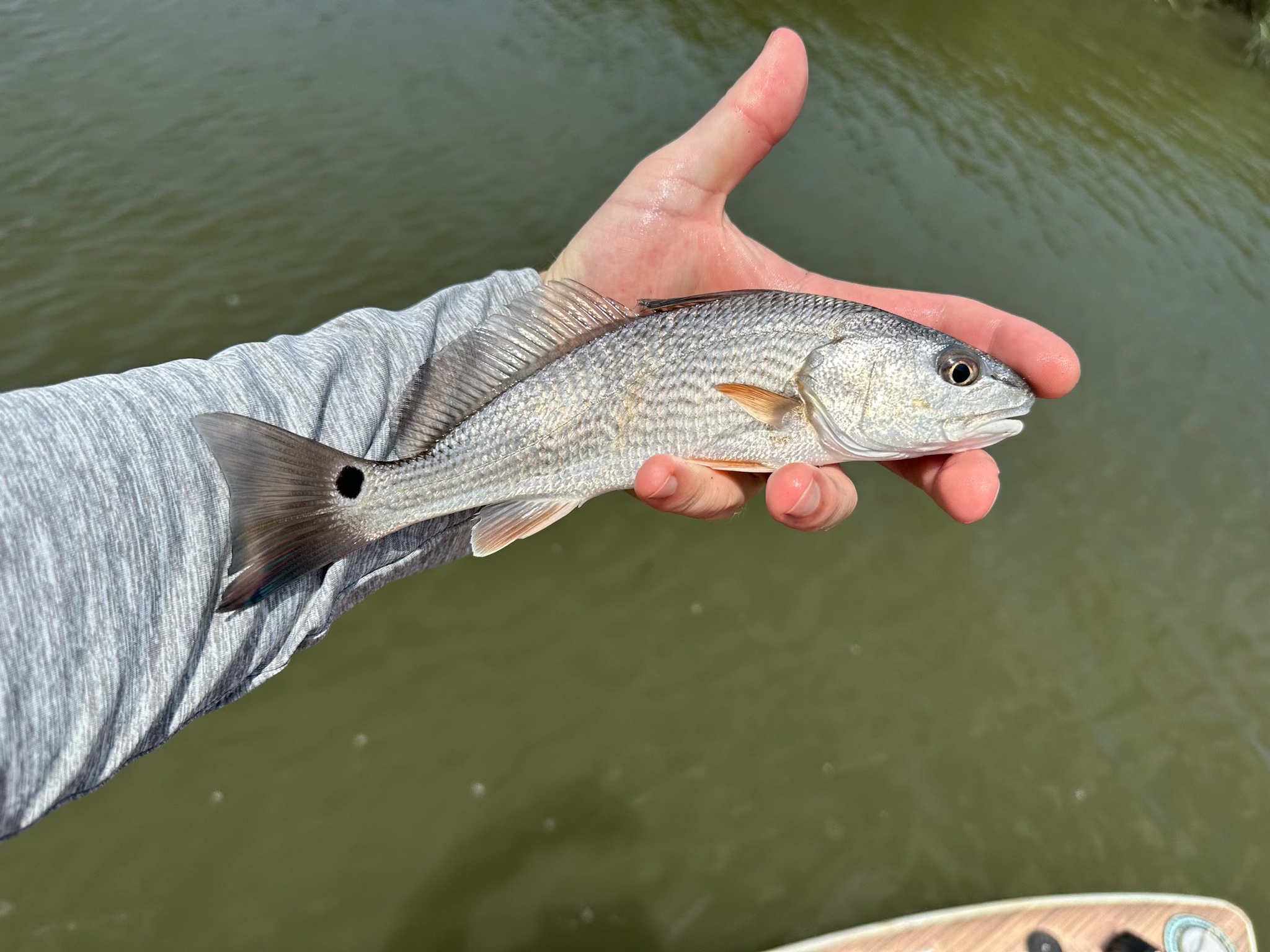
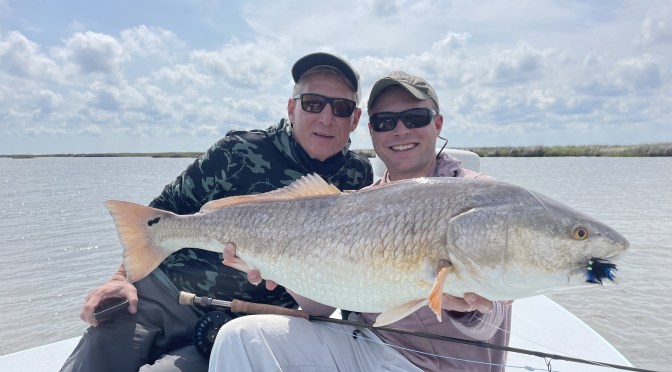
Fortunately for us, Day 3 was very similar to Day 2. With this said, we especially lucked out as it wasn’t our best throwing day of throwing line, and still had a productive outing even though we lost a couple of nice fish. In true Louisiana fashion, the largest fish of the trip arrived on the last day. It appeared that we might have timed things well, as there were a plethora of bull redfish back on the flats ready to eat a fly. Although several fish were landed this day, we were able to land three very large fish, with one being a top-3 redfish for myself size wise. The largest fish of the trip came down the flat at full speed (initially seeming as if had been spooked by something further up the shoreline), but we hit it with a great cast and it ate on the spot. After a long fight, we were able to get the fish into the boat and quickly release for it to swim away strongly. As the bigger fish can do, these fish were a bit more selective with the fly, and we needed a lot of flash to entice them in some dirtier water. Big hooks with gold flash were the ticket.

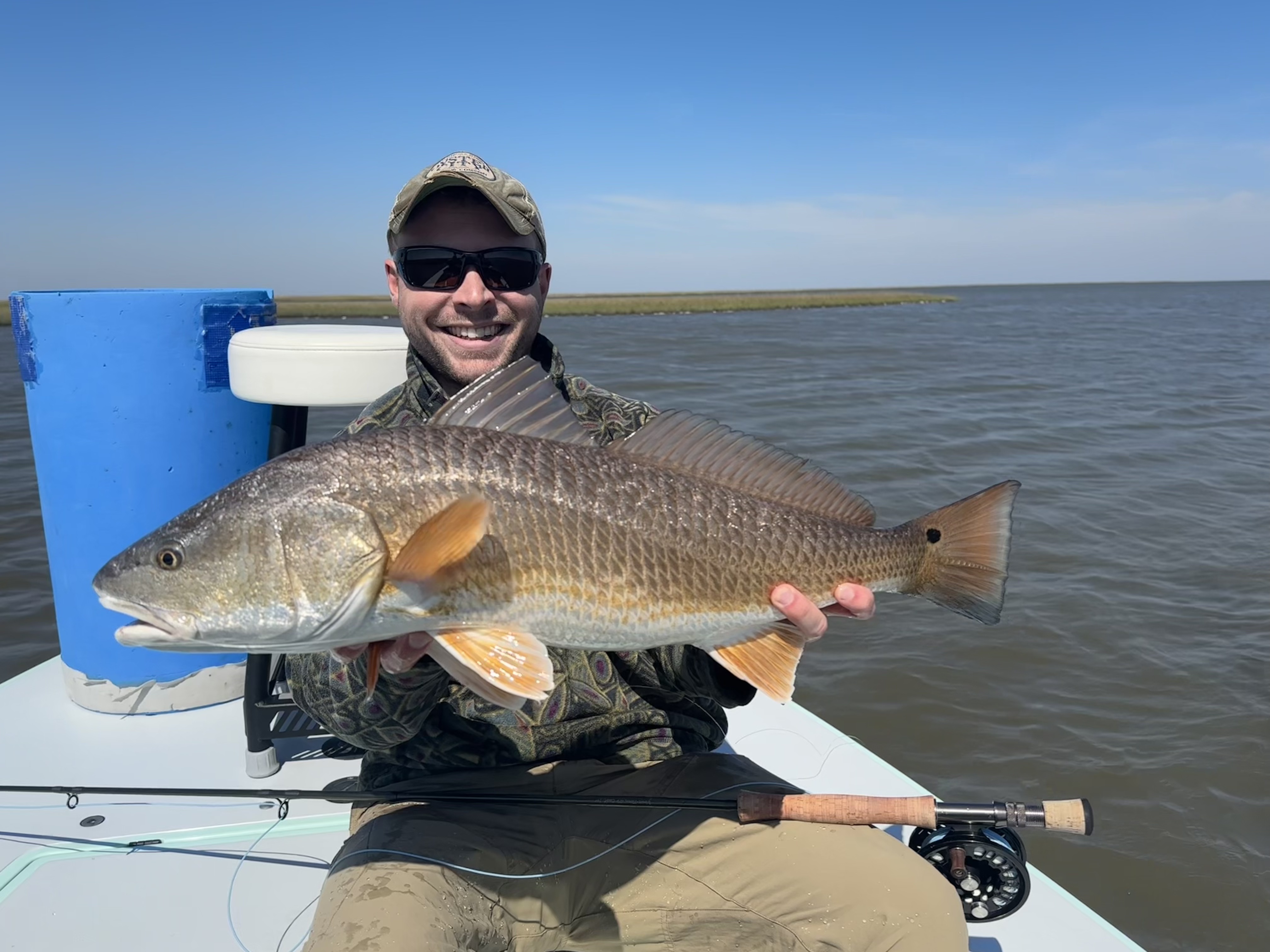
Joe Petrow – Redfish
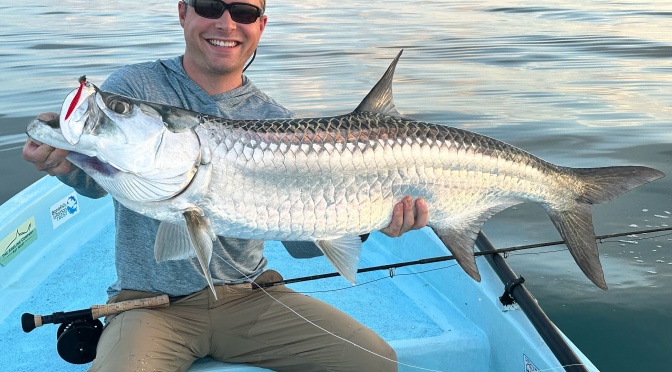

As I have written before, I am beyond lucky to experience trips like this (especially with my Dad). Trying to make it a priority of mine this year to make no excuses when it comes to doing trips like this, and already counting down the months until our next trip back in the marsh.

Tight lines!

Joe

Standing Up with Behemoth Carp

Summer in the south. Humid, hot, sticky, and all sorts of other adjectives that make you want to personally buy the guy who invented AC a beer. In Georgia specifically, the heat isn’t the only thing that makes a return in the summer: its nearest and dearest friend of thunderstorms is right there with it. Because of this, when it comes to throwing fly line in the Georgia summer, it is a blessing and a curse. The blessing is that it is sunny, warm, and the water is warm enough where you can take out the good ol’ Bote (standup micro skiff) to get after fish. The bad news is that you need to have a sense of when to go and the approaches to utilize because the rivers can blow out within a 2-hour notice.

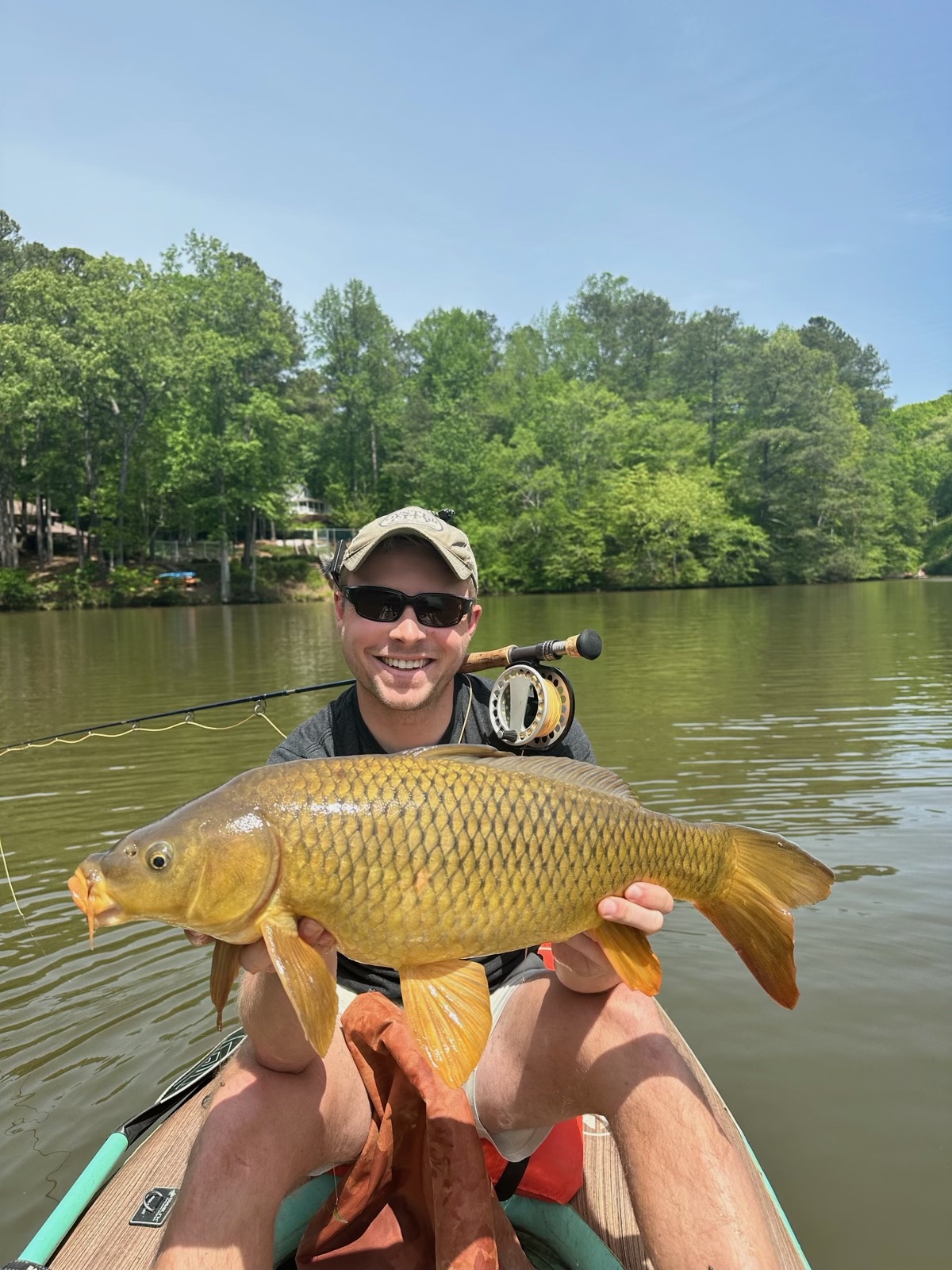
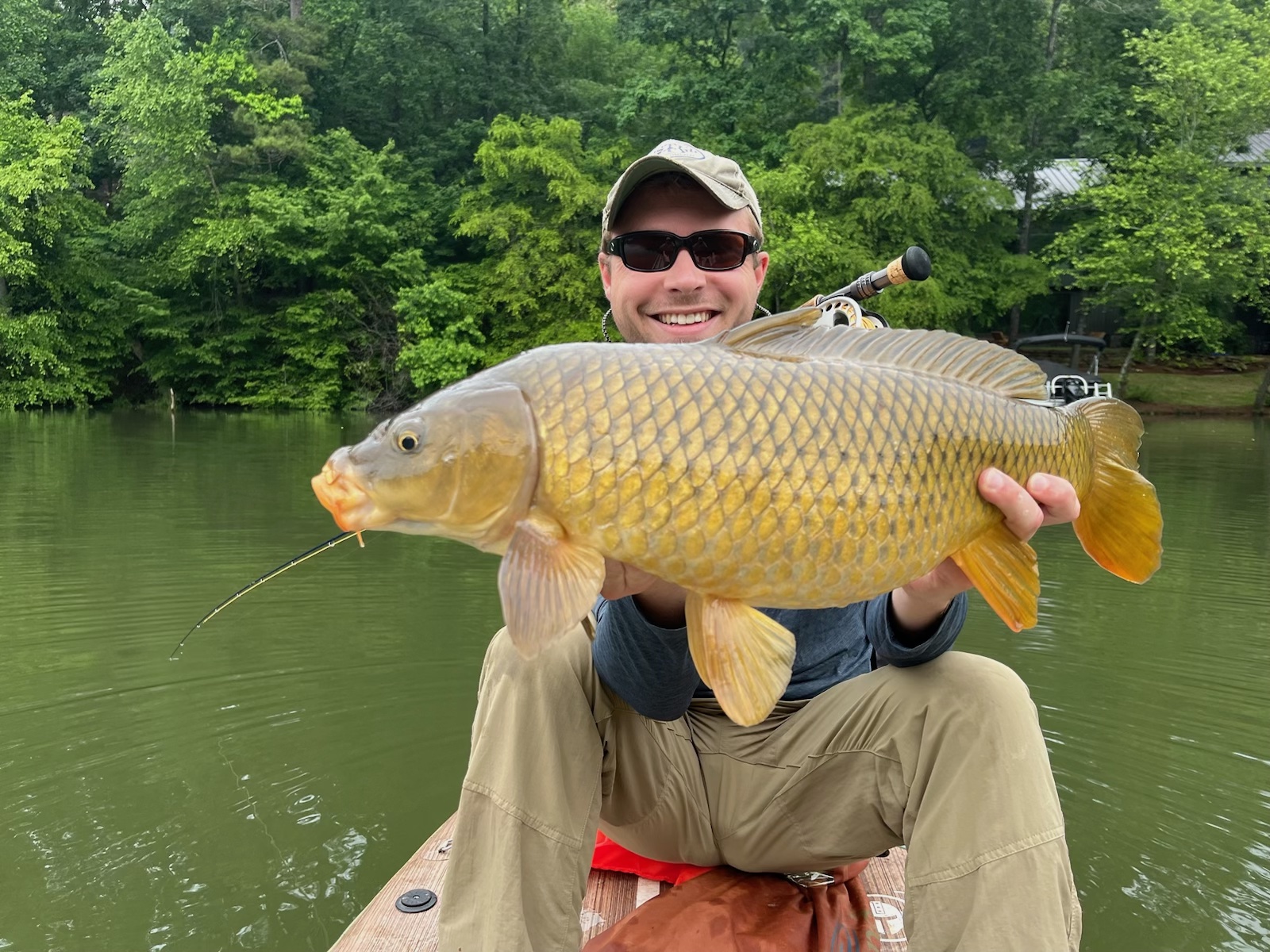
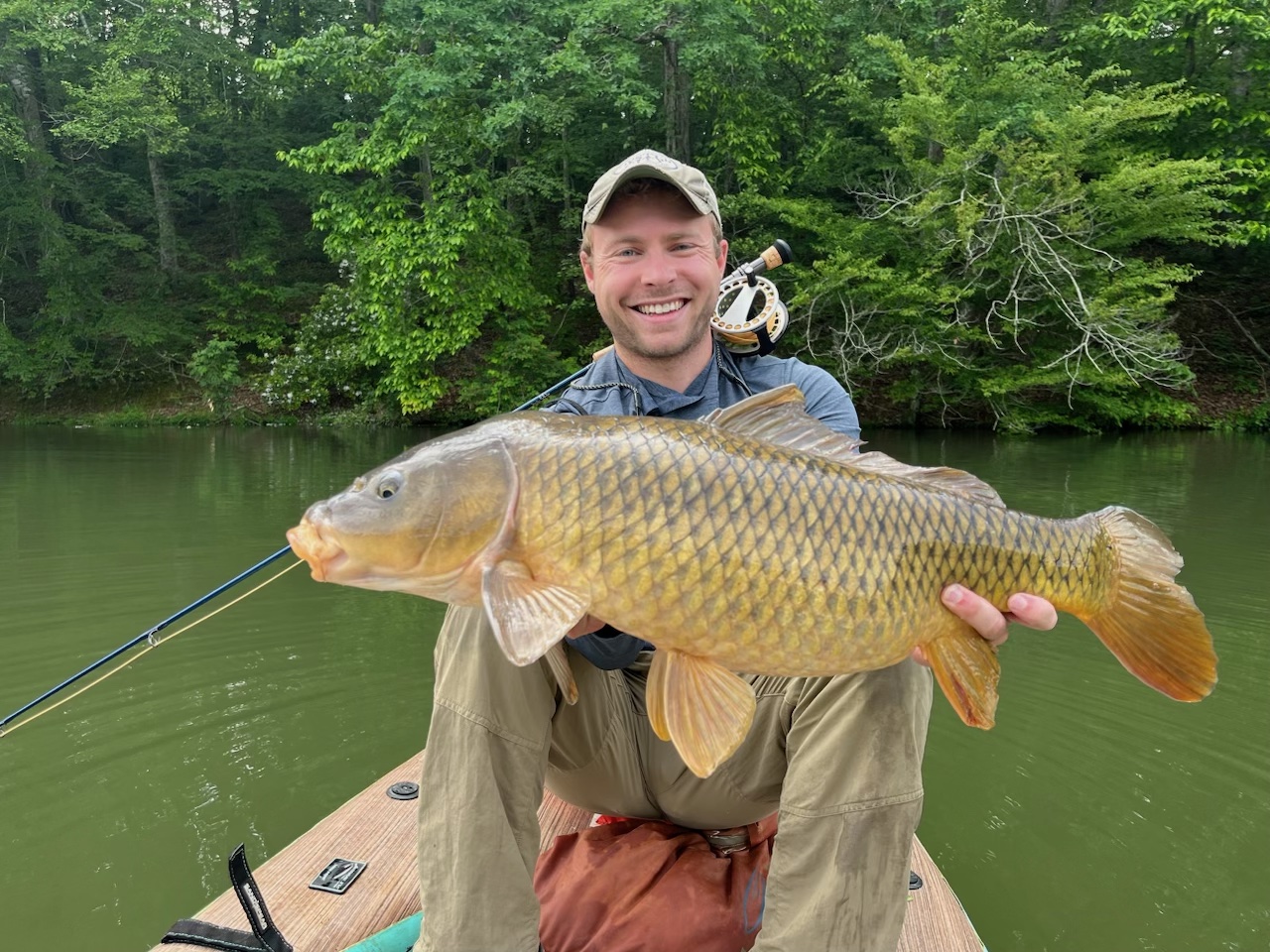
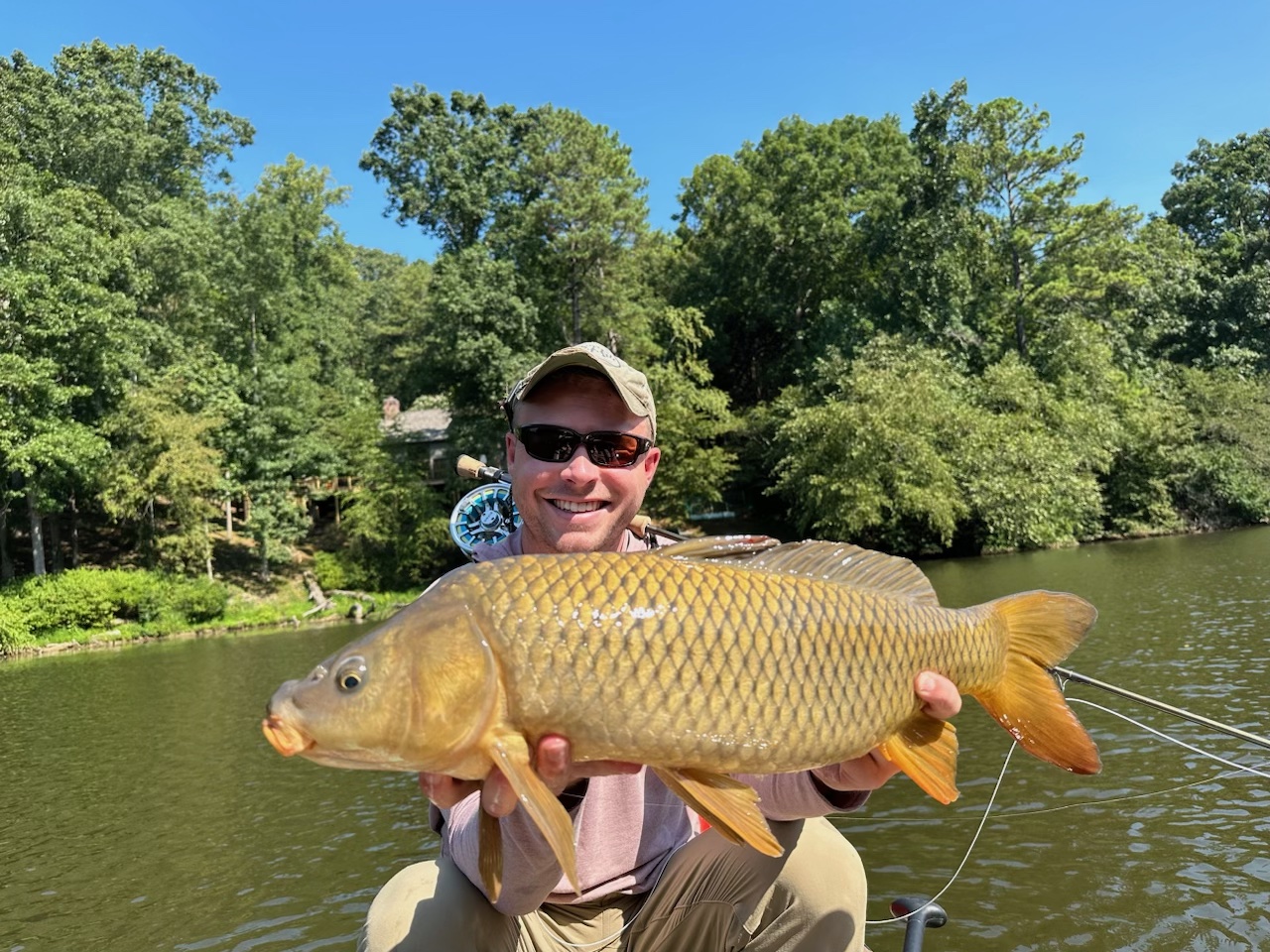
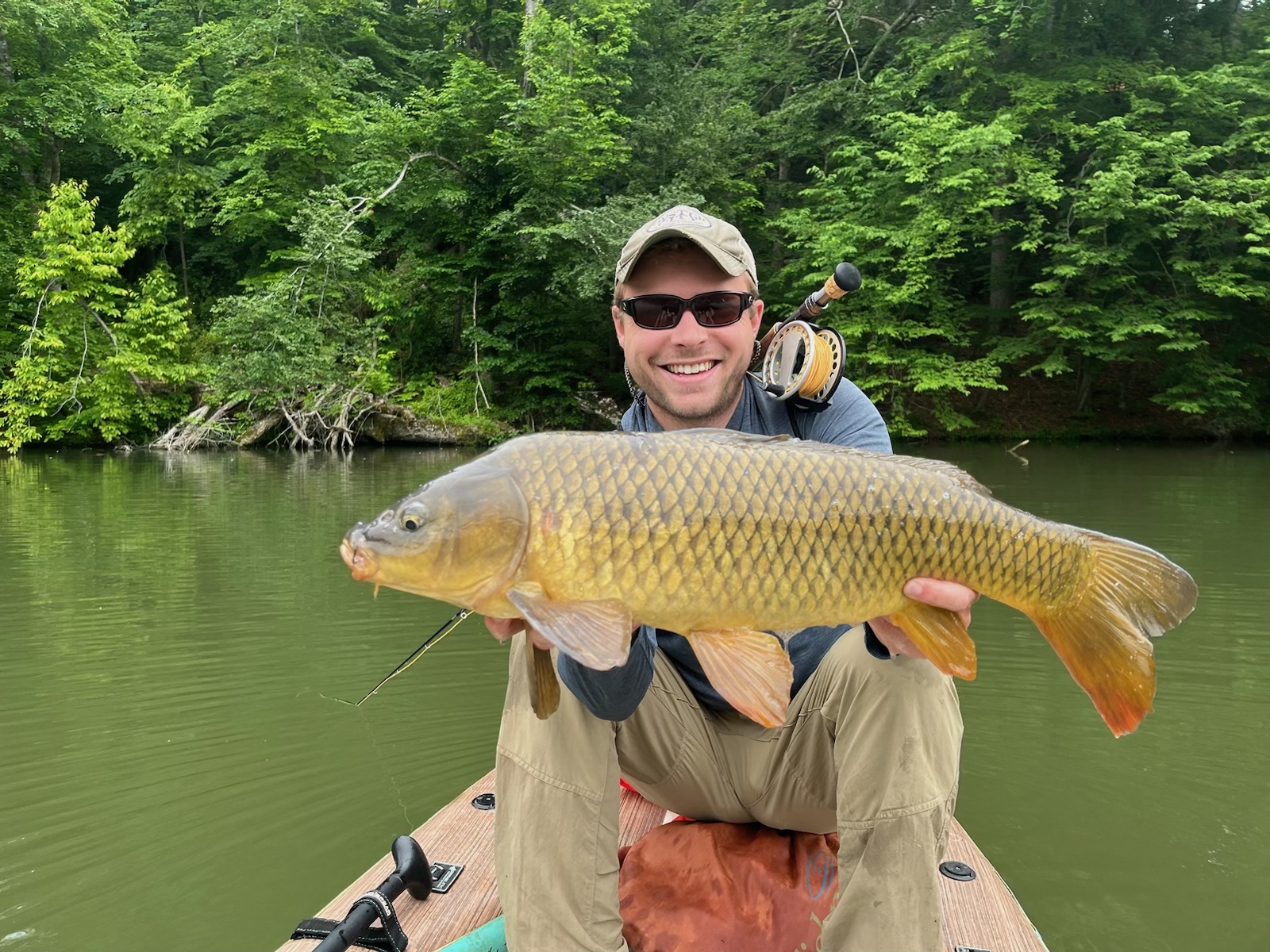
With all of this said, this summer has been particularly productive for carp on the fly in Georgia. Not only from a numbers perspective, but the size of fish has been unlike anything I have ever seen. As those of you who follow this blog will know, I am a huge advocate for carp, and have fished for these creatures my entire life. They are big, fight hard, and really test your patience with their infinite spookiness. Due to the fact that countless carp excursions have taken place this summer, I am going to narrate some of the best highlights from the summer.

To begin with, I made it a point to start my carp “season” earlier than usual this year (mid-April). Usually this is a great time of year to fish pretty much anywhere in the continental US, because spring is trying to transition to summer, and it isn’t too hot. I experienced much of the same which really optimized conditions for carp. On one outing in particular, it was clear that the carp had started to think it was summer and were out on the “prowl”. Dozens of fish about 2-3 feet sub-surface of the water…inquisitively reacting to anything hitting dropping out of a tree and hitting the water…good body language. After about half a hour of struggling (shaking off some of the rust and trying to find the right fly), I finally got my act together and threw on a trusted black damsel “pluff” fly that I tie on. Within one or two “shots” at fish, it was on. 12-20 pound carp inhaling this fly and making runs into the deep backing. Always fun when they pull the stand-up micro skiff/board around, and it becomes a whole other challenge to land them. Because of this, you might not always land every single one, but this day we were able to bring some awesome fish to the net.

Joe Petrow – Carp
Joe Petrow – Carp

A few days later after this outing, I made it a point to get back out there now knowing that the fish were willing to cooperate. Upon arrival on my carp spot, I had noticed that a large number of grass carp were around, with the majority of these fish appearing to be over 25 pounds. Not seeing a ton of common carp, I decided to shift focus and try to catch “one” grass carp as they are known for being infamously spooky especially at this size. For these fish in particular, they were not in a “feeding” mode and didn’t appear to be eating any plants/bugs/seeds etc. off the surface of the water, so knew we were going to need the right chance. Fortunately for us, about 15-minutes into the outing, had a huge grass carp pop up about 30-feet from the stand-up board near some tree branches. With my trusty black damsel “pluff” tied on, we slowly approached the fish…threw a gentle cast about a foot ahead of the fish…slow stripped…saw the fish slightly move…and my line goes tight. Fish on. From the initial set, I knew this fish was huge, but had no clue on how freaky of a large beast we had barely hooked on the end of the line. After about a 10-minute fight, we were able to get only the head of this fish in the net (barely), and proceeded to be in pure shock of the easily 35+pound beast that we were looking at. The fish was truly a monster, and even had a slight hump on its back that made it even more menacing.

Joe Petrow – Grass Carp

After these two outings to kick off the carp “season”, anticipation and expectations for the rest of the summer were at an epic high. And luckily enough, terrific results continued. Great numbers of fish landed, awesome fights as usual, and lots of different techniques utilized. Specifically, noticed that I became better at the following throughout the summer: using “tree” patterns, getting up on the flats when super hot, and fishing schools of carp. For “tree” patterns, I’m talking about any fly that looks like a cotton seed, berry, or piece of vegetation. I found these patterns to be crucial on really hot days where the carp weren’t actively out on the hunt, in that it seemed as if these fish were more willing to eat a slow-sinking (non moving) fly like this. In regards to getting up on the flats, this was the only way to catch fish on really high water days, and required faster sinking flies to be closer to the bottom. These areas were no more than a foot in depth, but were the only way to find fish on murky water days. Lastly, for schools of carp, I experienced my best success yet but providing extra long “leads” on casts and by not underestimating fish that were deeper in the school. Sometimes it can be hard to not throw at the biggest/most visible fish in the school, but learned that keeping the fly in the zone (and even fishing it deeper if need be) can often catch some of the big fish lurking underneath the ones up top. Below are just a few examples from the success with these techniques over the summer.

Joe Petrow – Carp
Joe Petrow – Carp
Joe Petrow – Carp
Joe Petrow – Carp

As always, tight lines and appreciate you taking the time to read the blog!

Joe

Stars and Stripes

America. The land of the free. No matter what is taking place throughout the course of the year, during the Fourth of July and the weeks leading up to it, you can’t help but feel that people have a little more pep in their step. The summer weather is doing its thing, the kids are out of school, and baseball games with cold beers are in full motion. Although every year I get excited for these festivities, this year had some extra anticipation as I was able to spend it fishing and exploring in a place that I had never been : Maine.

So for those of you that read my blog, we have a first here… a fishing trip to the northeastern US. Are we for real? The answer is yes…we are for real, and for the spirit of full transparency, we should’ve been making this a thing a LONG time ago. Can’t tell you how many times I put fishing in this part of the country on the back burner (insert comments of “isn’t it cold up there?”, “isn’t it crowded?”). For this stupidity, I take full accountability, but the joke is on me as turns out Maine is a fishing mecca.

Although our trip to Maine this year was not solely focused on fishing (and was more of a relaxation/outdoor activity priority), I was able to spend some time throwing my 8-weight into the salty goodness of Maine’s coastal waters. While driving throughout the state, it was clear that there was a plethora of trout and bass opportunities to for fresh water (will need to go back for Atlantic Salmon fishing in the spring or fall), but I really wanted to get on some Striped Bass that are known for making an appearance during the summer. Upon immediately arriving at the coast, the water looked fishy and hopes were high.

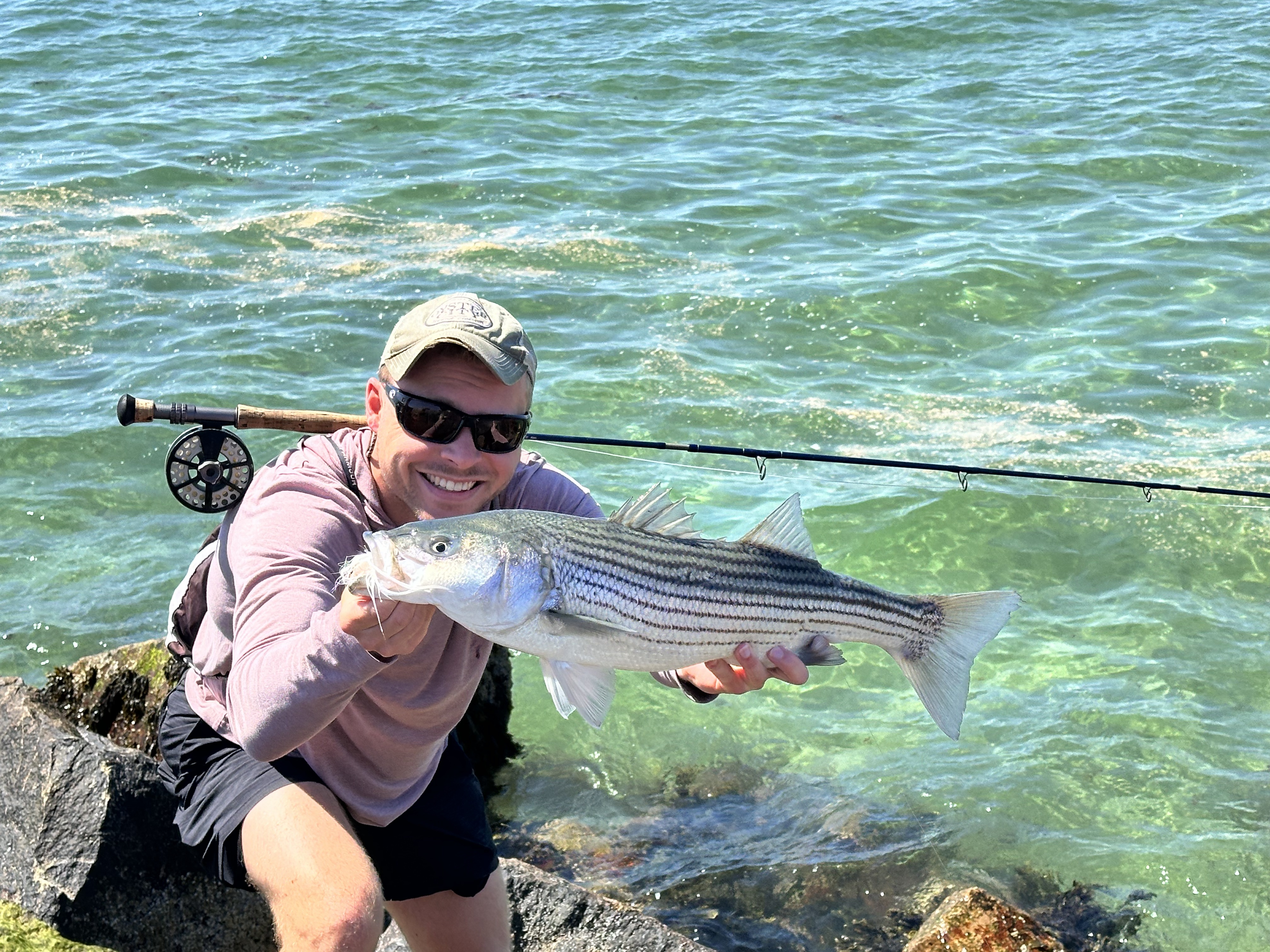
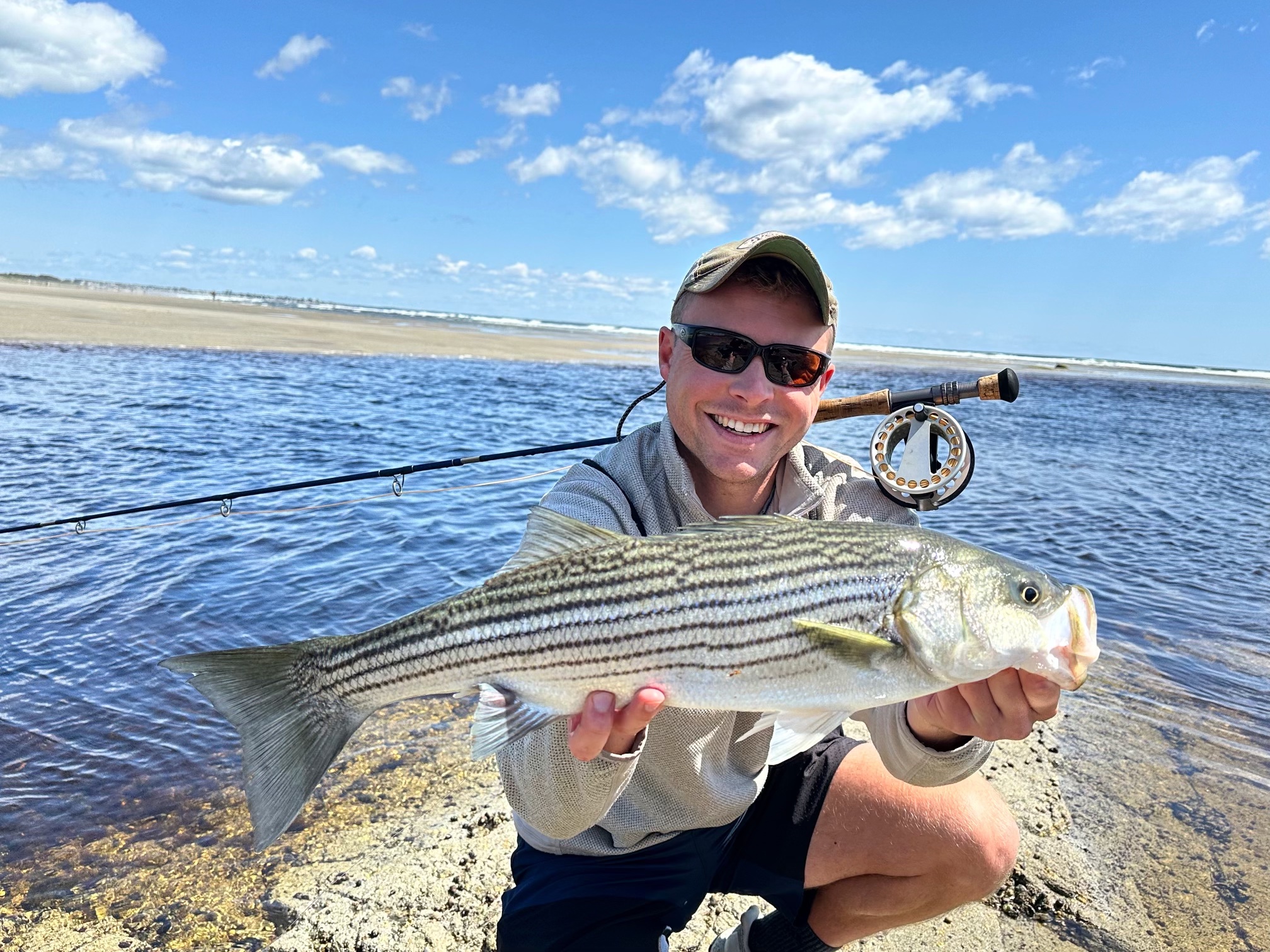
The fishing for this trip was a DIY mission and not with a guide. With this in mind, my focus on fishing spots was two-fold: find the rocks, and find the breaking water. Although I have not fished a ton for Stripers, my fly fishing experience (especially from shore) over the years has taught me that rocks/structure is forever a friend, and that big fish want to be as lazy as possible when it comes to finding food. Fortunately for me, while on a hike next to the rocky southern Maine shoreline on our second day of the trip, I found some great water with our Striper friends in attendance. With a large white and gray clouser tied on, I proceeded to send out far casts into the crystal clear water and strip extremely fast. After about 30-minutes of nothing, a giant silver flash erupted on my fly about 5-feet away from my rod trip. My first Maine striper. After a great fight with some sketchy dancing on the rocks, I was able to land the fish and get a terrific photo opp from my always fish-accommodating girlfriend in tow.

Joe Petrow – Maine Striper

As what happens usually to me after catching the “target” species I am after, this first Maine striper got my mind racing for how to catch more. This fish reacted to a large fly moving very fast and essentially ate right by my feet where the drop off from the rocks to the deep water took place. Knowing that I would be checking out a new spot the following day, I tied on some stronger leader (the saltwater Stripers definitely seemed to pull harder than some of the freshwater ones that I have run into) and left my large fly on.

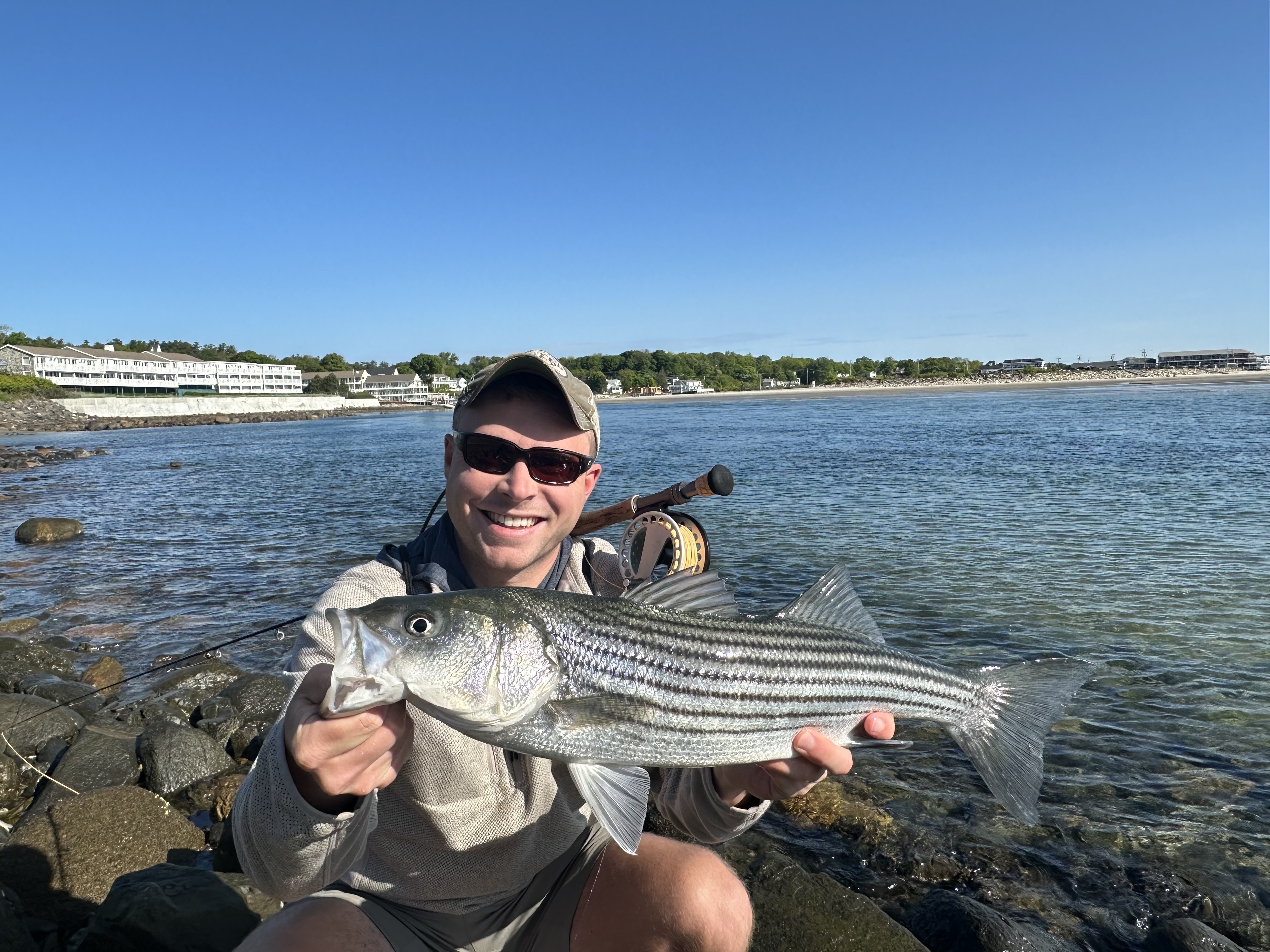
The next day, we found an area that was completely different than the day prior. After some research online, we decided to go to a “jetty” where a main river flowed into the ocean that created a large deep trough between the flowing river and the saltwater. There were two large jetties on both side with massive rocks, and the current was ripping. Even better, fish were blowing up on baitfish about 80-90 feet off the jetties, and they were ready to bite. Problem was that the tide window was short, so we didn’t have much time. Fortunately at this spot, were able to hook into another nice Striper and also get on some great Hickory Shad action (a new species for me). For a new area and fishing for only about 2-hours, definitely counted it as a win and made the lobster rolls taste even better for lunch after.

Joe Petrow – Striper

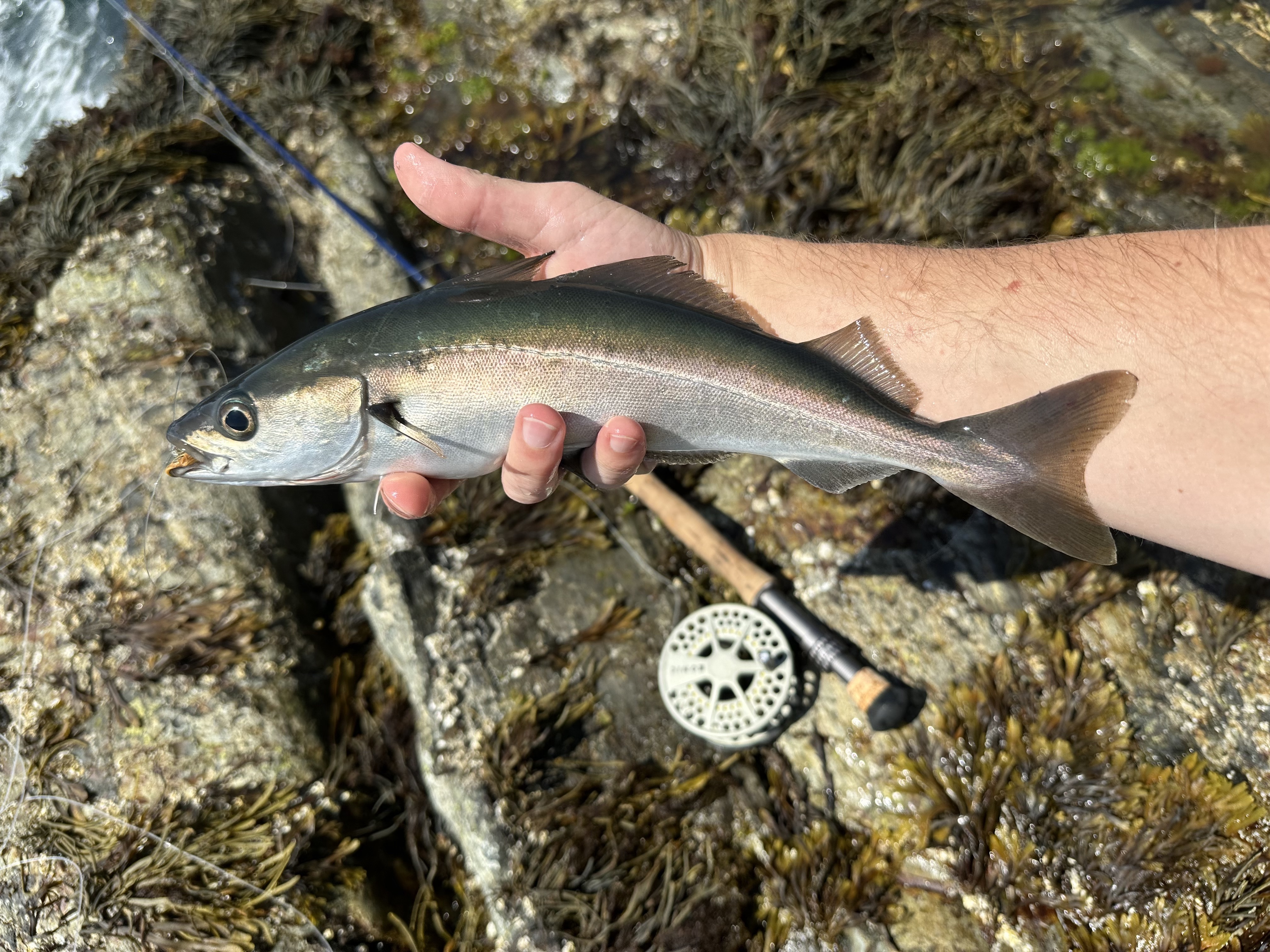
Although the Stripers were definitely the highlight of the fishing time during this trip, would be remised not to call out another fun species I ran into in northern Maine. The pollock. These guys were a blast to catch off the rocks in the arctic-cold water near Acadia National Park, and were extremely eager to attack any yellow-colored fly that could get deep enough for them to see. A sinking line would be highly recommended for these, and definitely would exercise caution on the rocks as waves come in.

To wrap things up here, what a week it was on the Maine coast. Big thanks to my girlfriend for encouraging us to go check it out, and can’t wait to get back up there to see what else is swimming the waters. Grateful that there were some fish willing to cooperate for a first trip up there! Unbelievable food, fishing, and fun.

Tight lines!

Joe

Way More than Catching Fish…But There Were Lots!

Alright everyone. We had an unbelievable trip to wrap up 2021, and I’m definitely going to get to the fishing, but this is going to be a different kind of post. I promise to do my best not to make this too sappy or emotional, but this trip meant way more to me than honestly any other trip I have ever had. And it wasn’t because of what many people may expect…i.e. fishing in some “once in a lifetime location”, or able to land a massive bucket list fish. It was because I was able to be back on the water with my Dad.

Not going to get into specifics, but my Dad experienced a “close call” very early on in 2021 and was extremely hurt. We are talking about being in the ICU hurt. We are talking major surgery and not being able to walk for an extended period of time hurt. We are talking about a situation in which most people wouldn’t be able to bounce back.

So with that said, the fact that I was able to end my year with my Dad back out on a boat lighting fish up is a blessing, and provided me with a chance to reflect on why fly fishing matters to me. It’s because of the people I get to do it wish, and the memories I have with them. Not just because of the fish.

AND END SCENE. Let’s get into the fishing and talk about that! For this trip, we returned to the Everglades to hopefully find Peacock Bass and other exotic freshwater species that live in these waters. There is nothing like the Everglades when it comes to sheer numbers of fish, and the calm waters in the canals make for an enjoyable and comfortable experience. With this said…we arrived to a ton of rain, and a very wet first day of fishing.

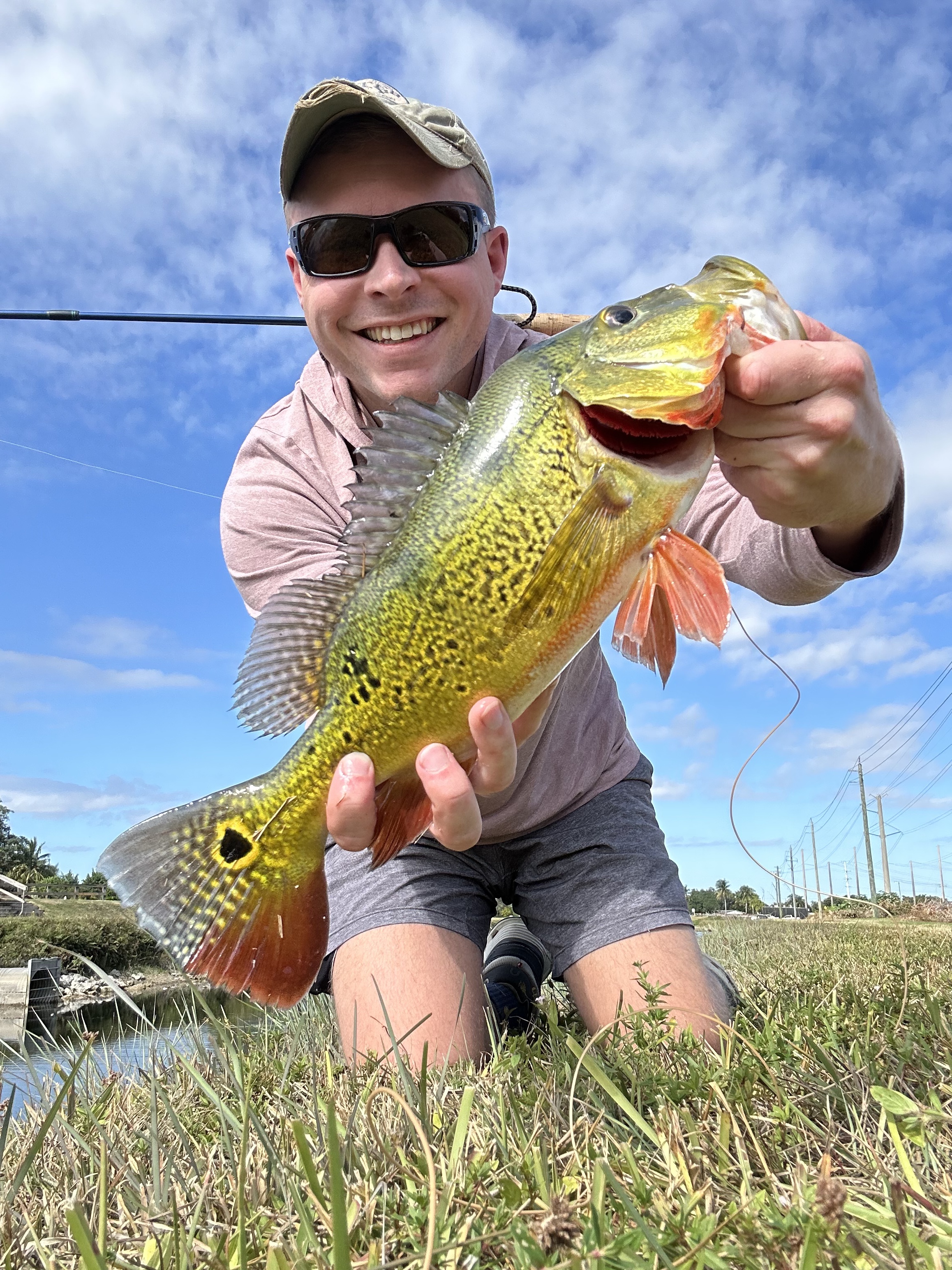
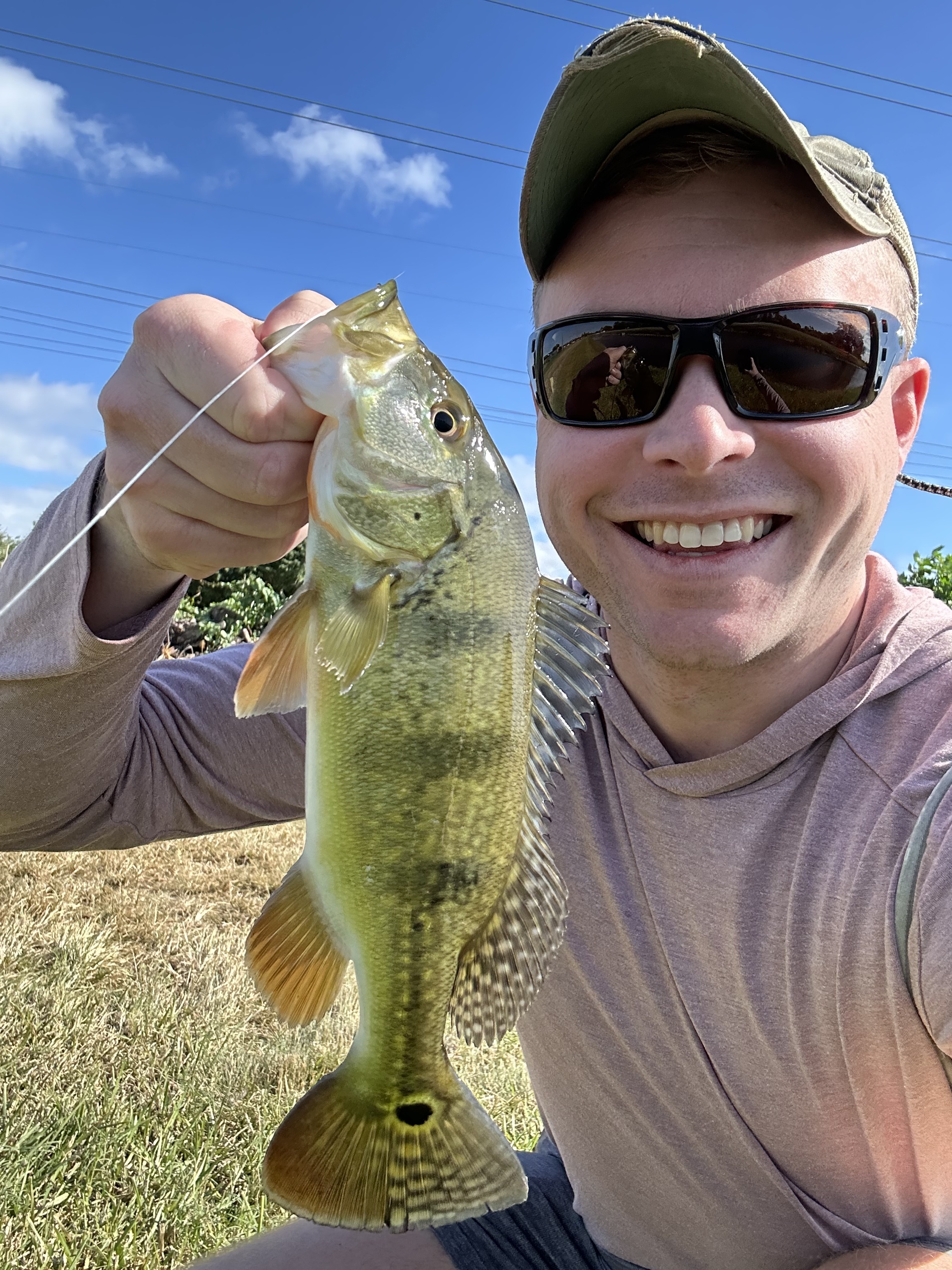
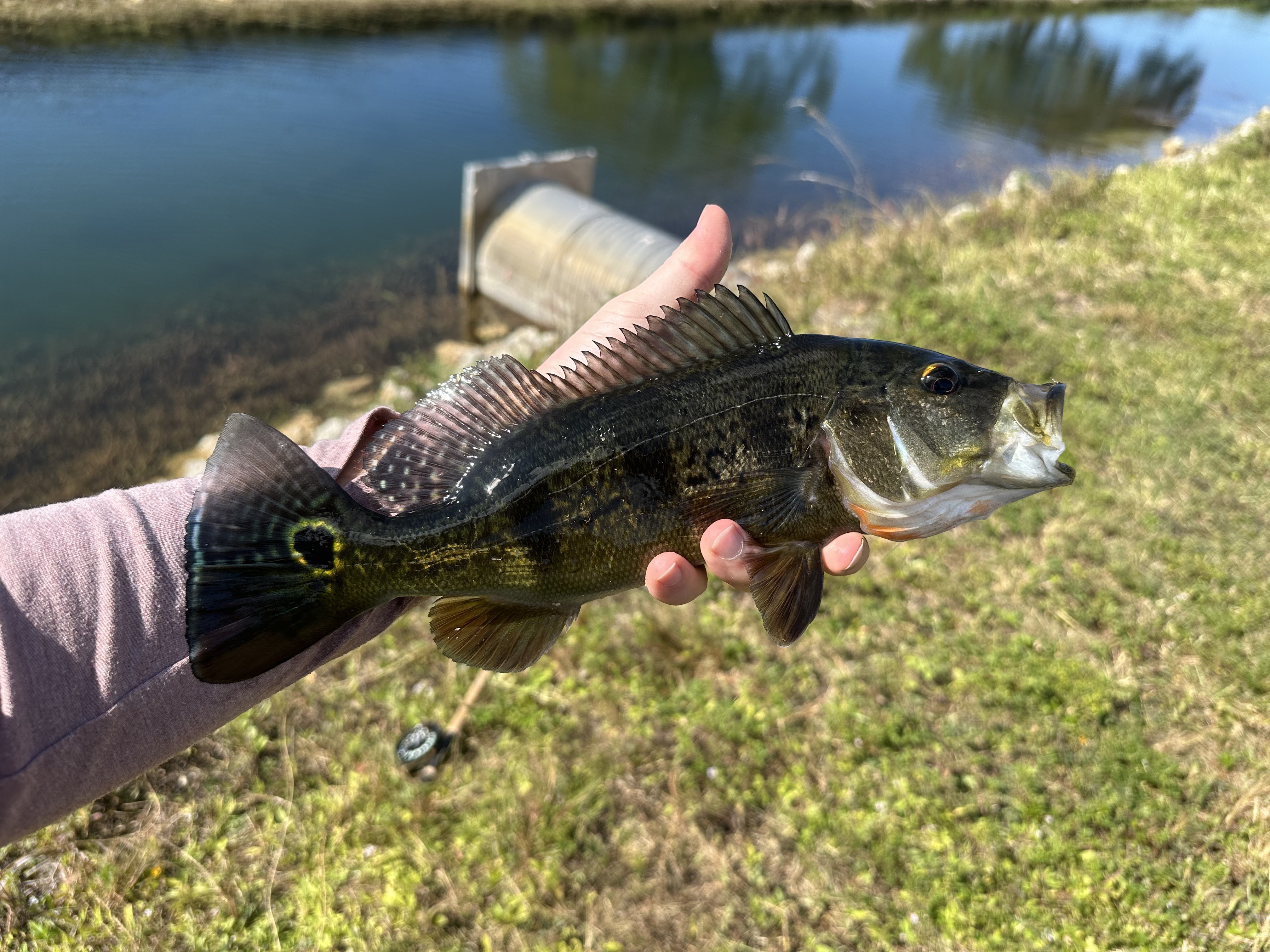
Luckily for us, even though the rain coats were soaked, the fish were going absolutely bananas. The weather shift got the fish all amped up, and they were smashing quickly stripped flies. This goes for all the species – the peacocks, largemouths, oscars, mayan cichlids, and sunfish. It was insane, and because we didn’t mind weathering the elements, we experienced one of our “highest number” fish days ever. We lost count after we got to about 50 peacocks, and I promise you we easily caught another 50-60 more after we stopped counting. One really cool thing about the fish this trip was that they were dark in color, unlike many of the other peacocks we have caught in the Everglades before.

Joe Petrow – Peacock Bass

Although the fish were so active that probably any fly would’ve caught something, the Peacocks really were hammering larger 4-5 inch white dear hair streamers that were moving fast. They also were crushing 3-4 inch long dear hair chartreuse flies that looked like smaller cichlids in the water. Our best Peacock of the trip came off of a white bucktail and flashy streamer that ended up being completely destroyed at the end of the day. The fish was a true pig of a Peacock.

Joe Petrow – Peacock Bass

After a day of pure fishing madness, we experienced another fruitful day of fishing in the Everglades (although not as crazy as Day 1). The fish were still chompy, but they definitely were more spread out and deeper in the water column that made us adjust our strategy. We turned to more clouser type patterns to fish deeper, and slower as well. Although more Peacocks were caught, the highlight of Day 2 was a massive Largemouth Bass that smashed a large buckatil streamer. This fish was roughly 4-5 pounds and put up quite a fight on the 6-weight.

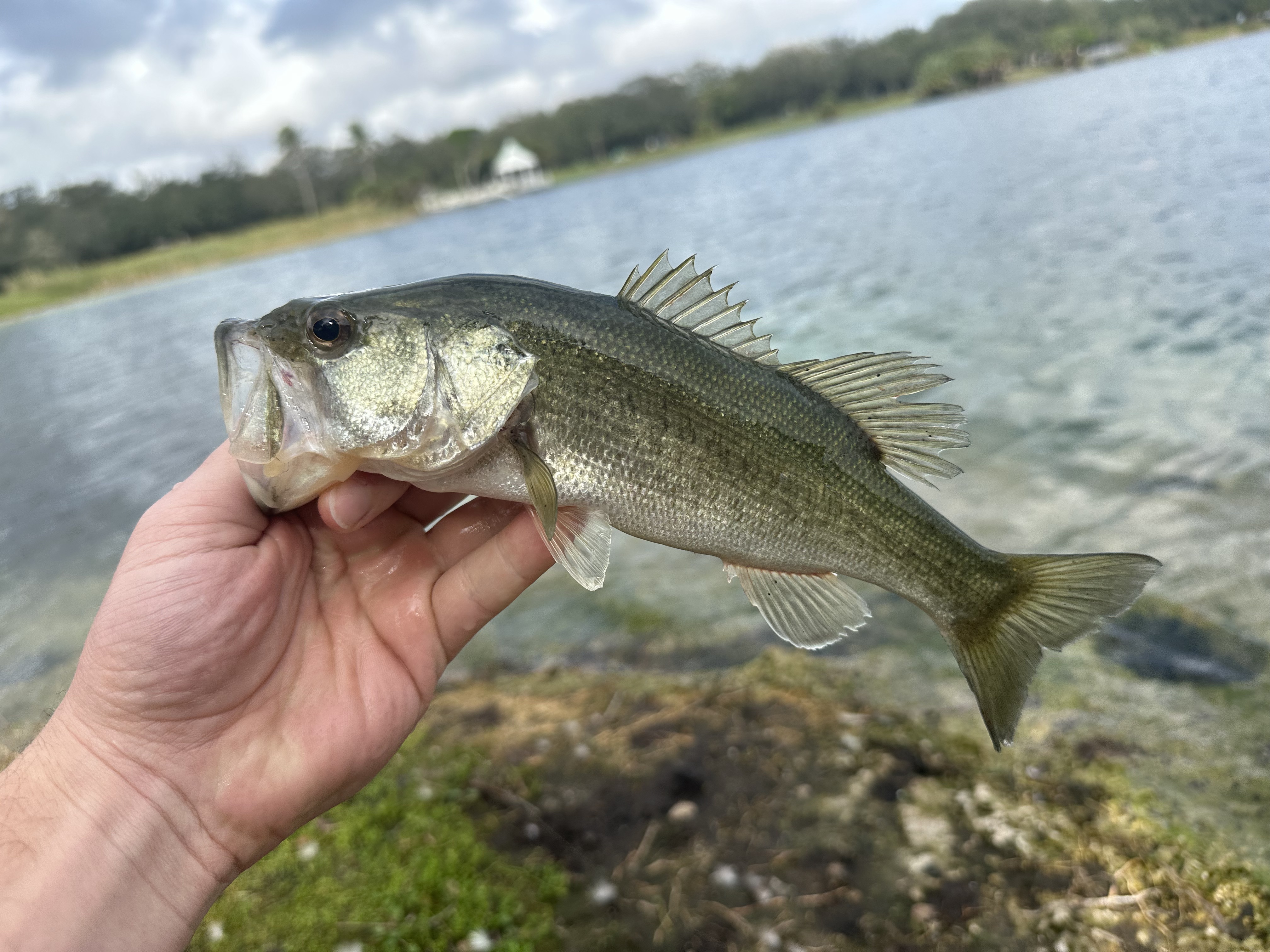
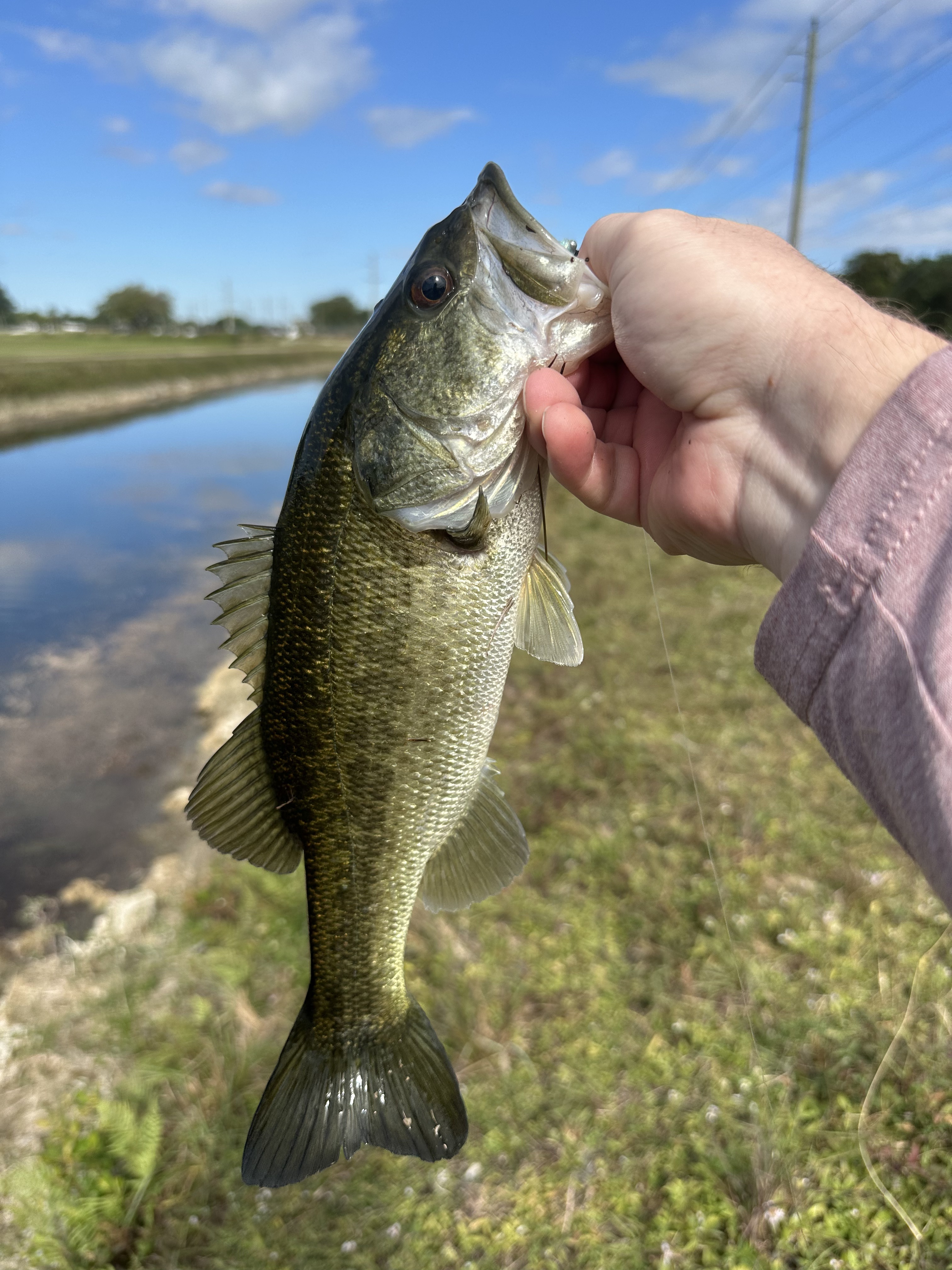
Joe Petrow – Largemouth Bass

To wrap up our trip, my Dad and I took out to the beach on our last morning to see if we could find any of our saltwater friends in the surf. The water was relatively calm, but the wind was moving and shifting the tide towards large rocks on the shore. With some baitfish patterns tied on, and some fresh tippet, I began casting parallel to the rocks…and our Florida trip yet again produced. Within a 2-hour window, we landed 7 Snook. The majority of the fish came extremely tight to the rocks where I was getting worried that I would get hung up. But after some additional observation, there were schools of glass minnow looking creatures schooled up against the rocks, making it clear that the fish were in “feed” mode.

Joe Petrow – Snook

To reflect on the year, we ended way better than we started. It isn’t always about the “coolest” destinations, or catching the biggest fish. Mind you I am big fans of both of those, and life is short, so need to make a better effort of traveling to catch all the fish I can! But my point is this…never take for granted who you are fishing with, and for the opportunities you may have close by.

Life is good, fish are good, and really looking forward to keeping after it here in 2022.

Joe

Paddle Board Redfish

Let me tell y’all something…I have fly fishing my entire life practically, and I have stumbled upon something that is a whole new level of fun.

For those of you that follow this blog, you know that probably about two years ago I was gifted a Bote Micro-Skiff/Stand Up Paddle Board (specific model is the Rover). I had fished on one of these with my best friend down in Florida on several occasions, and knew I had to include it in my arsenal. I have spent the last two years figuring out the best ways to fish out of this, and how to be consistently successful in a multitude of fly fishing scenarios. This year, I was lucky and fortunate enough to venture out and target one of my favorite species on the board: Redfish.

My girlfriend and I spent a week down in the 30A section of the Florida panhandle in September. We had been in the area earlier on in the spring with a few other friends (without the paddle board in tow), where I took some time to scout a few areas with some fishy looking flats. Having caught some fish wading in the area during the spring, I knew that if I returned with the board, we would be in for quite the time.

So, with the board in the car and a couple of beautiful weather days granted to us, my girlfriend was kind enough to accompany me on the flats with the board to pursue some Redfish. We ventured out on the perfect day – the water was extremely calm, clear, and mullet were everywhere. Perfect for paddle boarding and sight fishing.

The tide was up a bit, allowing us to “push pole” about 15 feet from the bank and look for fish pushing up shallow. Within 10-minutes, it was clear that it was going to be a special day. We had a nice red sunbathing up shallow in the sand – presented the fly perfectly, no spook, but the fish wanted nothing to do with the fly after a couple of casts. Fishing the panhandle area for 10+ years, I knew that I most likely needed to downsize my fly, and tied on one of my go to “Redfish Hushpuppy” flies that are essentially a deer hair looking crab thing that the reds seem to love.

After this fly change and pushing down the bank about 20 more yards, it was on. We came up on a pod of three fish, cast, and had a red absolutely smash the fly. Fish on. The fish took off and pulled our board around with it. Having only 10 pound test on and a small fly, I carefully fought the fish to the board, and was able to get it in the net. After some cheers and a few pictures, we let this beautiful fish go to keep growing, and this was only the start for the day.

Joe Petrow – Redfish

After landing this fish, we pushed down the flat further to let the area settle from the chaos. No more than 5-minutes later, we pushed out a little bit further in the flat towards the end of a dock and I noticed a red sitting on the sand bottom in probably about 4-feet. This fish was blending in very well to the bottom, but the sun allowed us to get our eyes on it. I threw a gentle cast right over the pot hole it was in, and watched the fly slowly start to sink…mind you it is a light fly, so it was taking its dear sweet time. To my surprise (and absolute benefit – I’ve never seen a Redfish do this before), the fish motioned upward like a Brown Trout would with a dry fly, and softly slipped my fly without me having to even strip. Another fight ensued, and we got this beautiful fish in the boat. The deeper red coloration was indicative of it sitting deeper in the flat.

Joe Petrow – Redfish

After this fish, the unbelievable success continued. Easily caught another 2 or 3 fish that were pushing up shallow and loving the Redfish Hushpuppy that we had on. Due to the phone being in the wet bag and the number of fish we had been hooking, we made it a point to start letting the fish go without a picture, in that the more time we were fishing the better off we were. After about a hour and a half, the tide started to go back out, and the fish weren’t as stacked up. So we started to push back towards the boat launch.

However, on the way back we noticed a large wake up in no more than a foot of water. A beautiful fish moving right quickly, and it was clear that it was in feed mode. The issue was so were we…With the paddle board moving fast, I quickly stripped out my line, threw out my best possible cast, and fortunately intercepted the fish. It destroyed the fly, and took off right towards the board. After we made sure that the fly line wasn’t getting caught up on us, we moved shallow so that I could jump in the water to fight the fish in that it was taking off deeper towards an oyster bar. After a nice fight and a few close calls, we got the fish in, took one last picture of the day, and soaked in the amazing moment.

Joe Petrow – Redfish

Days like this are tough to beat, and tough to replicate. Only ever so often do all of the conditions and stars align to have fishing sessions like this. We were lucky to be on the water this day, and we were lucky that the fish were feeling spunky. This was one of those days where fly fishing brought the best out of me, and let my mind focus solely on enjoying on seeing some fish and enjoying the day.

Tight lines,

Joe

Colorado Gold

In fly fishing, all waters aren’t created equal. All water brings its own challenges, benefits, and most importantly memories. Although it is a blessing every time you are able to get out on the water and enjoy the day, there are certain places that will forever mean more than just a “fishing hole.” For me, being born and raised in Denver, the South Platte River will always be my “home” river that is etched into my memory for good. In addition to the South Platte, the clear water and cool creeks of the Colorado mountains also will forever be a staple reason as to why fly fishing became a huge part of my life.

For those of you that know Denver, the South Platte goes hand in hand with the city. It flows right on through the city, and parallels one of the busiest roads in the metroplex. However, to most it isn’t viewed as a “pretty” body of water, in that upon first glance the water is at best funky in many spots. With this said, if you know where to look and are willing to put the time in, big fish and clean water are present. Most importantly, the river also allows plentiful fishing opportunities that don’t require hour+ long drives into the mountains.

The South Platte as a whole is best known as a trout river, and consists of some of the best fishing in the state. Mind you this is taking place in non urban areas that require a couple hour drive from most major cities. With this said, as soon as the South Platte gets closer to the City, a larger species comes into mix that makes it a hoot and a half: carp. The carp in the South Platte are smart, skiddish, huge, and extremely adaptable. They can be found year round (assuming the water is low enough to sight fish them), and they span the entire river system from downtown Denver up towards Chatfield Reservoir. It took me many years to get a sense of how to catch these fish, and every time I’m able to get my hands on one, memories from the past come rushing in. On my las trip to Denver, I was able to revisit some of my oldest fishy friends, and they were eager to hit some of my home-tied South Platte specialty flies. The water was low, clear, and the fish were happy. This was my largest fish from the trip that put up quite the fight on the 5-weight.

Joe Petrow – Carp
Joe Petrow – Carp

Know I have posted about carp many times on this blog, but there are a couple of tips that I want to provide for carp in clear and cool water river scenarios (much like the South Platte):

  • Let the current be your friend – play it safe on the casts. Throw upstream to avoid spooking the fish, and let it come down in the “feed channel” for the carp. This is especially critical for fish sitting in faster moving water, in that you also want to give your fly plenty of time to sink down to the fish.
  • “Less is more” – this is the one constant with carp. If you can avoid using strike indicators, lead weights, and flashy flies, heavier tippet, the better. For the South Platte, I like using bead chain eyes and adding colors that I can easily find in the water so I can watch the eat. White/dark brown/even orange help to get your eyes on the fly.
  • STAY OUT OF THE WATER (or at least try to) – honestly, this tip is probably one of the best ones I can provide to catch any spooky fish. And I’m not just talking about saltwater species or carp, but even trout too! Stay out of the water if you can…you would be shocked at how many fish like to hug the bank, or can detect that something is up as soon as you get in. My most productive way to catch carp is to find fish within 5-15 feet of the bank, find a high angle to see the fish, and try to get them to eat. Especially with carp, once you hook a fish and it takes off, the spot is going to “spook out” from all the commotion. Once you hook the fish, then get in the water to net it/land it if need be, but there is zero point in wading for the sake of wading…especially when you get a worse angle on the fish, and they can sense you better.

Now that we have gotten our carp fix out of the way, let’s talk about the other “gold” fish that is further West in the mountains. The good ol’ Brown Trout! My personal favorite of the trout species…nothing personal to the rainbows, brookies, and cutthroats of the world. To the Lake Trout, our time with the fly rod will come.

For the record, the biggest Brown Trout of my life came from the South Platte (near Denver, not kidding). But, the mountain rivers and streams are way more productive when it comes to catching these fish. While in Denver this year, I made it a point to visit some of the local mountain towns and do my “hole hopping” with a cup of coffee in hand. Contrary to popular belief, some of the best fishing for Brown Trout in areas like Breckenridge, Vail, Steamboat, Aspen, Glenwood Springs, and Crested Butte does not require a guided trip on one of the major rivers. Although float trips are fantastic and nearly guarantee fish, if time is of the essence and you may not be able to break out for a full day event, the smaller water opportunities are endless in these areas for DIY missions. I made it a point to venture out this way in 2021.

While in Breckenridge, I was able to find some terrific spots on a few of the creeks around time and the fishing was incredible. The water levels were a little bit high, but this presented terrific pocket water opportunities near the bank. When the water is high, I love throwing wooly buggers in the pockets, letting them drift a little bit, and then ripping them fast upstream. You would be stunned at how many fish in small creeks will go out of their way to smash a smaller streamer! Making it even more fun, I was able to see these fish prior to casting, which made watching them hunt down the fly even more fun.

Joe Petrow – Brown Trout

A few tips for these close to town, aggressive browns:

  • No shock here – stay out of the water! The water is freaking cold, and 90+% of the fish I catch in these areas are TIGHT to the bank. Stay out of the water, fish the banks, and use height to your benefit.
  • Don’t overcomplicate the fly choices – when throwing in pocket water during the summer/early fall, larger swimming nymphs or wooly buggers will catch fish. Find a fly and color you like, and do your thing!
  • Never assume that a fish “isn’t there” – can’t tell you many fish I have caught right under bridges through town, or steps away from a local shop. In the middle of the day mind you. I would argue that many “known” fishing holes get more pressure outside of town than many of the creeks get in town. This is because people naturally assume fish might not be here. But guess what, they are, you just need to have some faith and look! Take your time, get that coffee and donut, and go try and hook some fish.

Always love visiting Colorado to get my “gold” fix of both Carp and Brownies. This State has so many amazing fishing opportunities – glad I did not take them for granted growing up!

Tight lines,

Joe