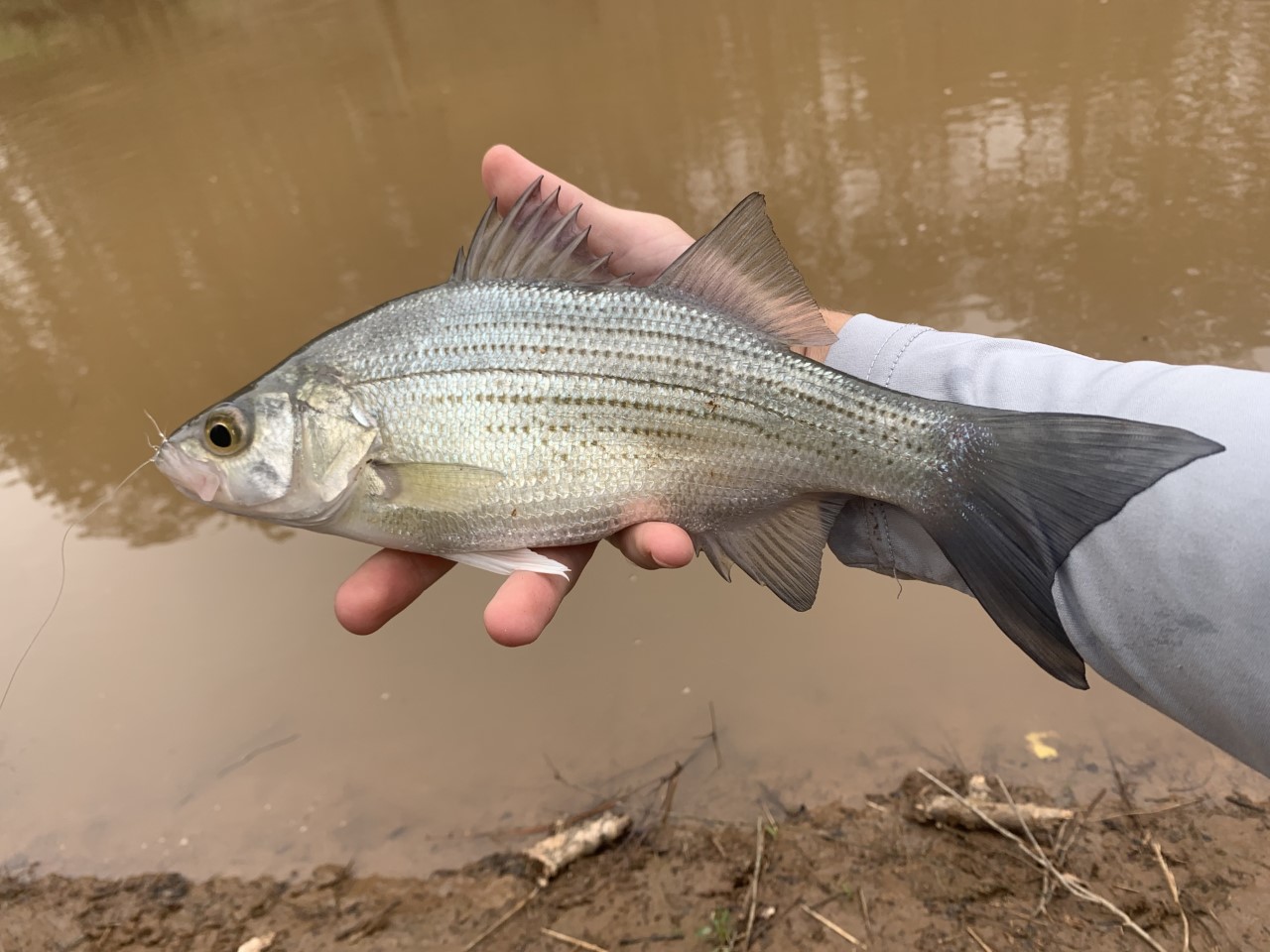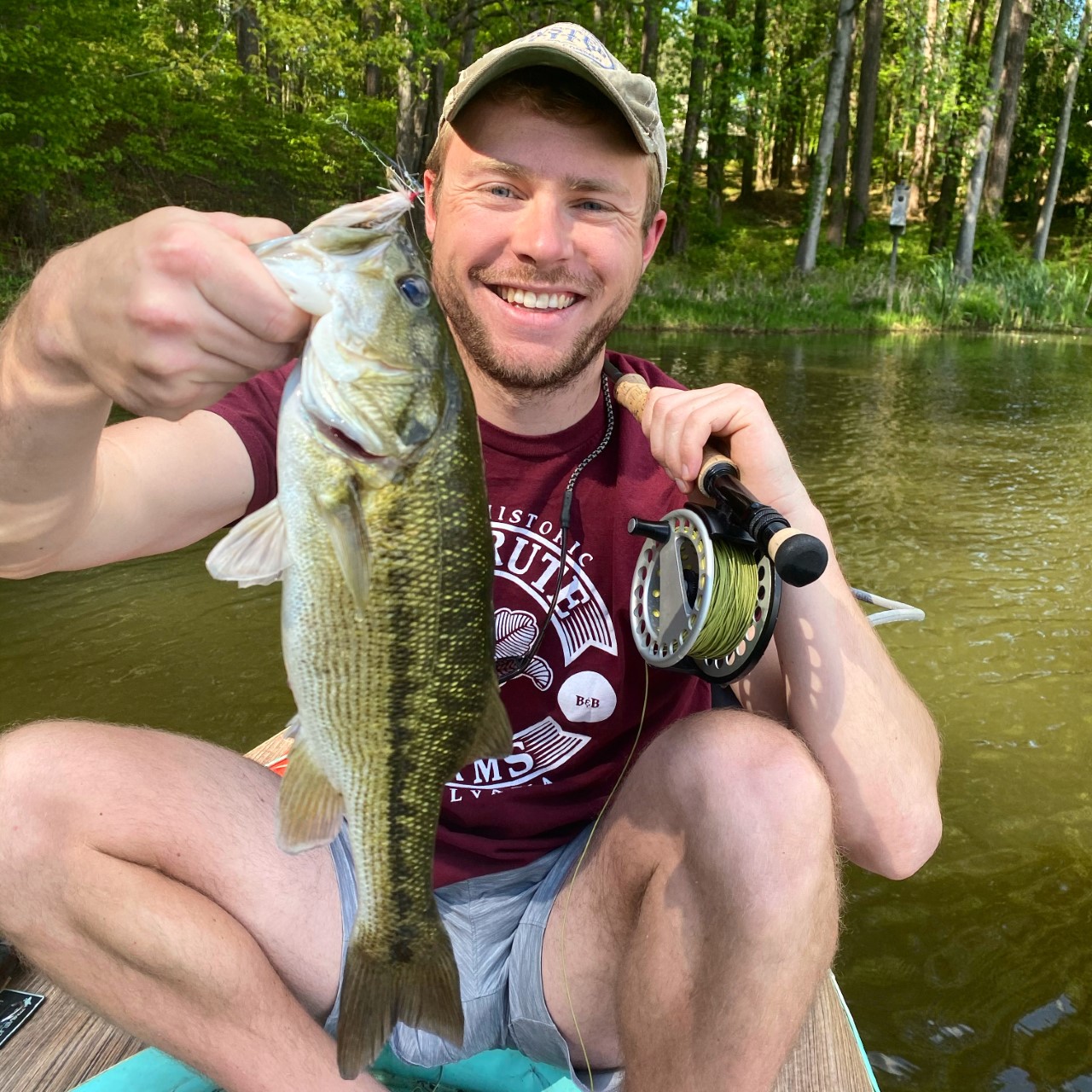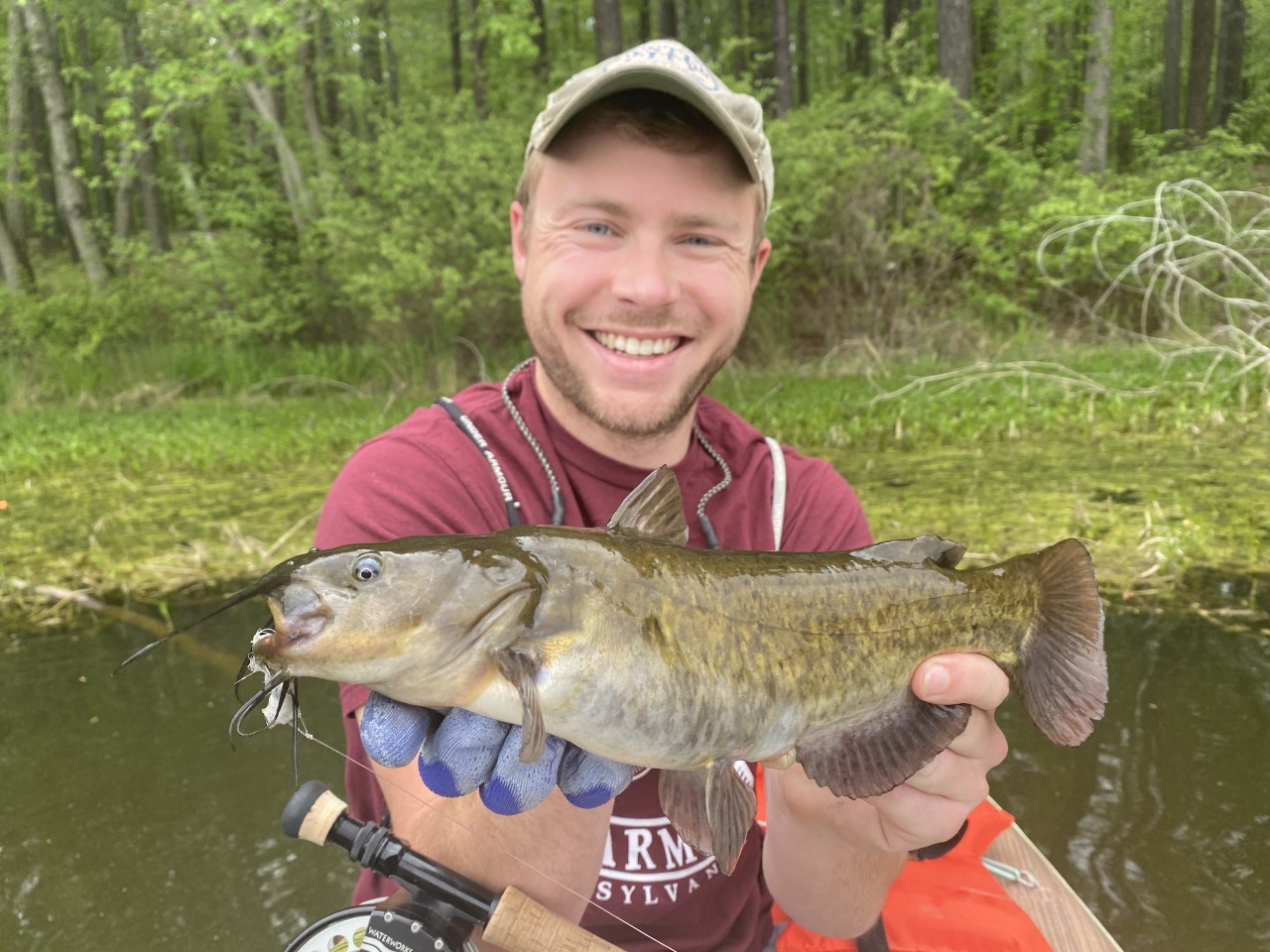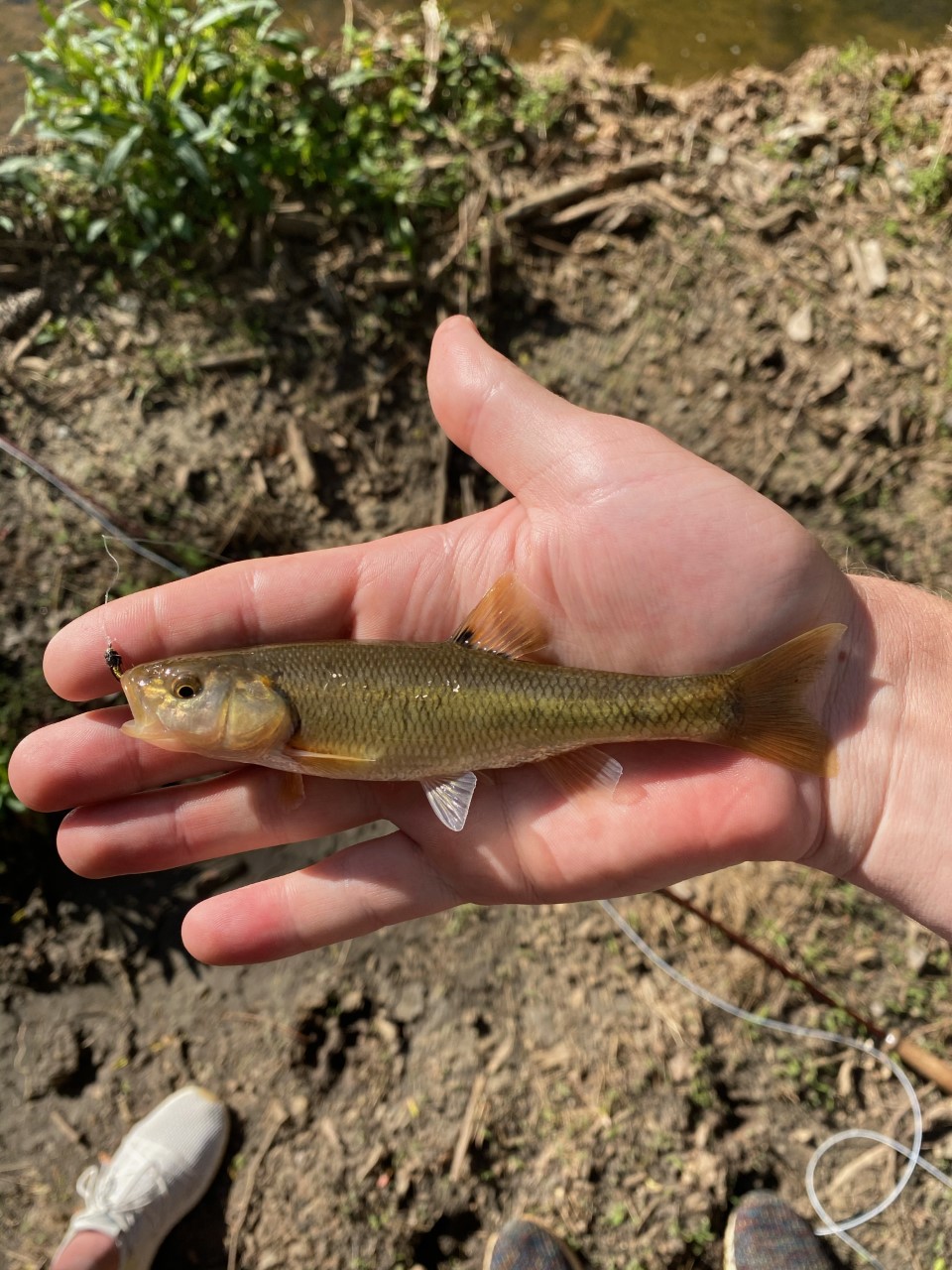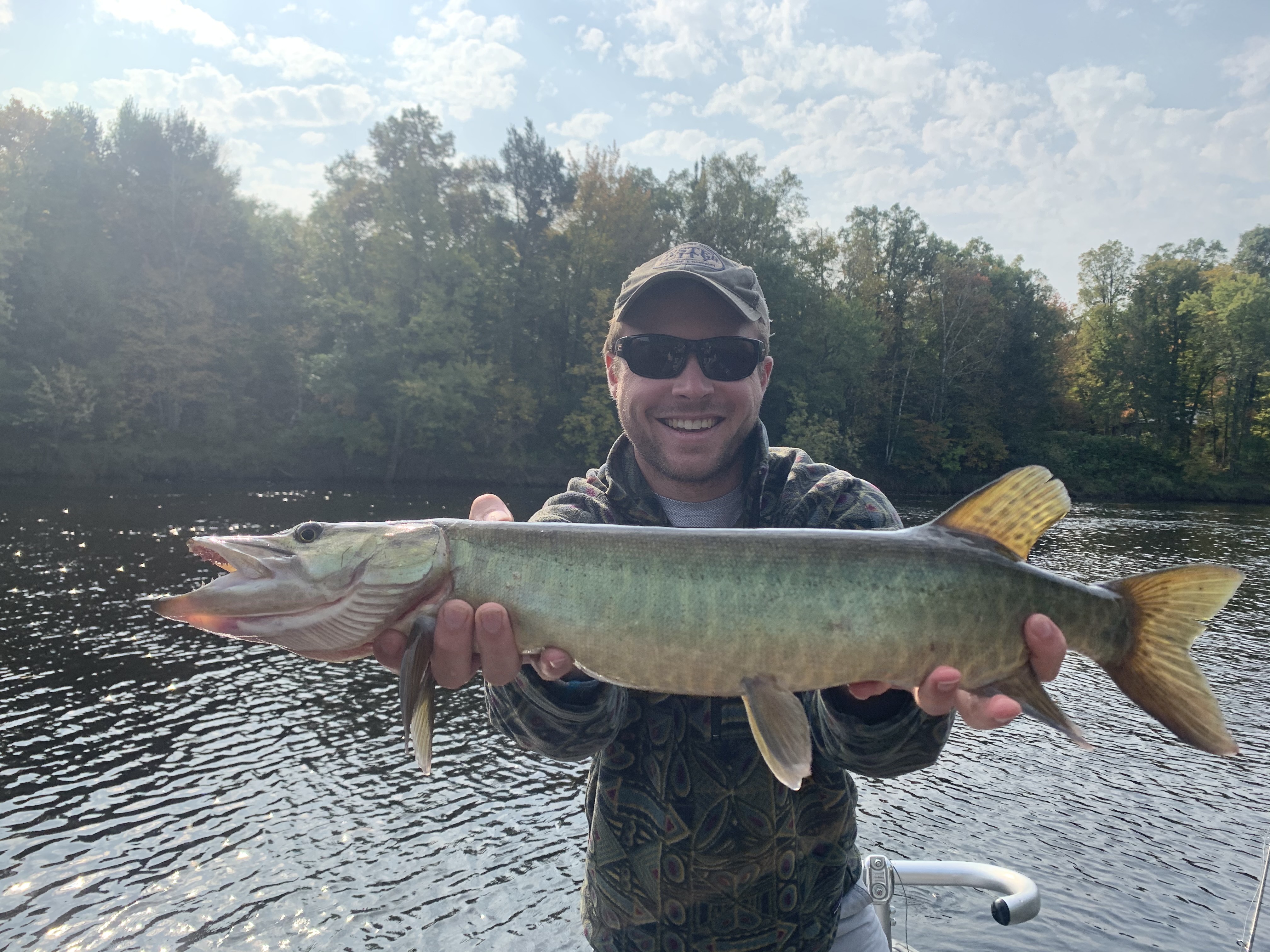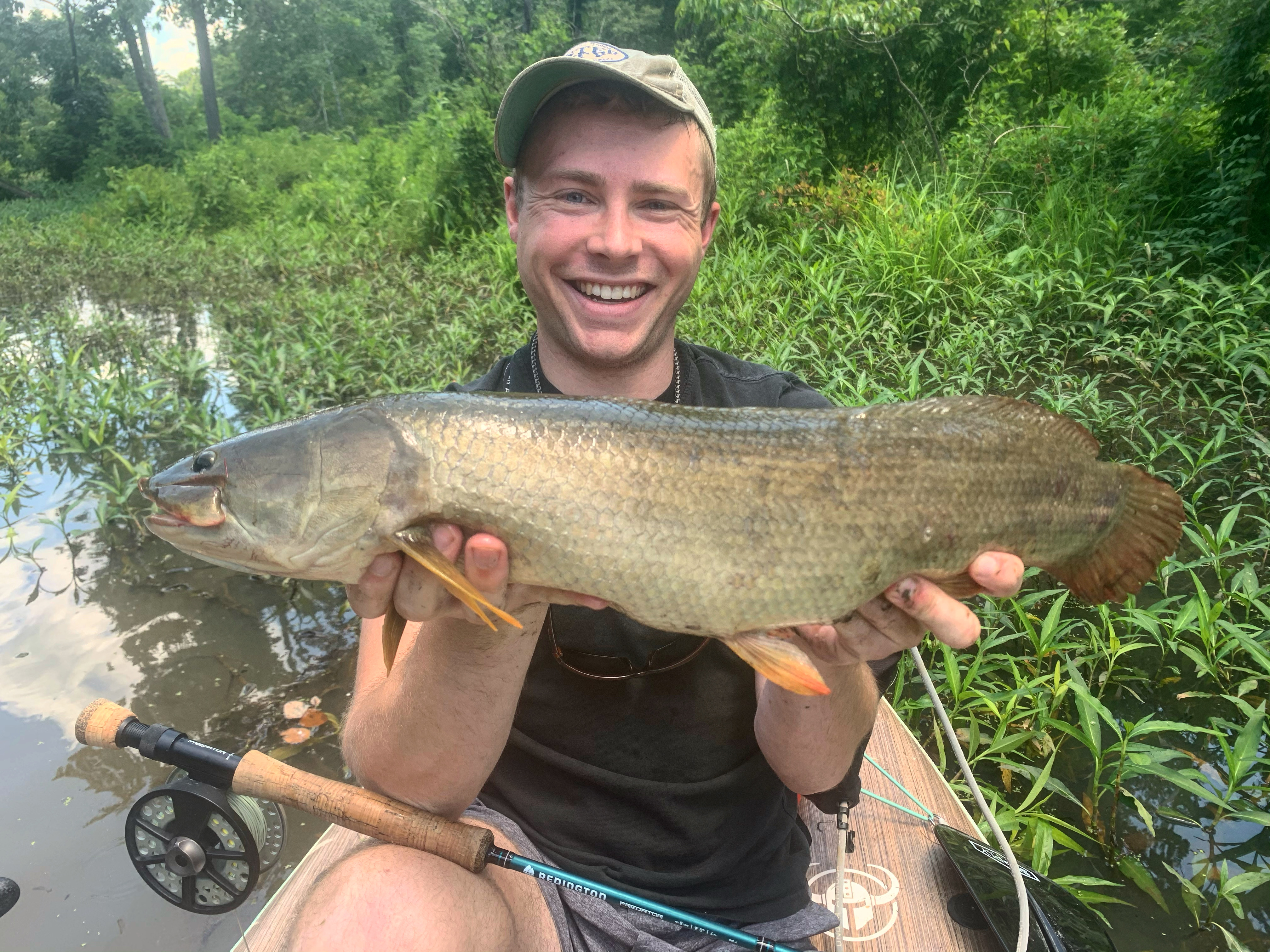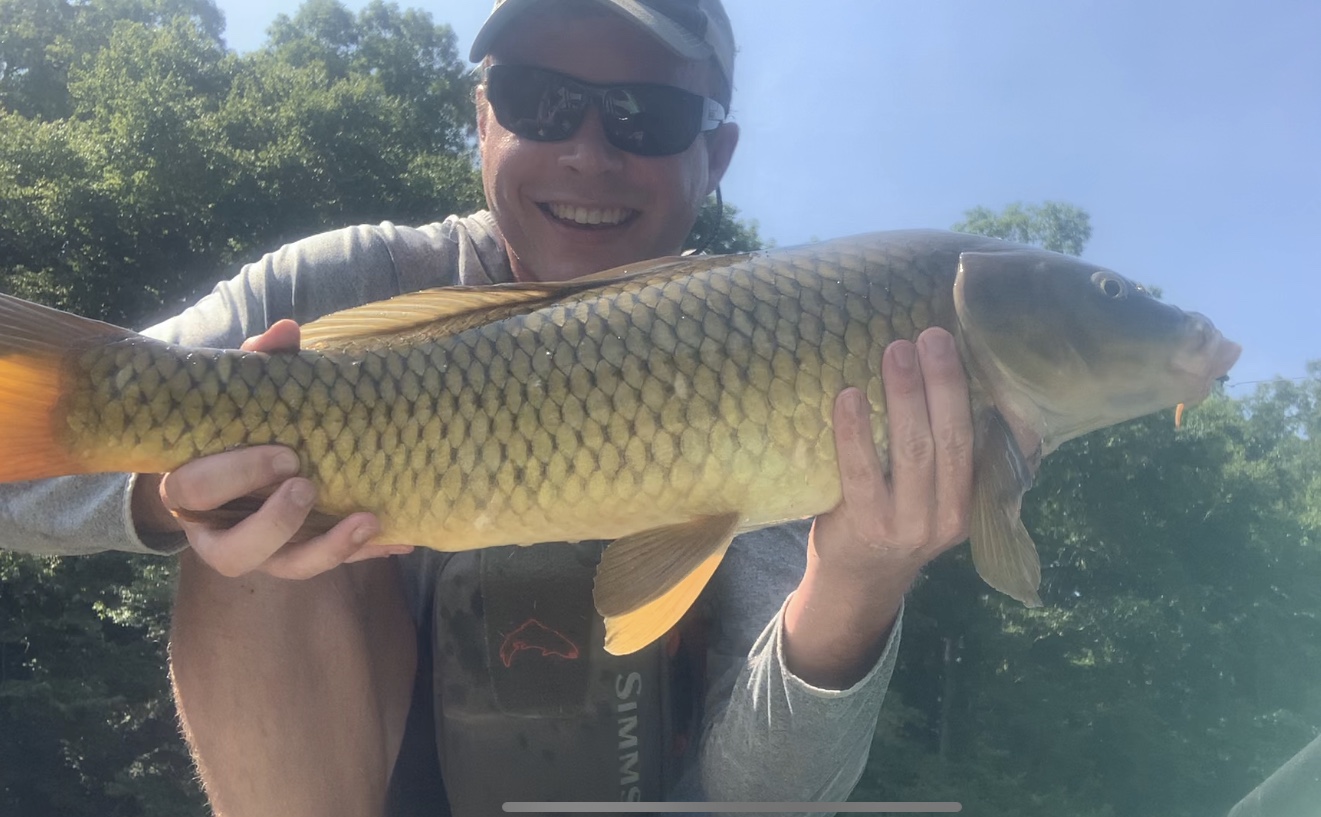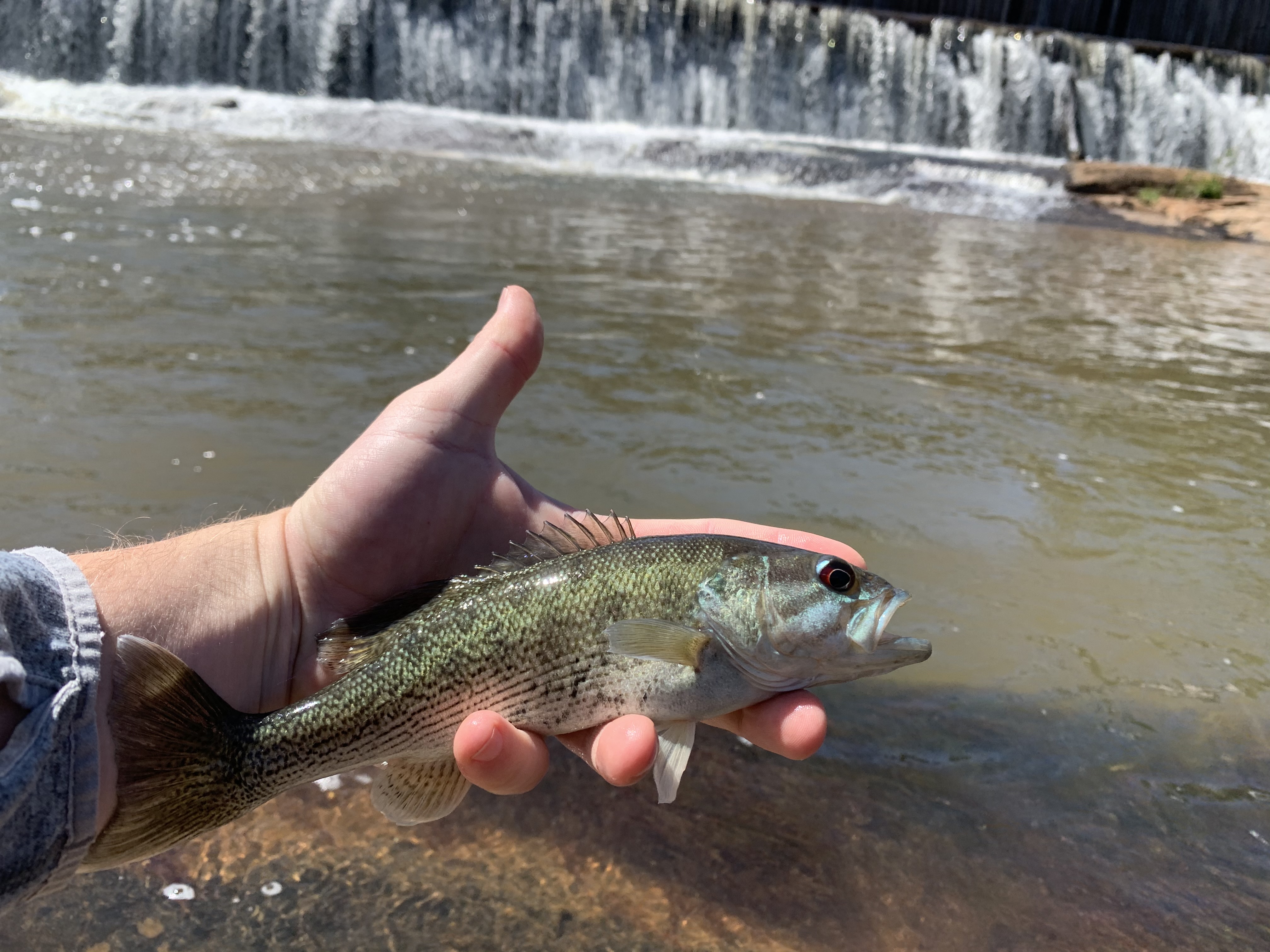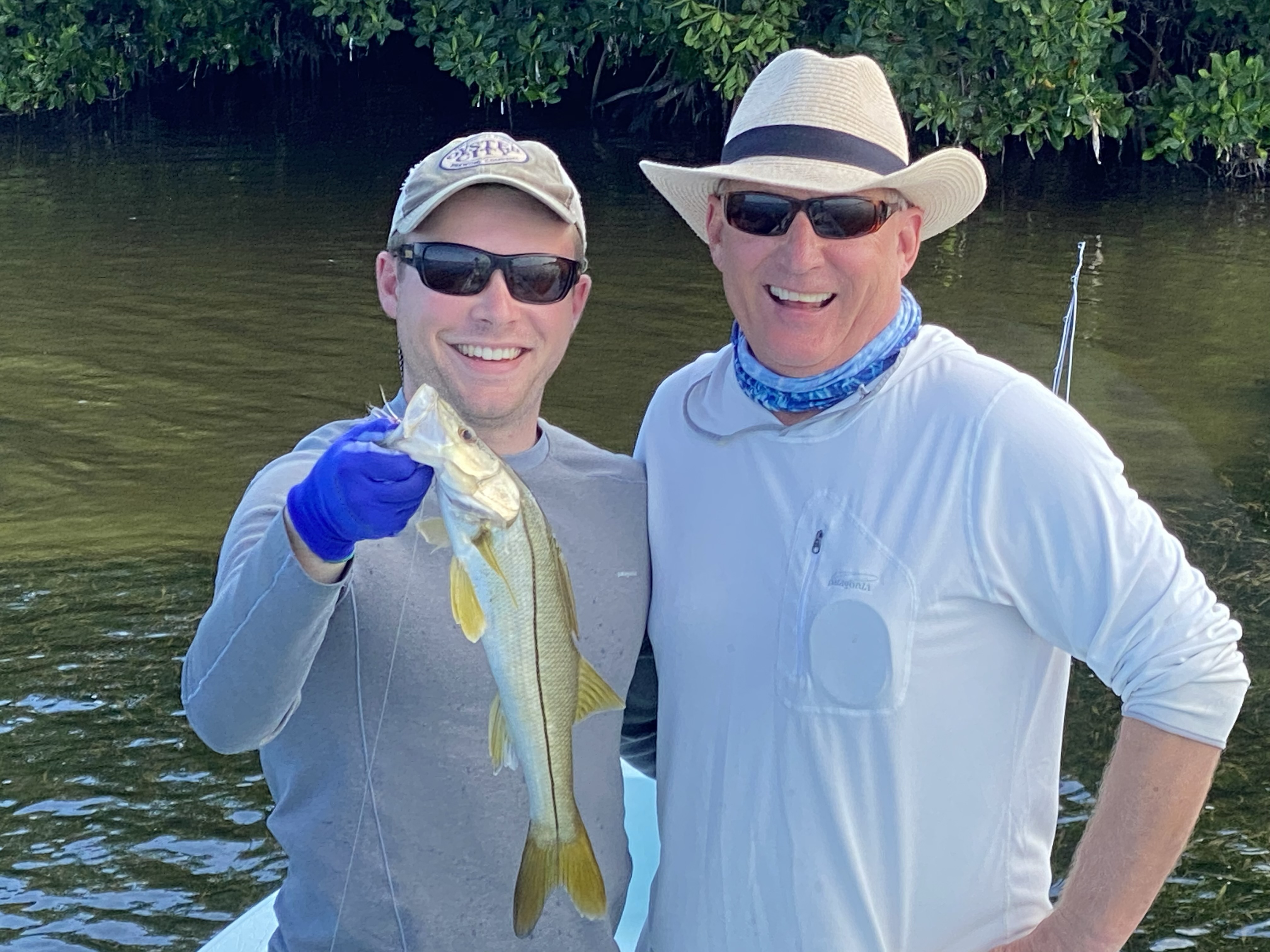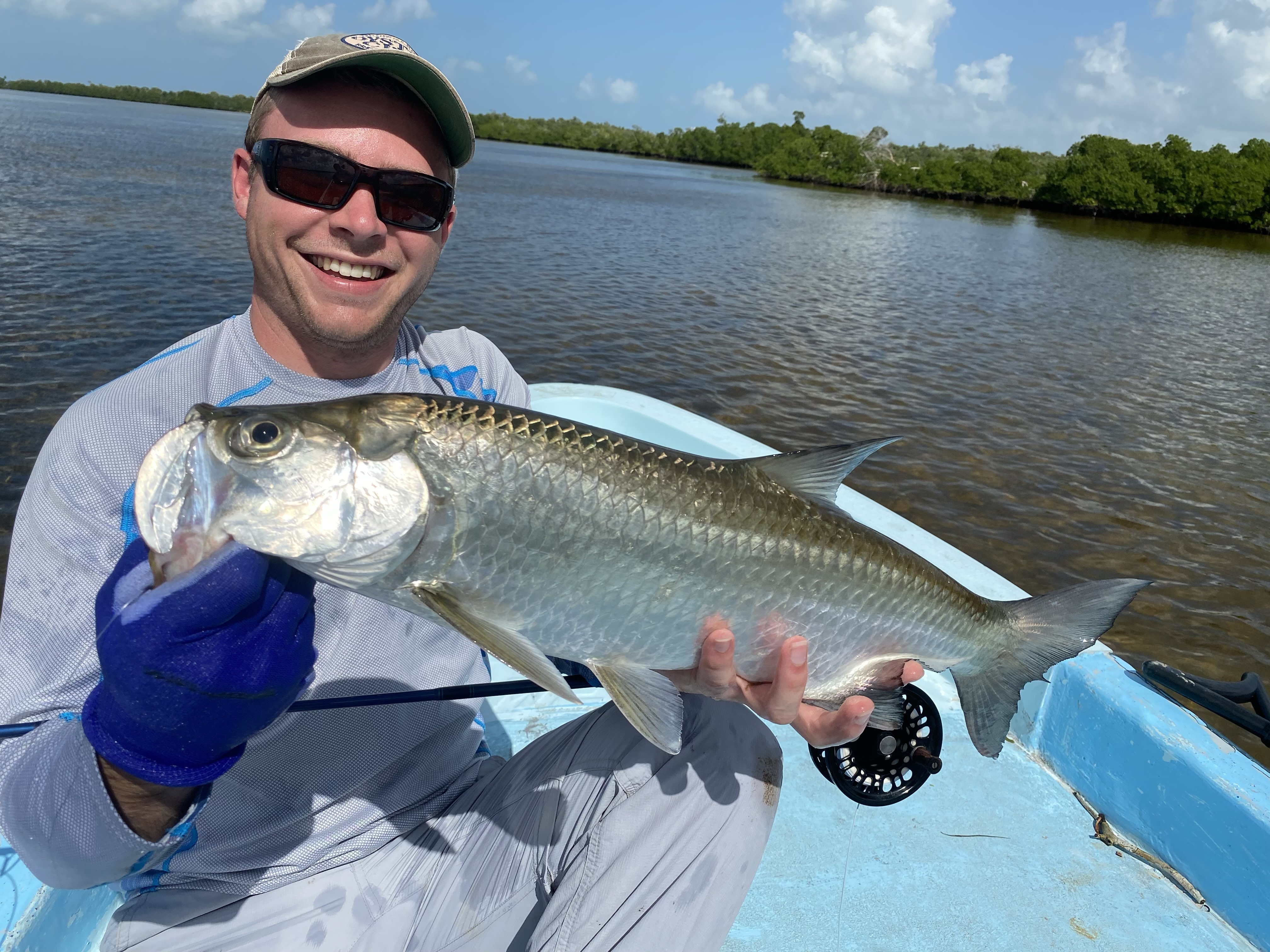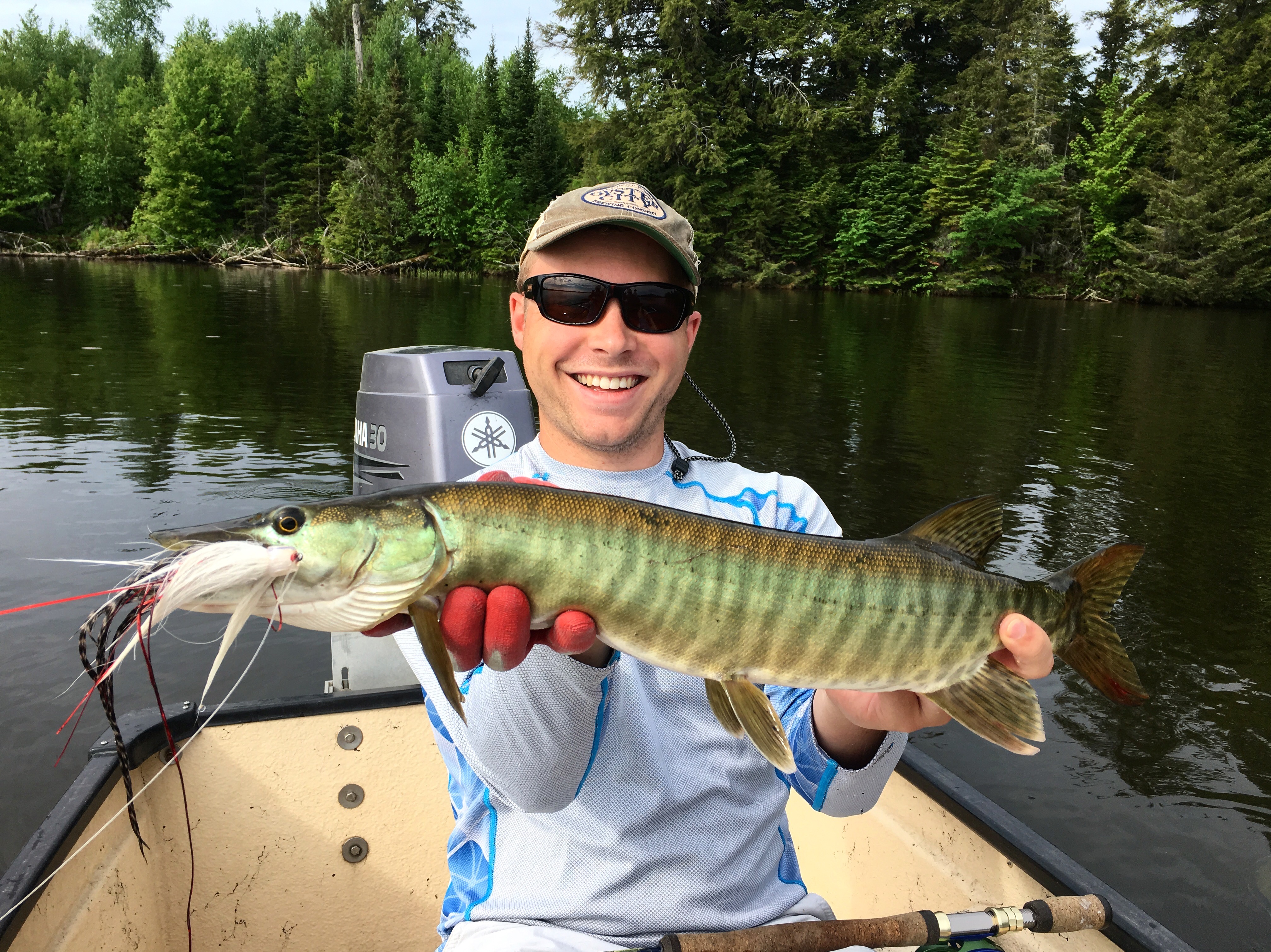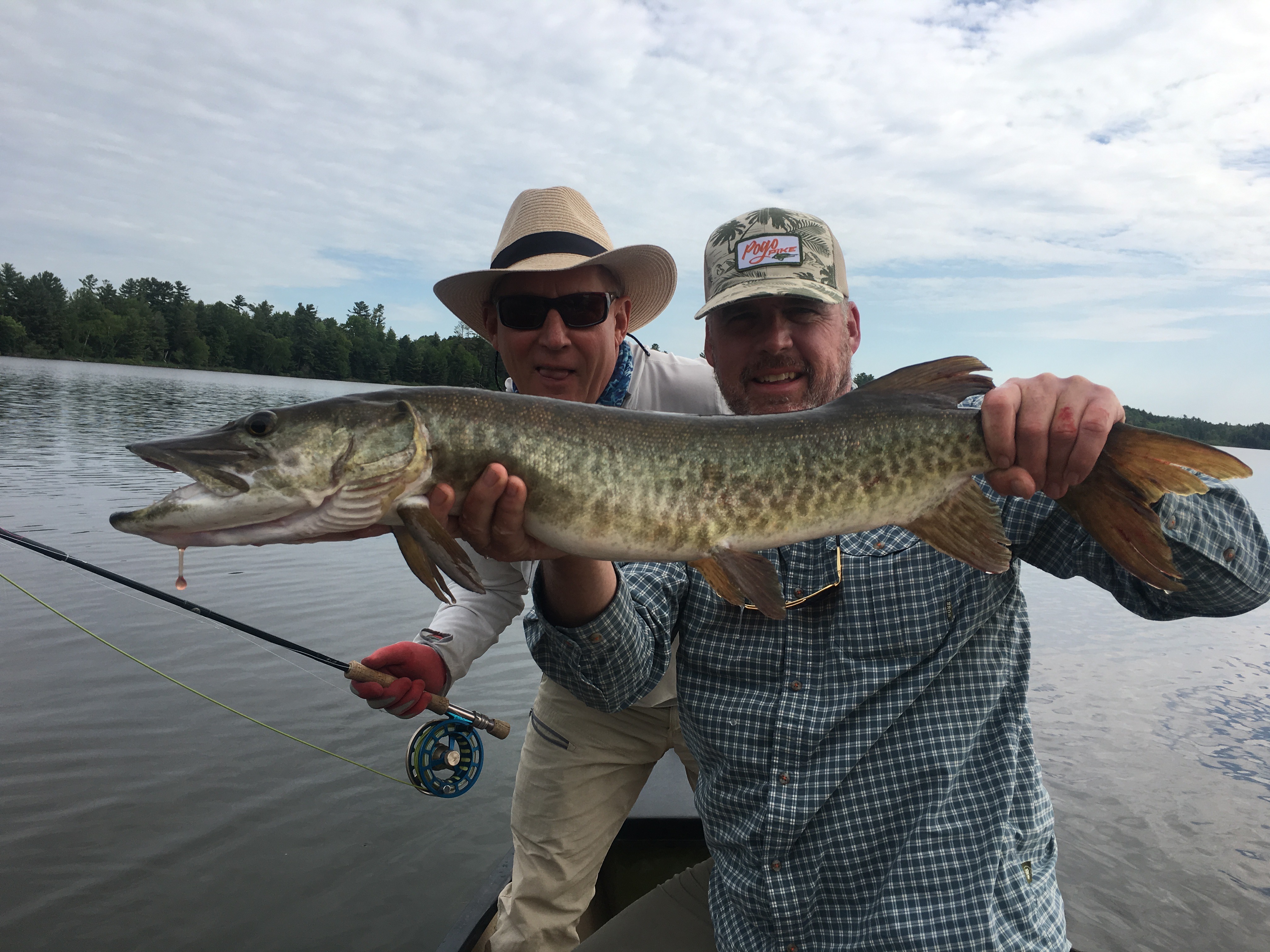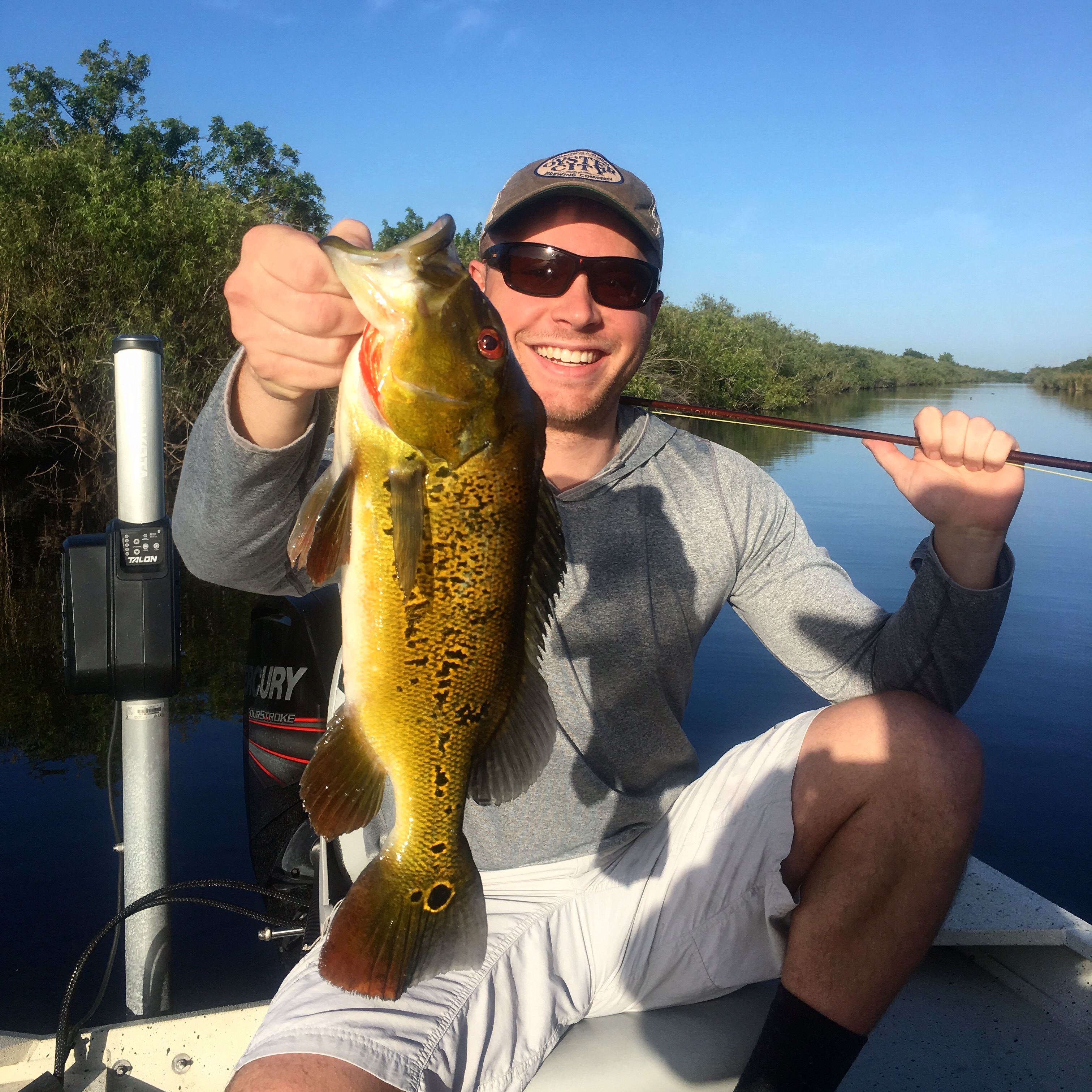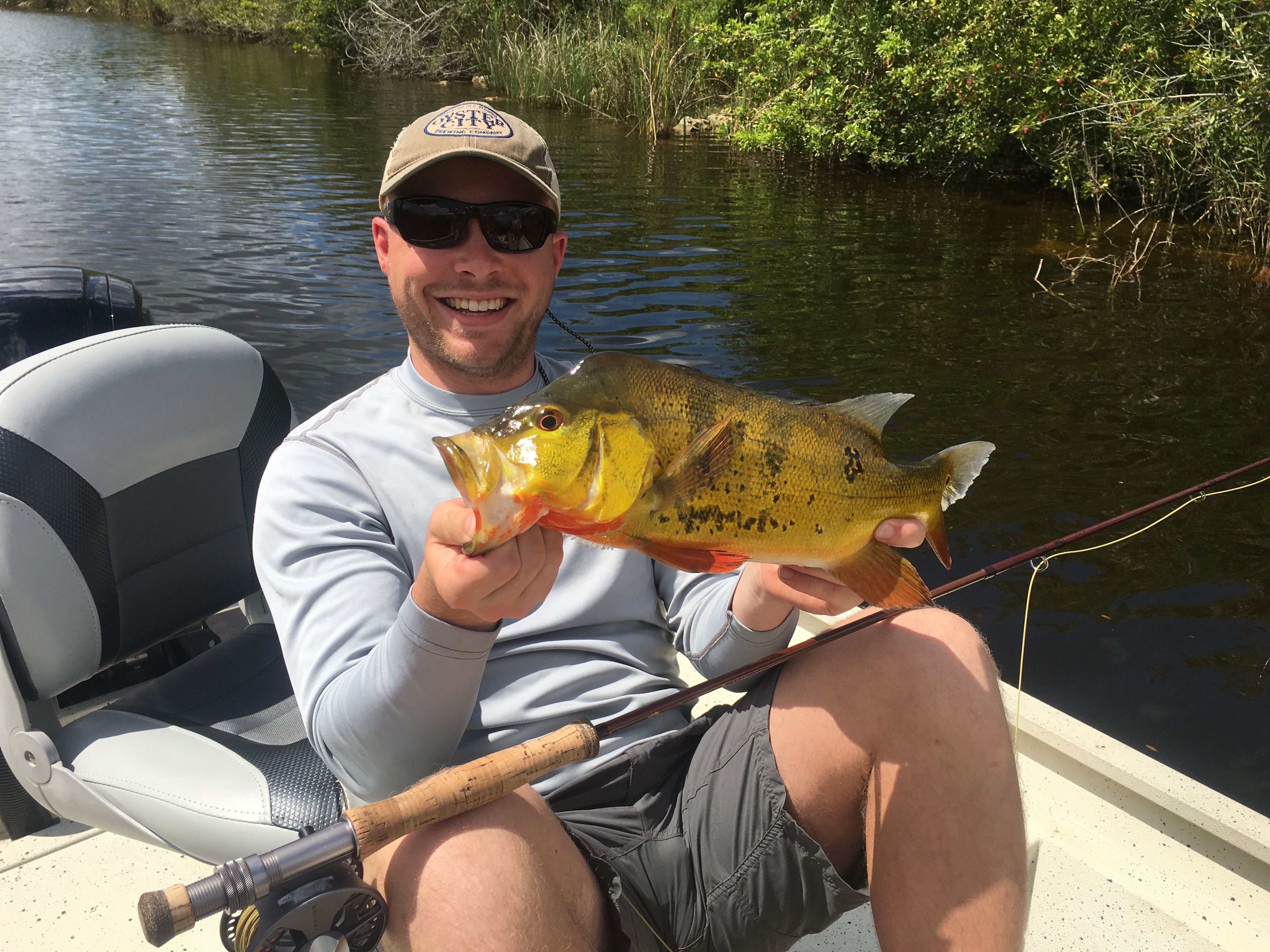
Every fly-fisherman has those bucket list locations and fish that they want to get their eyes on before it is all said and done in this life. Whether it is catching a GT in the Seychelles, Golden Dorado in Bolivia, or Roosterfish in Mexico (as you can tell, I have some big future hopes for trips), the new experiences keep the passion alive and going. However, not all of these new experiences require an overseas trip.
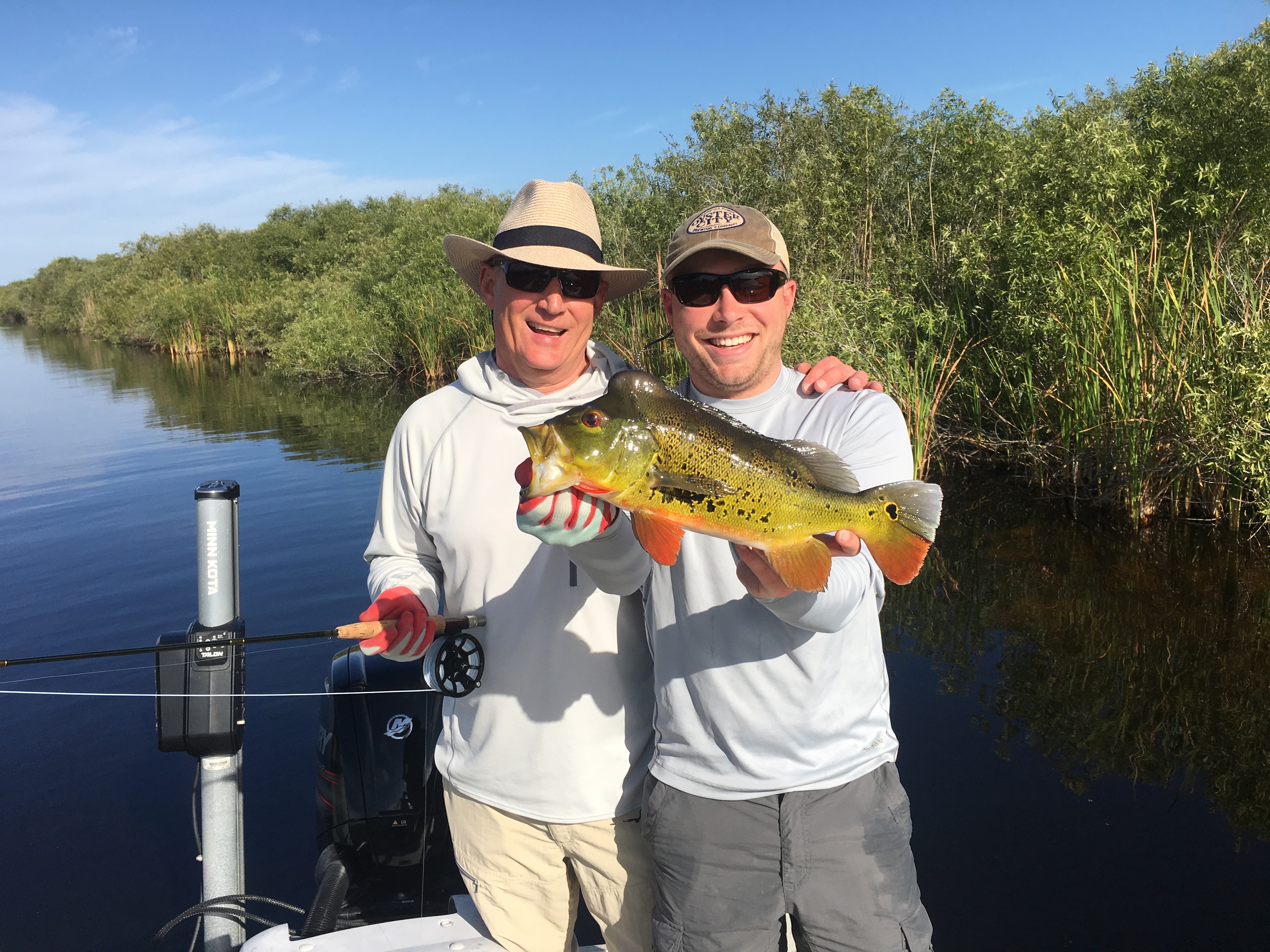
The one place I had been itching to get to in the good ol’ USA had been the Everglades. And let me tell you what, it blew away my expectations and I cannot wait to go back. With a long weekend in effect, the goal was peacock bass and other exotic species, and I’ll let the pictures speak for themselves.
We timed the trip PERFECTLY in that the peacock bass were just beginning to spawn, making them hot and aggressive! It was quite a sight to behold watching this fish post up on beds and attack a topwater or baitfish fly that landed within a foot of their home-stay. Another amazing thing was watching these fish come out of the depths to smash a fly, in that not all of the fish were in spawn mode yet. Not only was I able to catch my first peacock on a fly this trip, but these fish were of great quality. These things fight way harder than any largemouth I have ever caught, and are a truly a beautiful fish that has innovated freshwater fishing in south Florida. Way too many peacock pics to post, but below are some favorites.
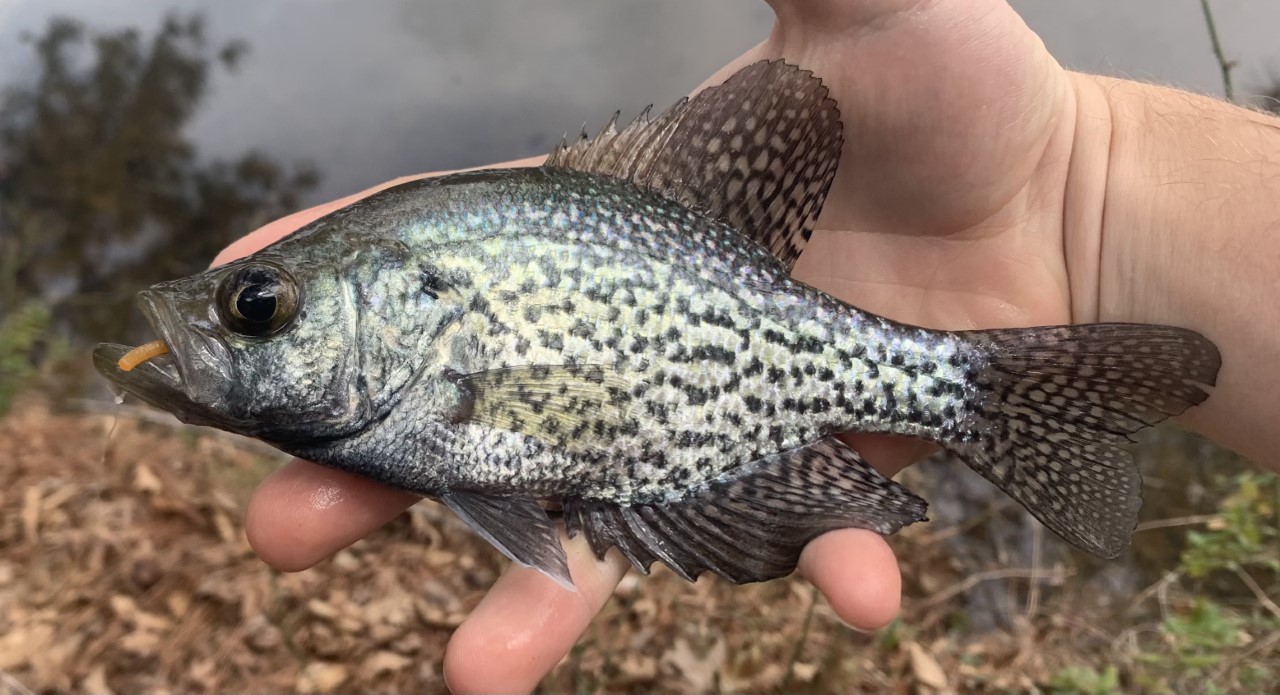
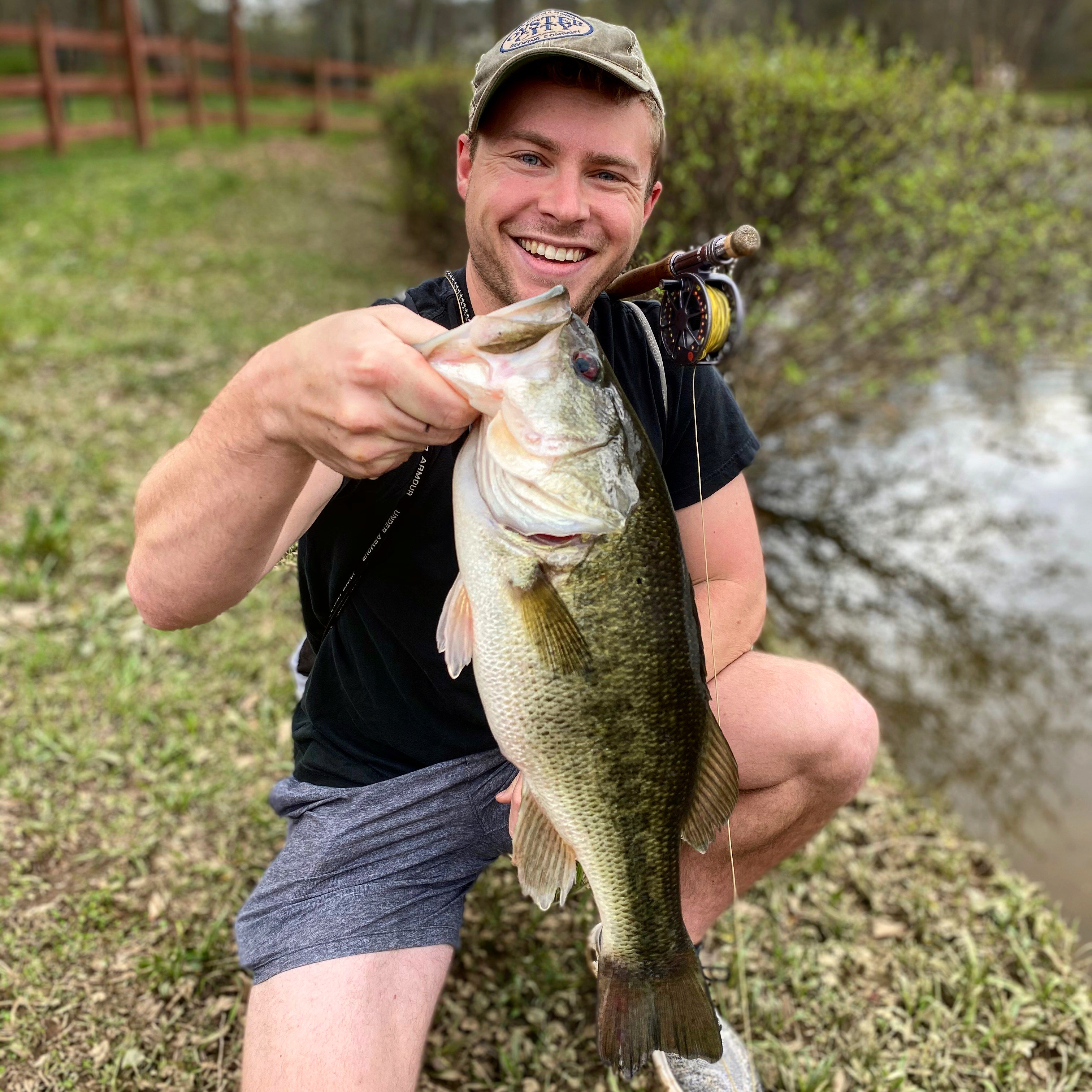
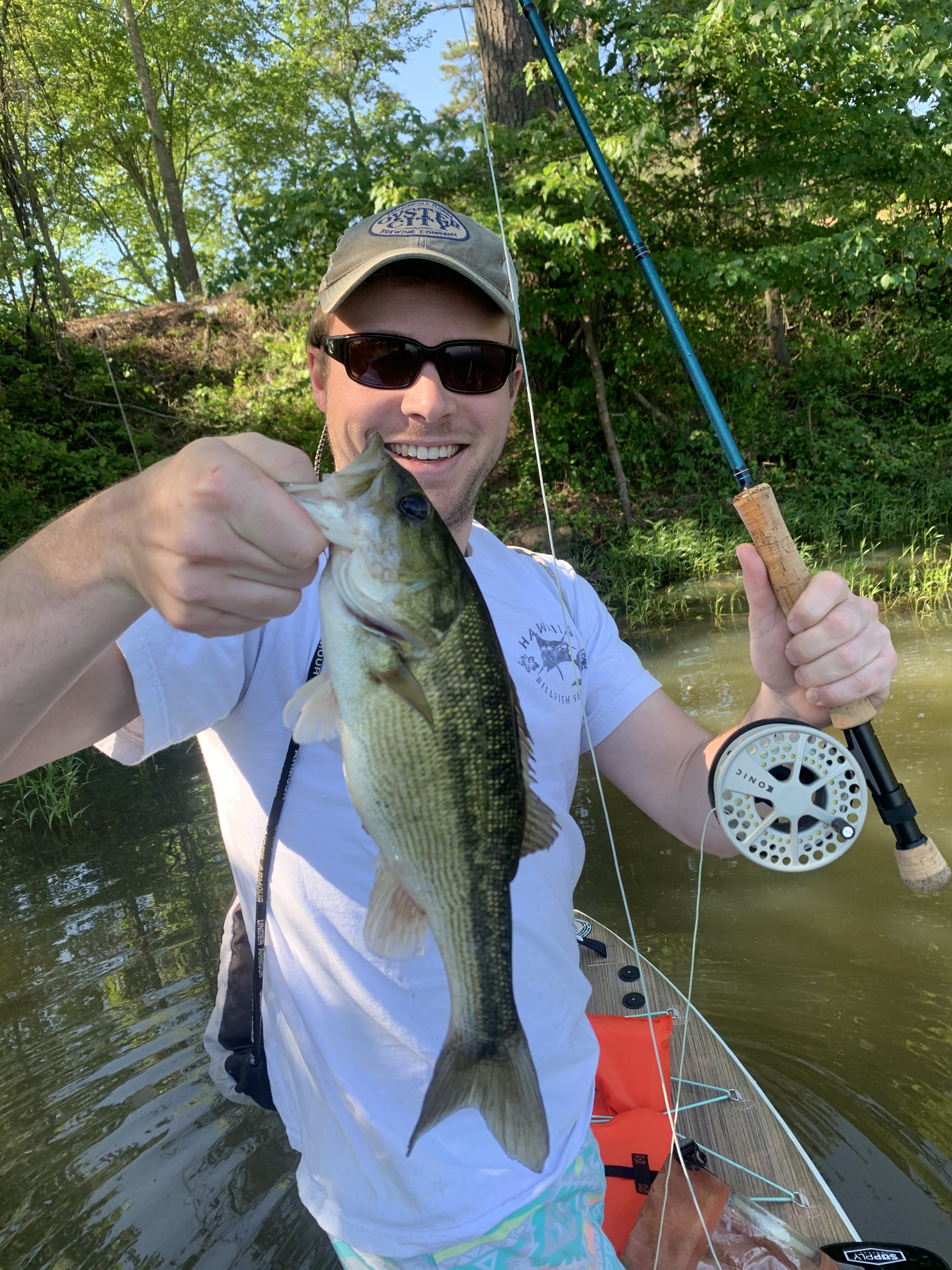
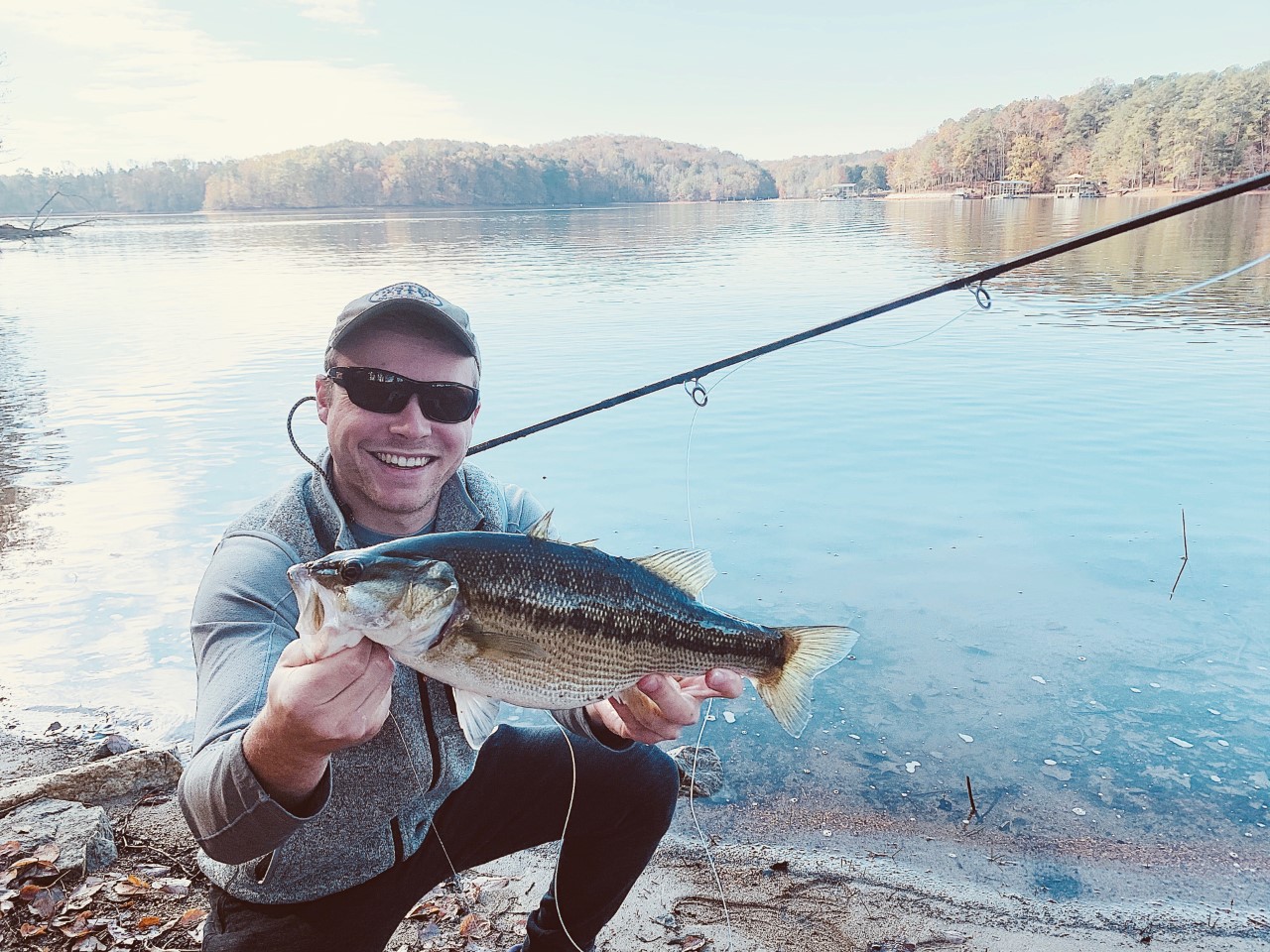
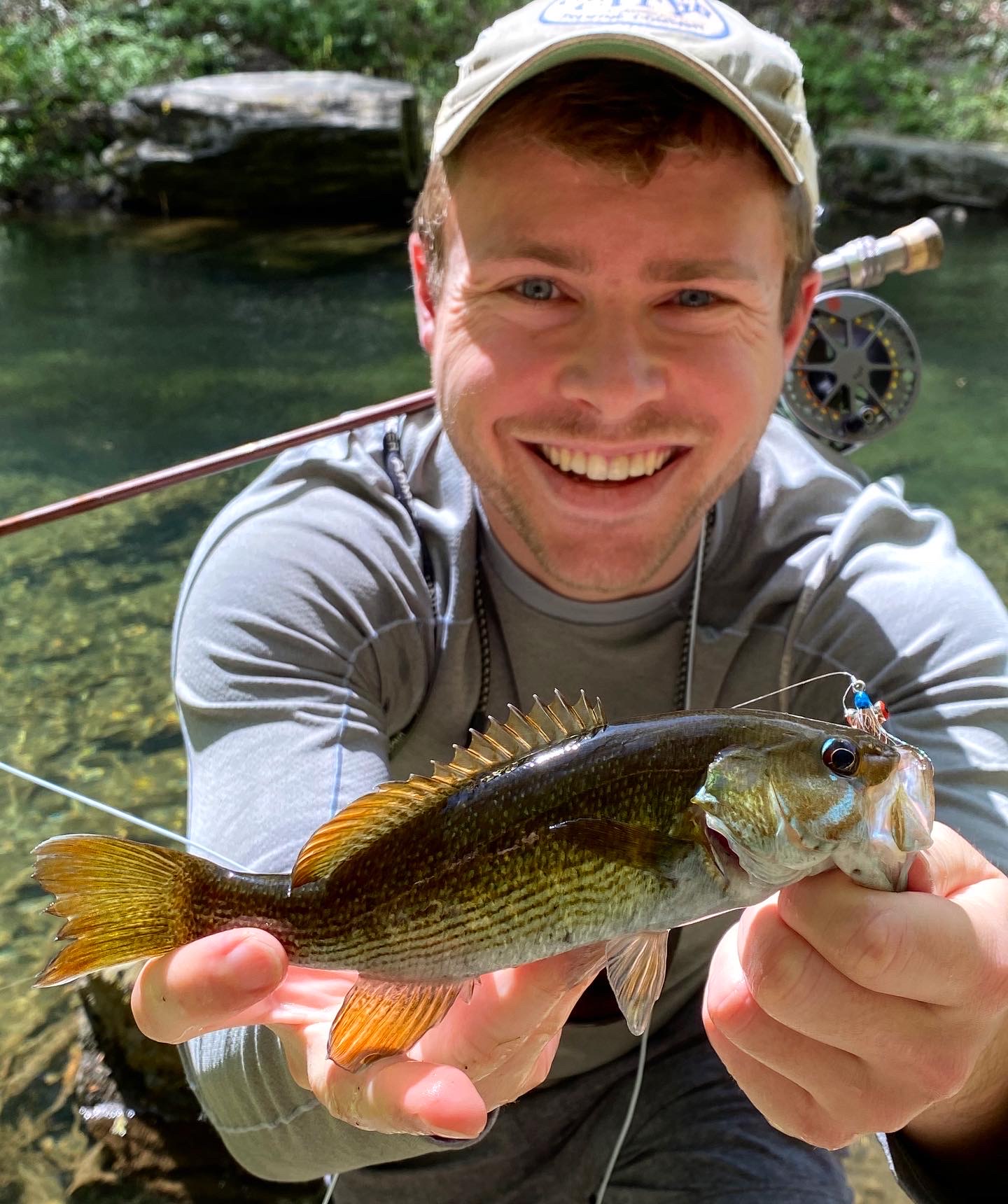
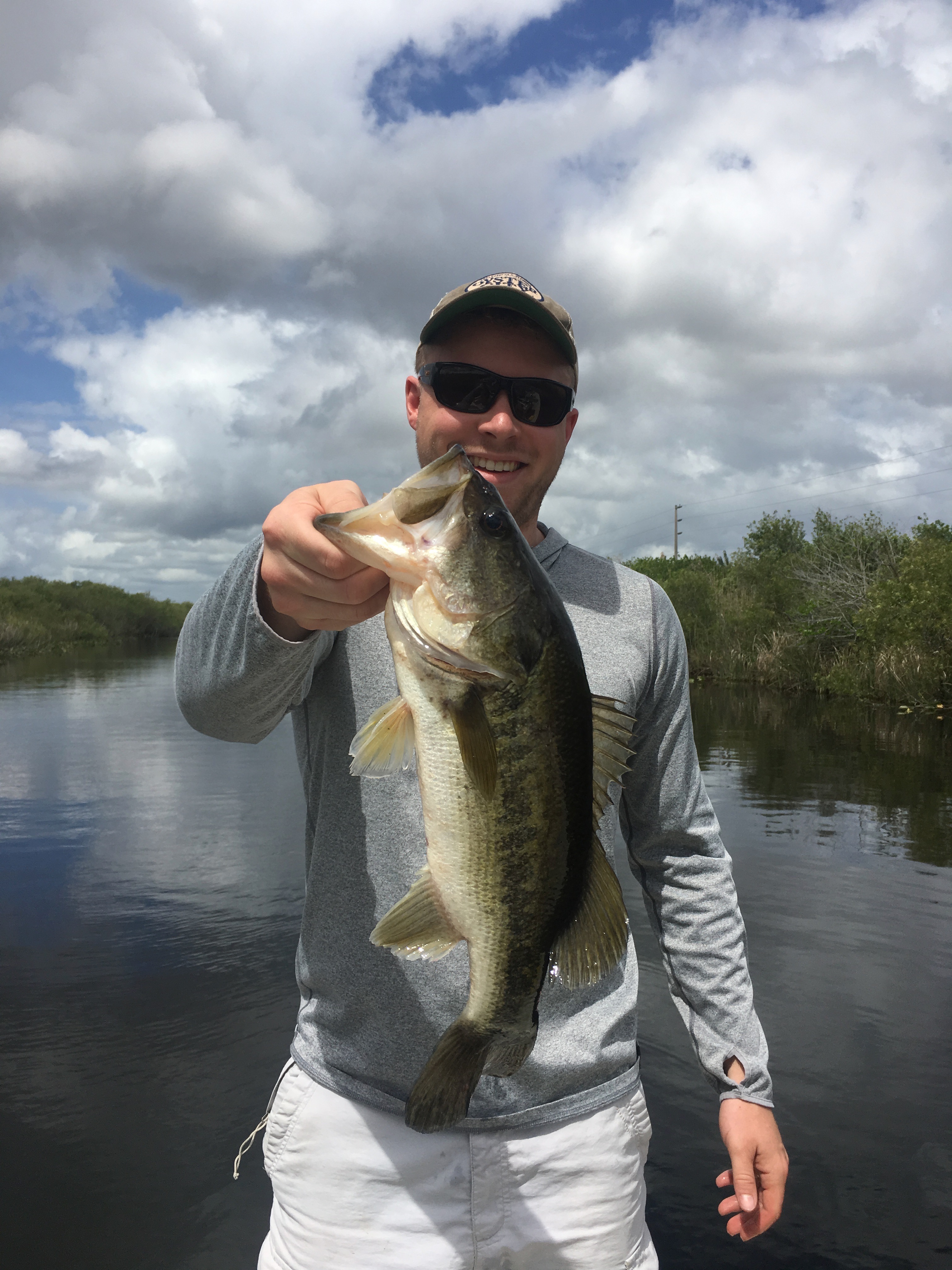
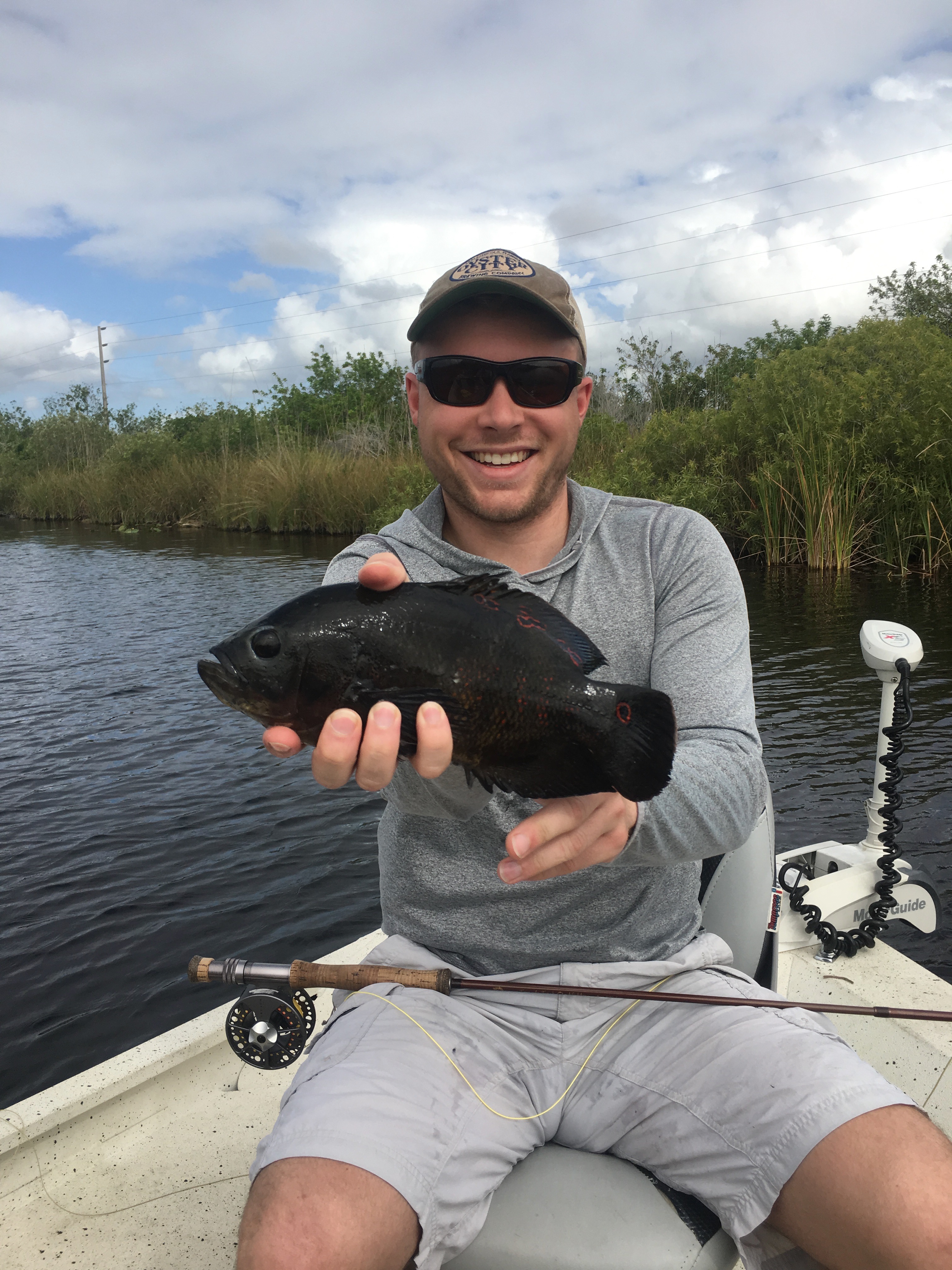
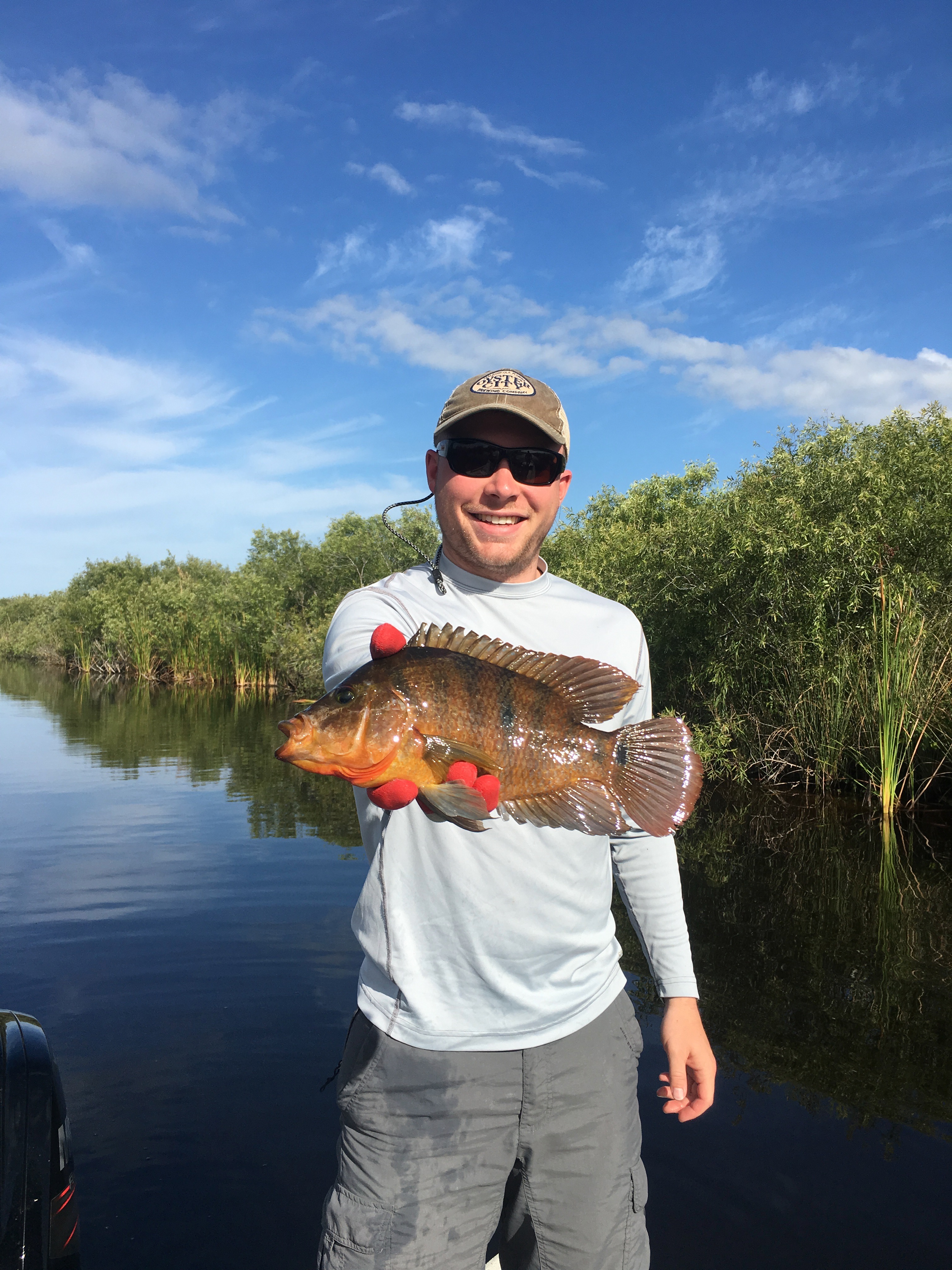
The most impressive part about the Everglades was hands down the amount of species. During this trip, we caught peacock bass, largemouth bass, warmouth, spotted sunfish, gar, oscars, and mayan cichlids. The largemouth fishing was exceptional, and wiggle minnows and topwater flies were hands down the most effective thrown right against the lily pads. In addition to this, if we wanted to catch cichlids and oscars all day, we easily could have. Many times while fishing for bass, these fish would come out of nowhere and steal the fly. At one point during the trip, we tried finding a fly that these fish wouldn’t eat, and to catch 100+ in a day on the 6-weight is something that any fly angler should enjoy. These fish are often overlooked because of their “invasive” label, but purists, relax and breathe the fresh air and give these fish a shot. Truthfully, if I lived here, I would love to catch these for a hour or two a night after work.
Joe Petrow
Needless to say, I’m planning another Everglades trip for next spring. Next time, would love to try and catch a clown knife-fish, bowfin, or snakehead in addition to all of these species. The Everglades is a special place, and you never know what you might find in these Jurassic Park type waters.
Oh the winter time. In terms of fly fishing options, this season can keep anglers somewhat limited. Although the winter will require gloves, mad-bomber hats, and hopefully a nice hot toddy once you get off the water, this time of year can lead to some giants. Historically I have found that although the numbers of fish in the winter might not be as much in other seasons, this can be the best time of year to chase giants.
So this last winter, we headed back down to Louisiana to try and get on some beasts. With only a couple days to fish, this post is not going to be as long, but we made it happen.
To be transparent, the fishing was more difficult than it usually is down in LA. A massive cold front kept the fish in a funky mood, and many fish were extremely sensitive to boat movement. In LA, where the water is going to be dirty year round, many of the shots you get can be 10-15 feet from the boat. Needless to say, for this trip, we had to find our fish far out and make the shots count. In addition to this, the usual colors of black/purple/gold were all struggling, and we found ourselves having to resort to natural patterns (that made it even tougher for fish to see in the dirty water).
Joe PetrowJoe Petrow
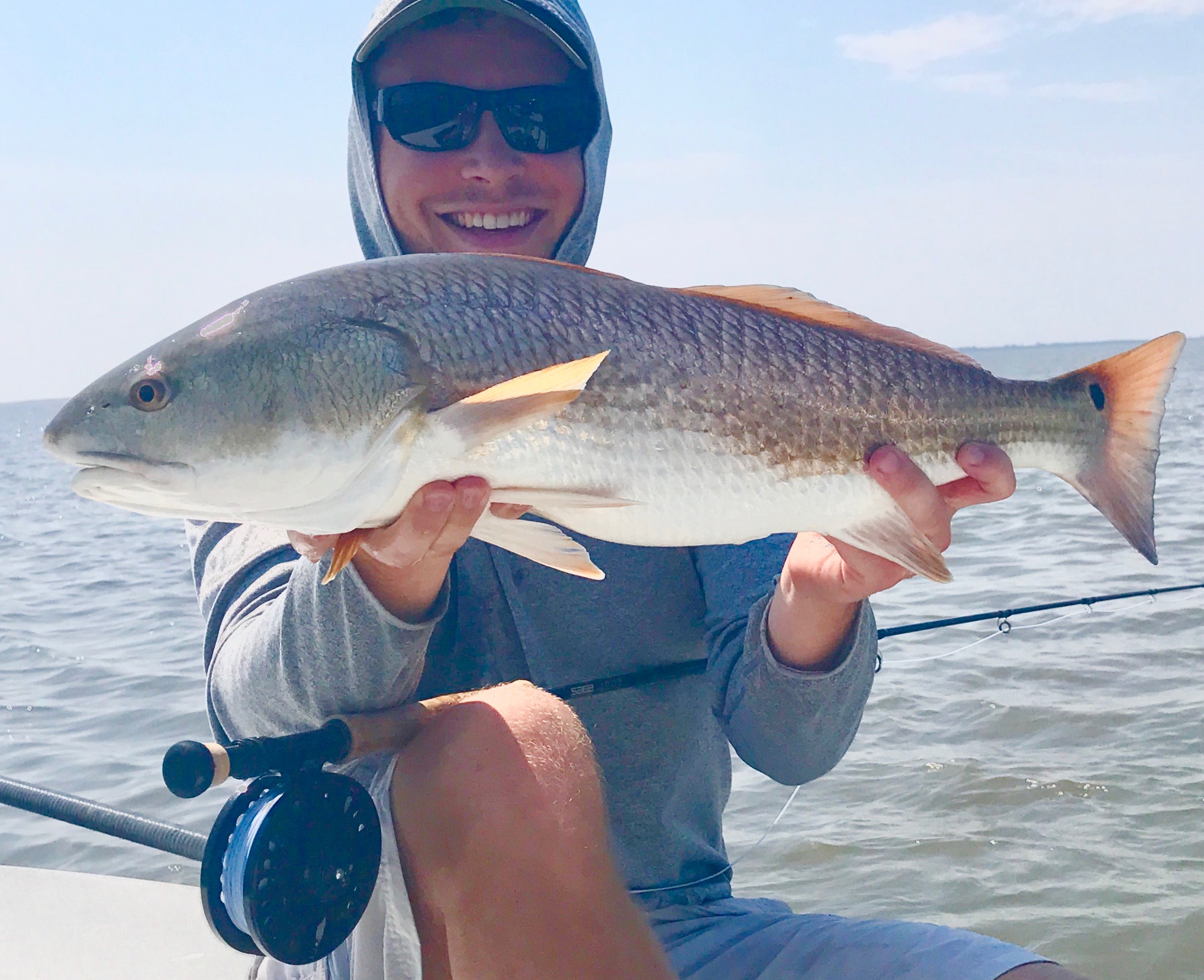
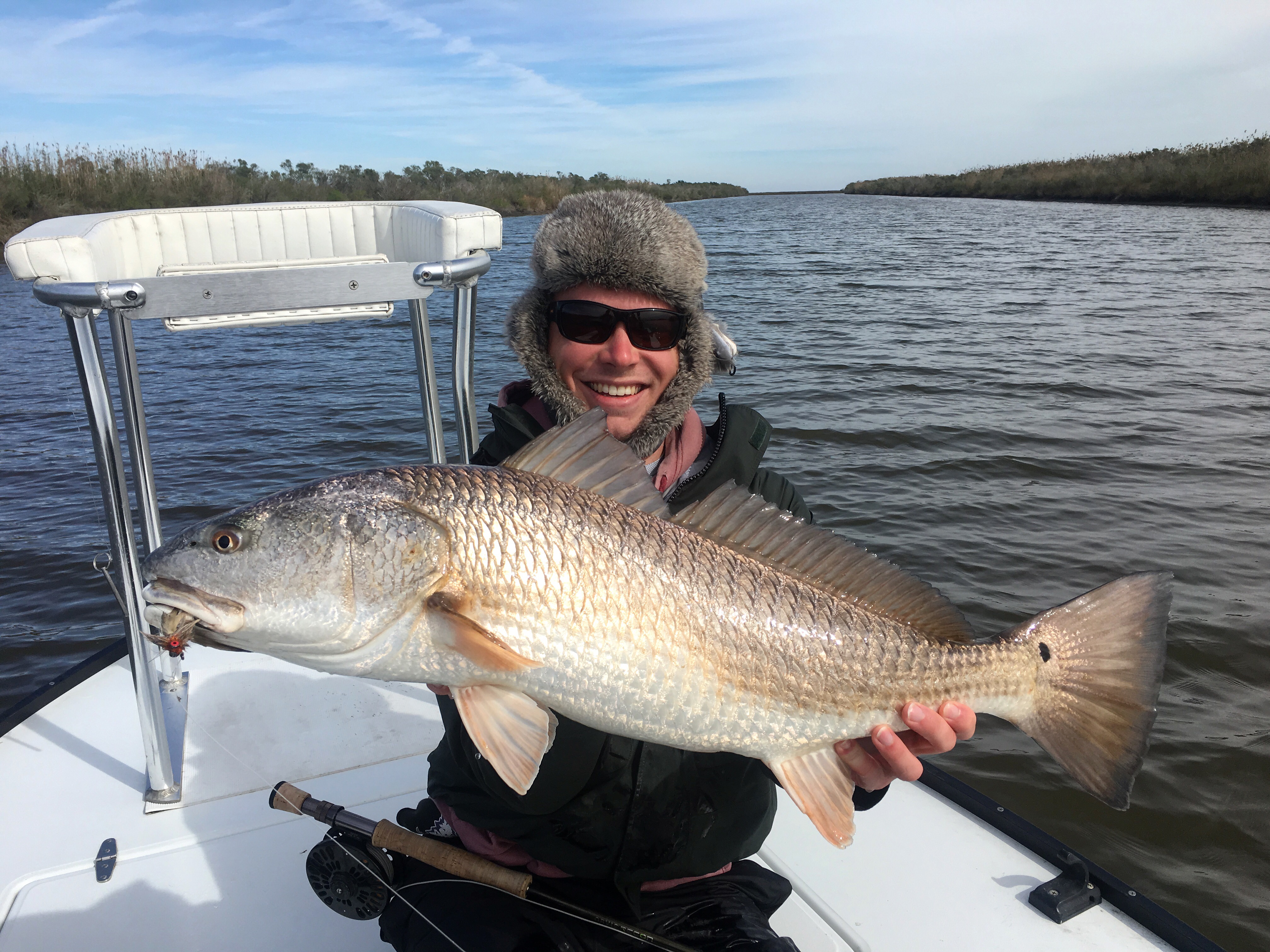
Needless to say, we still managed to get it done. We managed to get a few really nice reds in the boat, and the highlight of the trip came from the largest black drum I have ever caught on fly. The fish weighed 48-pounds and was an absolute brute. Unlike any other black drum I have caught, this fish fell victim to a chartreuse and tan redfish slider that was presented right on the nose. Usually these fish like bold, dark colors that they can go find.
Joe PetrowJoe Petrow
Another trip to LA in the book, and another great father-son fishing trip. Like I said, with just a couple days to fish, this post is definitely a bit shorter, but good to get back on the blog grind again. Thinking next time we head down when it is a bit warmer to avoid some of the cold!
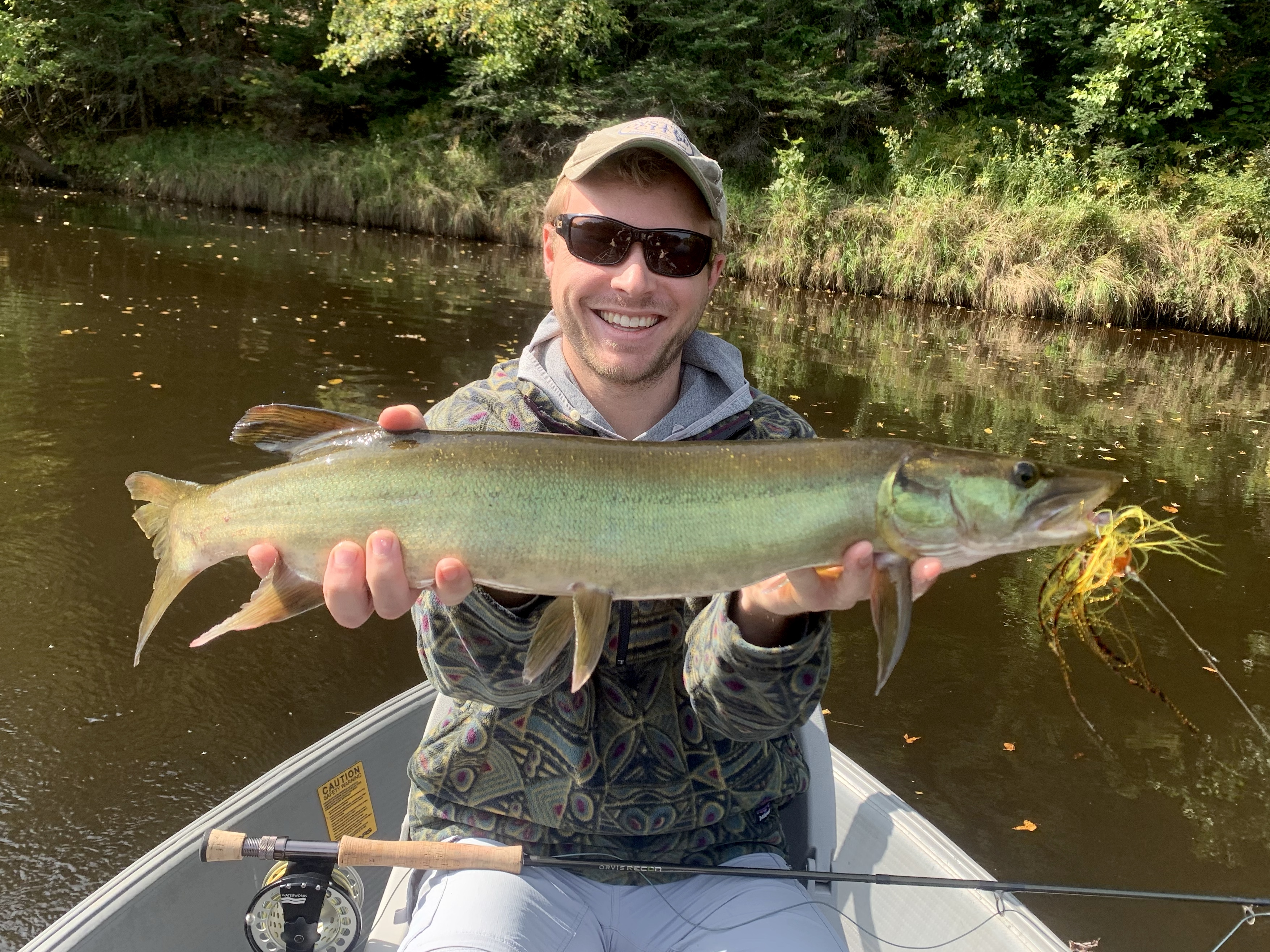
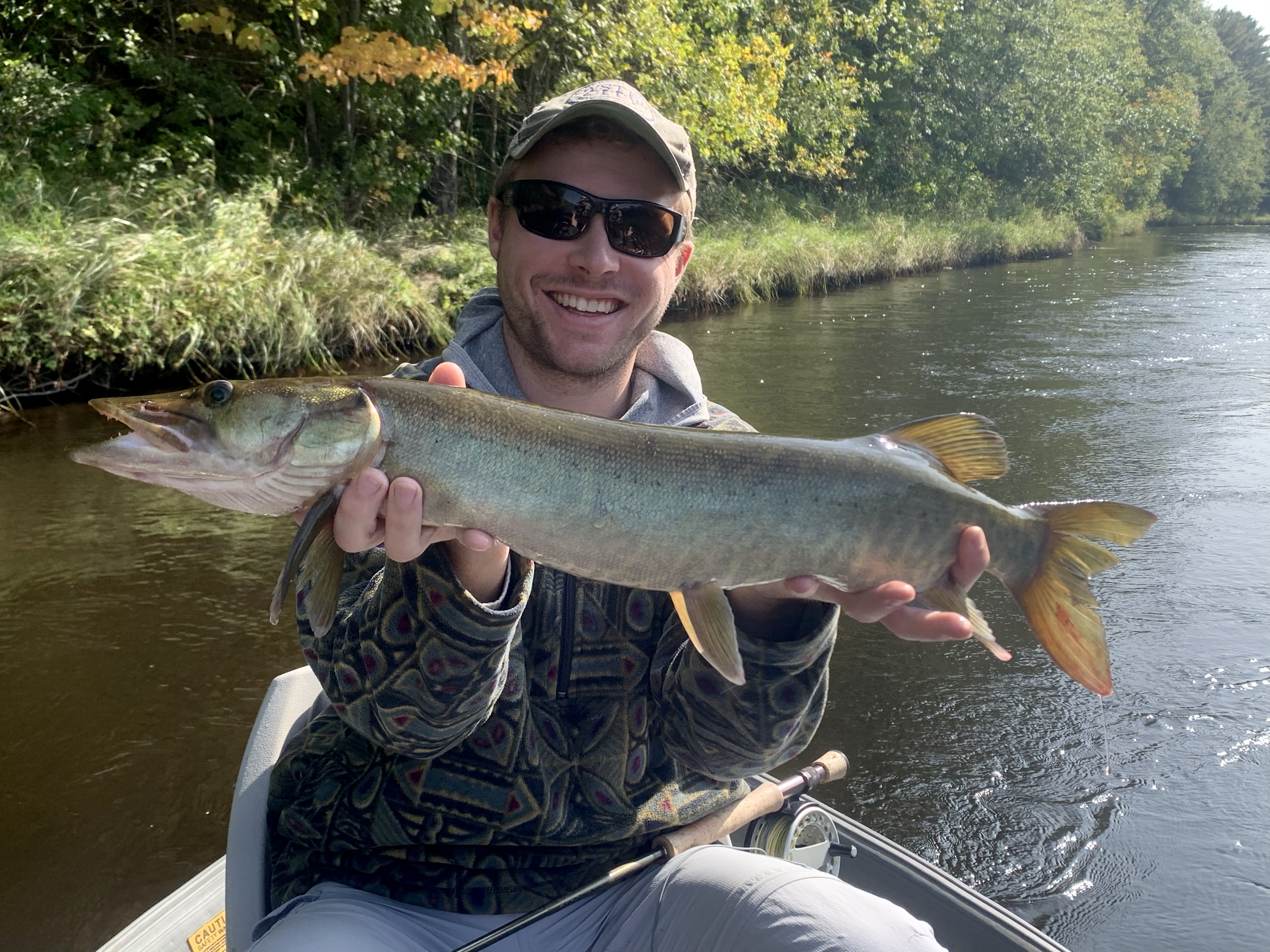
As I continue to fly fish, I am finding that there are certain species that are becoming more influential and special to my heart. Although in my book every fish is a good fish, certain ones get my blood pumping like no else. As many of you may already know, many of the saltwater species do this to me : tarpon, redfish, permit. However, the good ol’ muskellunge (Mr. Muskie) is a fish that I will continue to love throughout my entire life. This year, my Dad and I headed back up to the Northwoods to go on a search for muskie, as well as fish topwater frog flies for smallmouth bass. Deciding to go in the summer, we knew that the fishing would be more challenging than usual, but as we have learned with muskie, showing up and giving it a go is 90% of the battle. As we would find out, every cast was going to matter this week, and we better be ready to go come the fourth quarter.
The first day of fishing was beautiful, perfect weather, sun out, no wind. Within 30 minutes of fishing in one of our favorite river systems, we had one eat, and life looked good. But with that being said, that would be our only eat for the day. We threw bufords, river pigs, home tied massive deceivers, and nothing. Not only was this going to be our result for Day 1, but would end up being the same story for Day 2 of fishing as well. On top of this, huge weather fronts rolled in, causing us to be off the water by noon. With attitudes still high however, all was good and we didn’t lose hope. A couple of bass at the end of the day lightened the spirit.
Joe Petrow
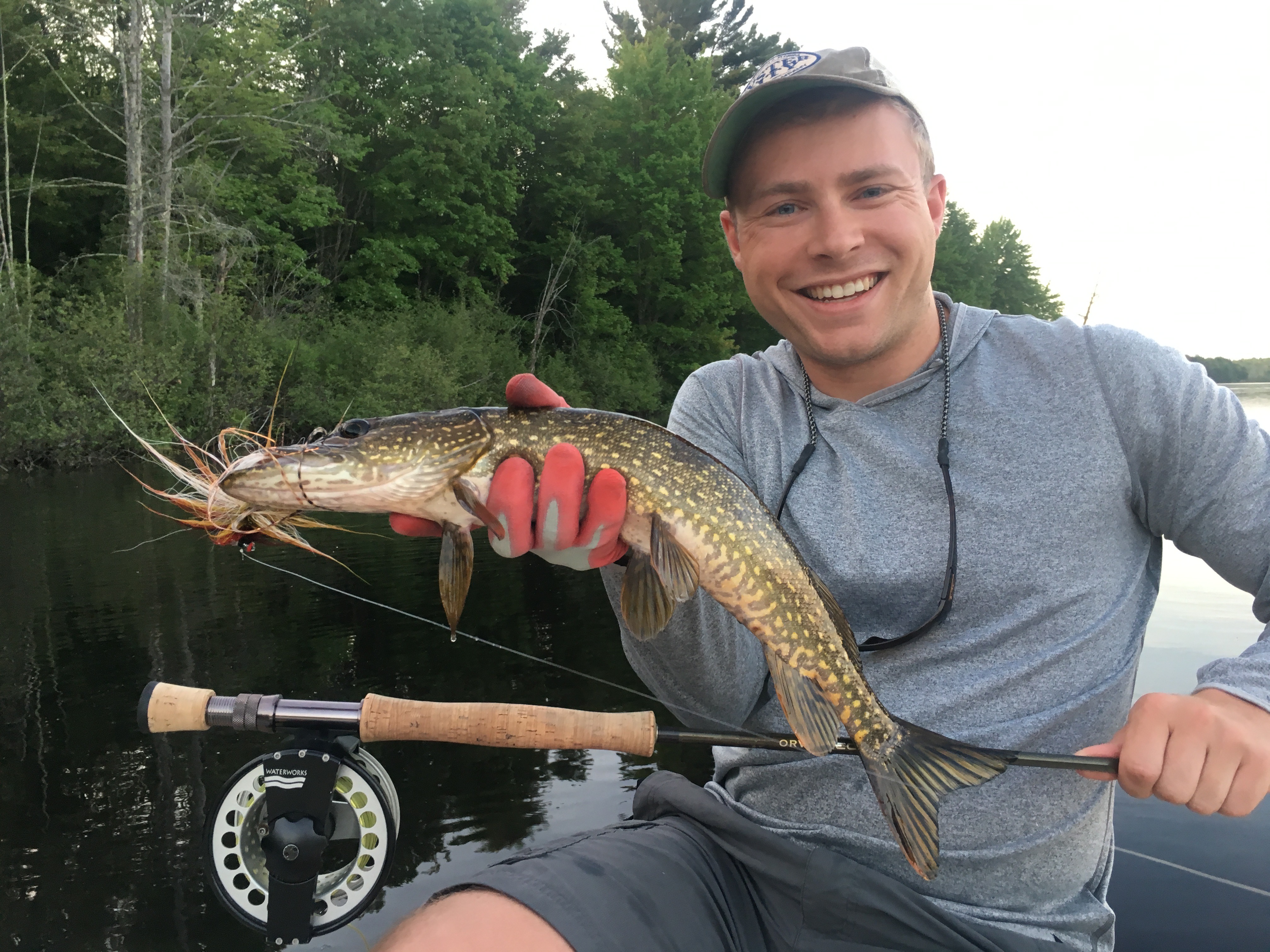
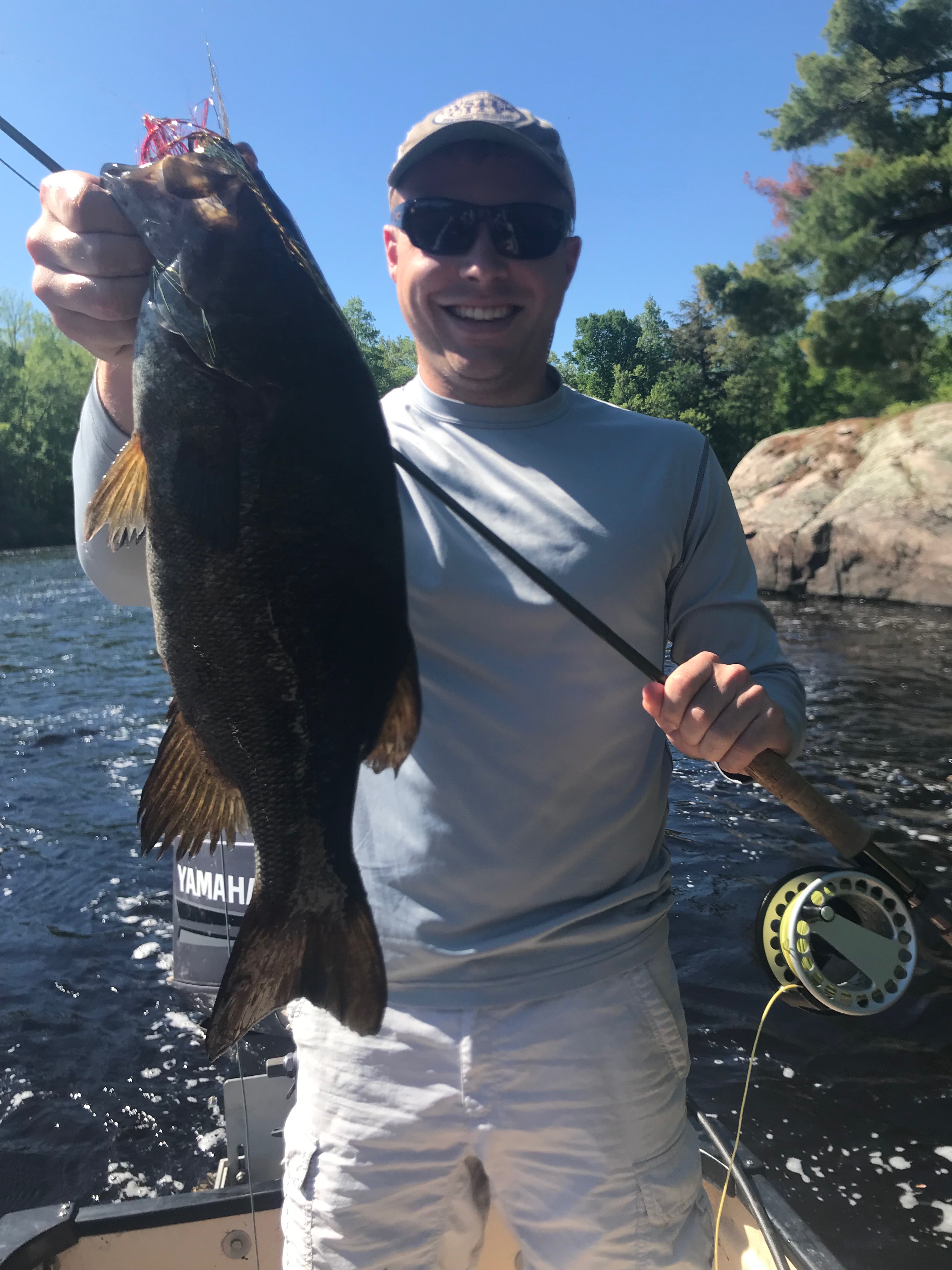
For Day 3, we decided to get some of our mojo back and go after some smallmouth bass. And man did that turn out to be a great decision, not only in that it was probably the best day of fly fishing for bass in my life, but it got our morale high. Throwing foam frogs and four-inch streamers, we had consistent action all day, and probably boated 50 bass by 2pm. Watching 3-4 pound smallmouth come up and slurp the frog like a trout would to a grasshopper was a blast, and allowed us to see some fish come to hand. One of the best things about the Northwoods is that when a mental break from the muskies are needed, the smallmouth are willing to cooperate. With the occasional pike thrown in. Later on in the day, we decided to hit up a local muskie lake and had two massive hits on a topwater fly, but they didn’t stick. However, it was enough action and life to know where we would be fishing for our final day.
Joe Petrow
As for Day 4, this was our final day to make something happen. Although we had three eats in the previous couple of days, nothing had stuck, and the muskies were playing the infamous hard-to-get game. After hours of fishing on the last day, I finally stuck something huge. Powerful…diving deep…ate a 10-inch red and white buford. After a few minutes of fighting, we finally saw the fish, and a huge golden flash. It was the biggest walleye I had ever seen, measured at 27 inches – the largest I have ever caught, especially on fly. Although slightly heart broken that it wasn’t a muskie, this fish was remarkable in it’s own right.
With only about two hours of sunlight left, we decided to go into a secluded two acre lake that required paddling and no motor through a very shallow stretch of a creek. The lake was small enough where we knew that it wouldn’t hold many fish, but for a large fish to get back in there, it would require effort and hunger to drive it to find new water. So we began to throw our massive flies yet again. And after about ten minutes…boom. It had happened. A nice muskie stuck. After a jump and several heads hakes, we had this beautiful fish to the net, and I let out one of the loudest yells I have ever done. Relief. Blessed, beautiful relief. This was a well earned fish, and tells the story perfectly as to never giving up and keeping the faith baby!
Joe PetrowJoe Petrow
Muskie. Nothing can describe them with enough justice. All I know is that on this trip, this one fish, on day four, in the final hours, will forever be a fish I remember.
Man, it has been a minute. A crazy year of work and travel has kept me from updating the blog consistently, which not only bums me out, but I am going to make a News Year Resolution to keep this update regularly. I promise with that…seriously. Watch me. With that being said, 2018 has been a fishy year, especially within the great state of Utah.
Ever since arriving in Utah, there was one fish on my radar that I wanted to learn how to catch consistently and develop an expertise with : tiger trout. Growing up in Colorado, I had maybe caught three or four tops, but Utah is famous for the high mountain lakes stocked with them. Not only are these trout the most unique looking out there (in my opinion), but they can be ultra aggressive and put up a heck of a fight. Being a cross between a brook trout and a brown trout, it is evident that this fish is a one of a kind not only through the markings, but through the behavior as well.
Joe Petrow
My favorite way to target and catch these fish is on streamers. Hand-tied wooly buggers are a must (the best colors being black on black with gold flash, or white with a gold body – olive green can also produce in ultra clear water), and watching these fish chase down a streamer in a crystal clear high mountain lake is a sight to behold. I also find that they are most aggressive towards streamers as the day goes on, while looking for late afternoon and early morning bug hatches is more productive. With that being said, another great way to catch tigers is by fishing foam beetles or ants during any kind of a hatch. Doing some slight twitches not only gets their attention, but gets them keyed in on a larger prey item than a typical fly on the water.
In terms of retrieves, I usually find the faster the better for Tiger Trout. Being predatory in nature, these fish love to chase, and I find that the faster the streamer moves for them, the less time they have to investigate. With this being said, I am a believer in starting with fast retrieves, then adjusting if the fish aren’t seeming to catch up in time. I have also found that throwing bigger streamers helps to focus more on tigers rather than other species, in that they often live with rainbow and brook trout as well.
Although tiger trout do inhabit creek and river systems, in Utah, I have found that lakes are the best way to find good numbers of fish. With the fall being the best time to fish, not only is the scenery beyond unbelievable, but it is a perfect way to get out there before the big winter season comes full throttle. With that being said, I was very fortunate to have several solid outings before snow and the cold weather came this year.
For our major saltwater trip this year, we decided to head back to one of our all-time favorite family/fishing vacations : St. George Island. The summer time in SGI and Apalachicola is known for the migratory tarpon run, and we were hoping to get in on the mix. With massive storms in the area, and with fishing being tough thus far in the summer, the expectations were not set for huge numbers of fish, but we did hope to have a chance to hook into a big tarpon or two.
The tarpon played hard to get. Having fished three days for them, we did not get any eats, or hookups until the last day. To be honest, we probably only had two legitimate shots during our fishing periods. But on the last day, in the last hour (this seems to be a trend from the year), we were able to make it happen.
Deciding to call it quits on tarpon, we took the 9-weight fly rods out and decided to go pound on redfish and ladyfish on a gulf side of the island. Upon arriving at a boiling school of fish, we caught mackerel, ladyfish, and trout cast after cast. All of a sudden I looked to my left, and saw a huge shape in the water…a massive tarpon. I threw a perfect cast one foot in front of the fish, stripped the gold flash bunny I was fishing twice quick, and BOOM. Fish on. Finally.
The tarpon took off way into the gulf, and we fought the fish for roughly 30-minutes. Only using a 9-weight, we knew we weren’t going to be able to get this 150 pound fish into the boat, but we were able to enjoy the fight and get a leader touch to count the fish as caught. Unfortunately did not have many photo opps, but my best friend Jackson was able to get some solid footage of a jump.
Although these fish can be beyond difficult, and it doesn’t always end in a picture perfect moment, this trip was a blast, and teaches the lesson as to always being prepared for the unexpected.
And that’s a wrap. Another year of fly fishing, growing, and experiencing this sweet life in the books. Not only was this a big year in regards to fishing, but 2017 was possibly the best year of my life so far and I have much to be grateful for.
For the last trip of 2017, my family and I went back down to our home away from home when it comes to being on the beach and fishing: St. George Island, FL. The winter can be a difficult time to fish here due to the wind and colder weather, and in the past we have found it to be very hit or miss. This year not only did we have a plethora of rain and overcast skies present, but we also had to deal with the first major cold front of the winter. Although this made the fishing challenging during the week, we still made it happen, especially on the last day of giving it a go.
Winter in Florida is an ideal time to catch large speckled-trout on the flats. Not only will these fish school up in deep troughs by oyster bars, but large “gator” trout will go out on their own and begin to hunt the flats like redfish. Throughout the week, speckled trout were our most consistent option. With a variety of clouser minows and baitfish patterns in the fly box, we landed several trout in the 23-28 inch slot, and this provided constant action throughout the week.
Joe Petrow – Speckled TroutJoe Petrow – Speckled Trout
As for the redfish, we found that not many were pushed in on the flats. Whether this was due to the cold front or the poorly timed tides, we were not seeing the number of fish we are accustomed to. Thus, on our last day of fishing, we decided to get in the flats boat and venture to the back country marsh to see if these fish were trying to find warmer areas to lay up in the sun. With a warm day presenting itself, bait was moving everywhere, and we were beginning to see redfish show up. Throwing a larger sized natural-colored slider, we boated about ten redfish and the fish were extremely eager to eat. Fast strips, fish coming on top of flies, as always it was an exhilarating sight to behold! One redfish in particular noticed the fly as soon as it hit the water and the take was as if it was hitting a topwater.
However, the highlight of the trip consisted of catching a species that has been on my fly fishing bucket list for quite some time: black drum. After catching a great number of redfish, we were pulling down a flat and noticed a big, broom tail flapping out of the water. Having seen black drum multiple times in these back marshes we knew it was a black drum and got into position. After a throw right in front of the fish’s head, we immediately saw the fish react and go tail up even more so. After a few slow strips, the fish turned 180 degrees, flared its gills, and the fly line went tight. Fish on!
Using only 12-pound test, I had to be extremely cautious with this fish in that it dogged like no other and is known for having large, sharp scales. After turning the fish and grabbing it boat side, we got a couple of great pictures and a quick weigh on the scale – 35 pounds. A true beast, especially for my first black drum on the fly ever!
Joe Petrow – Black Drum
After a couple of minutes of gathering the excitement and looking through the photos, we looked up ahead and saw another massive tail out of the water. Another large, black drum feeding on a shallow oyster bar. After a beautiful 60-foot throw to the fish, the fish seemed disinterested and started to slowly move away. We pulled up closer and closer until finally I basically hit the fish on the top of the head with my fly; this got his attention. He fully tailed on the fly and ate it immediately. After another 15-minute we got this fish in, weighing 34 pounds. Unreal. We just caught two 30+ pounders on the fly in less than half a hour.
Joe Petrow – Black Drum
I couldn’t have asked for a better fishing day to take in the New Year. A week of fly fishing and spending time with my family always makes me realize how thankful I should be for this life that surrounds me, and I cannot wait to see what 2018 has in store.
As always, tight lines and best wishes for the New Year.
The first of September. Yellow sneaking into the trees, a cool morning breeze trying to break free like a running back between the tackles. As for fly fishing, September can be one of the best months out there, it that it is a transition period. Predators are out and about due to the cooler water, and know that work needs to be done before winter comes in full form. For the beginning of this fall, we decided to return up to the North Woods in search of one of the most challenging freshwater fish on the plant: musky. Pure, full-strain musky.
The last time we traveled to the North Woods in Wisconsin, we did a five-day fishing excursion. However, with work now more than a reality, we were only able to break away for three-days using the Labor Day weekend to our advantage. Upon arrival, the rivers were in great condition, and the weather for the most part appeared as if it was going to be cooperative. With a plethora of 12-18 inch flies in the boat, and 10-weights rigged up, we headed out to search for these elusive fish (day one being on a lake).
With clear conditions and very little wind, day one consisted of dark and natural patterns. Black, purple, tan, and off-white flies (Buffords, Hangtimes) fluttering through the water as if they were asking to get killed. I swear that just watching the flies swim when musky fishing is a sight to behold in itself. After a couple of nice follows to the boat, we arrived along a stretch of some wood cover that looked more than fishy. A throw tight to a shelf and WOOSH! A musky storms over and inhales the fly. After a chaotic fight, we had the musky in the boat and the weekend had truly began.
Joe Petrow – Musky
With one fish in the boat on the first day (we also had three more eats/strikes, unfortunately just weren’t able to stick), we decided to do river floats on days two and three. In my opinion this is probably the most fun way to fly-fish more muskies in my opinion: dark water, fast riffles, structure everywhere. You never know which pocket or stretch could potentially hold a fish of a lifetime.
As for day two, the weather was cooler and there was rain upon us. However, prior experiences of fishing in the rain for musky have been positive, so to be honest I was glad to put on the raincoat! Clouds and the rain also provide opportunities to throw some bigger and flashier flies, especially in the tea-stained waters of northern Wisconsin. After about a hour of casting and casting, we arrived to a faster stretch of river with a good amount of cut bank. I was throwing about a 14-inch creamsicle fly (orange and white), and had a gut feeling that something special was about to happen. After slinging this big ol’ creamsicle into a pocket right along the bank, I stripped twice, paused, then another strip…all of a sudden the fly disappeared, and a gold flash like no other erupts the water. Big musky on. Being in the fast moving water, this musky had plenty of spunk and kept dodging the bow of the boat methodically. After a couple of jumps and one flop out of the net boat side, we finally got the fish in the net and celebrated like no other. After a couple of pictures, we released this beauty (below) back into the dark underworld it came from, and a huge sigh of relief occurred. It’s not every day you get to see (let alone) catch a fish like that on a fly. What a sweet life this really is.
Joe Petrow – Musky
As for the rest of the day (and ALL of day three), the muskies did what they usually do. Stayed hidden and made us seem crazy to be out there blind-casting massive flies into the dark water. However, this is part of what makes fly fishing for these fish an unforgettable experience. There are no guarantees, and more often than not you are going to get humbled. They also reward you for remaining focused and attentive; they will finally decided to cooperate the minute you lose focus or don’t watch the fly come all the way in. As for us, we find that when we begin to have some doubt, it’s a good idea to tie on a bass popper and catch some smallmouth to keep the brain wired! Although putting in the time and energy is only way to have a chance of catching a musky on the fly, seeing big smallmouth crash a frog or gurgler provides a well needed spark (below).
Joe Petrow – Smallmouth Bass
I still am chasing a 45″+ monster, but I know that with diligence and with effort, any opportunity with these fish is possible. I’m itching to get back up to the North Woods as soon as possible, and who knows…maybe we have one more long weekend in us before winter comes in full force!
Man, what a trip. Although I have been extremely fortunate to fly fish around the world in some of the coolest places imaginable, our third trip back to Isla Holbox will forever be one for the memory books. Known for being one of the best juvenile tarpon destinations in the world, Isla Holbox has become one of my favorite saltwater destinations to fish. On top of this, the people, town, and culture of the area also make this place more than about fishing: it is a true getaway.
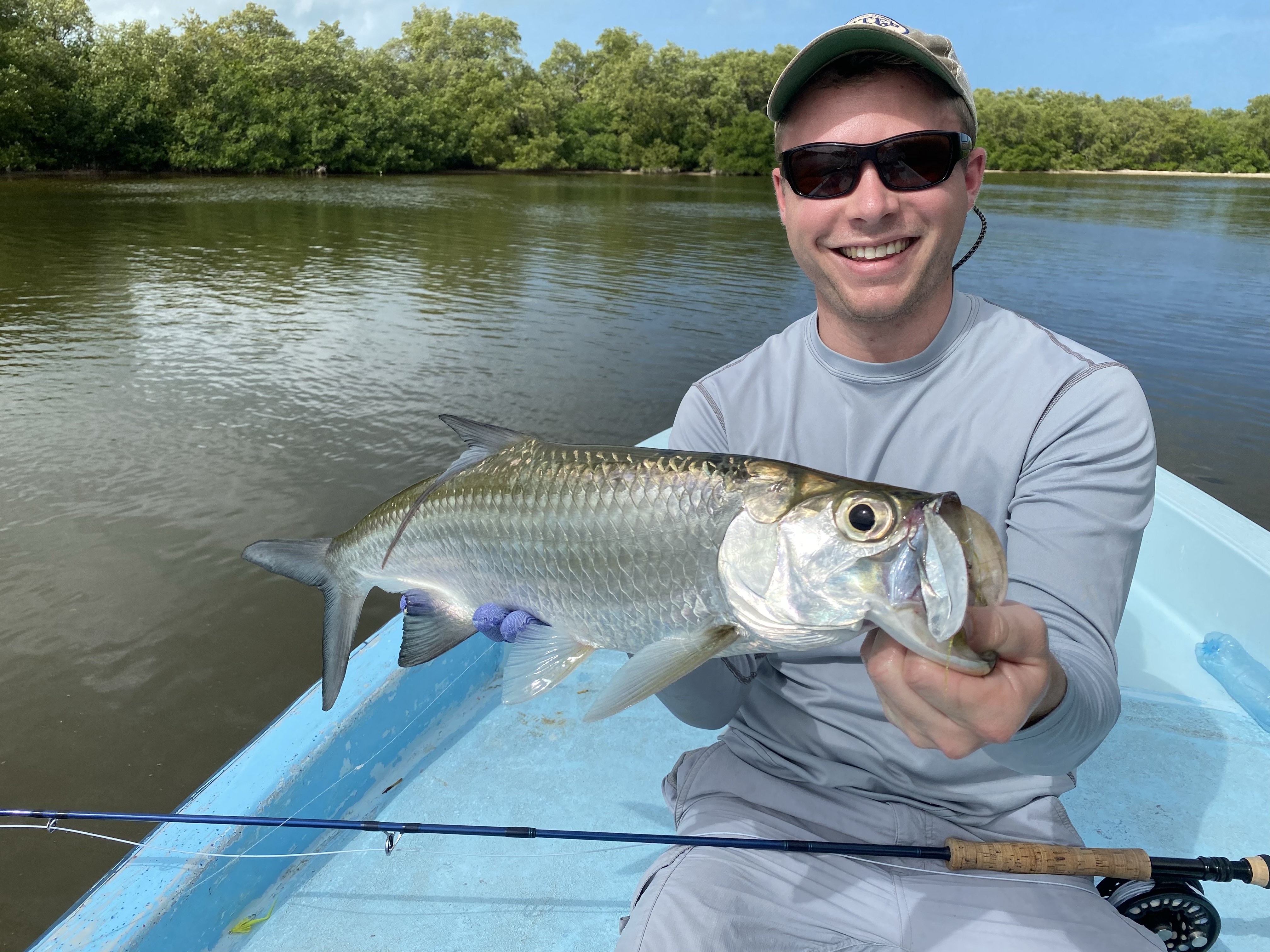
We decided to fish for five days in Isla Holbox, and the conditions were excellent. Typical summer on the flats. Clear skies, relatively calm wind (except for in the afternoons), a multitude of aquatic life out on the flats, and juvenile tarpon rolling everywhere. Whether these were in pods of three, or eighty, it seemed like no matter where we were polling, tarpon were around every corner. Fortunately enough for us, the tarpon were also in a feeding mood for the most part. Extremely light and soft-landing tarpon toads were the trick, and black/purple seemed to be the best bet for the week. We also had some success with chartreuse in the late afternoon (we even landed one off of a dock in the middle of the night!). Every time we return to Holbox, seeing these baby silver kings fly in the air and gulp for your fly is a sight to behold. To this day, if someone said I could only do one type of fly fishing for an extended period of time, fly fishing for juvenile tarpon would be tough to pass up on (especially with fish in the 20-30 pound range – see below). A good amount of action with the stealth of the hunt involved.
Joe Petrow – TarponJoe Petrow – TarponJoe Petrow – Tarpon
However, it wasn’t just the tarpon that stole the show on this trip. We totally lucked out on the last day of fishing, in that we chose to take a risk and visit a flat in which permit and bonefish will sometimes reside. And sure enough, as soon as we arrive on the flat, we began to see huge tailing stingrays. Anyone who has fly fished for permit know that this is one of the best signs possible, in that permit are known to follow behind stingrays to eat the crabs and other critters that are scared up from the disruption of the sand. After about two hours of following stingray trails, we saw a ray about 60 feet out that was completely hunkered down and feeding. With little sun above us, it was tough to see if anything was accompanying the ray, but as we inched closer and closer, I finally saw that famous black tail. A nice permit horizontally feeding off the back of the ray. A brief moment of light presented itself, and I threw the best cast of my life… landed a crab pattern softly six inches in front of the permit…and boom. You would have thought a jack crevalle had taken the fly. But no, the permit was that hungry. After about a ten-minute fight, the permit was in the boat, and fist pounds and celebration ensued. Funny enough about 15-minutes later, we saw another permit tailing over a stingray about 75-feet out. We landed the fly two feet in front and waiting for it to swim by…and whack. Two permit in 15-minutes. You can’t even write that up.
Joe Petrow – PermitJoe Petrow – Permit
With TWO permit in the boat, we soon had one thing on our minds: Flats Grand Slam. Let’s go for it. After a short boat ride to another flat, we began to search for bonefish (which are not that prevalent in Holbox. Similar to the permit). However, it was just one of those days where everything was lining up. After about a hour of hunting, we ran across a large school of about 25 bonefish. Cast after cast we kept trying to get these bonefish to eat, but they were being beyond difficult. Throwing the classic shrimp patterns, nothing was going on, so we decided to go back to our permit setup. We saw a pod of three permit and threw in a large crab pattern, and soon had a fish take off with the fly. As soon as I hooked it, I knew something was funny in that the run was totally different. I looked into the water about 40-feet out and soon noticed that we had no permit, but a BONEFISH! It must have been lurking below the permit. We are able to land it to get phase two of the Grand Slam complete.
Joe Petrow – Bonefish
After the bonefish, we only had 1/3 left of the slam to go; the silver king himself. We jetted the boat all the way back to mainland Holbox to get back and explore in the mangroves. But for the first time in the week, we couldn’t find the tarpon. Low tide, low light, no rollers. Things were not looking up. However, as this story has been going, we had one moment of fortune yet again. We stopped at one last go-to flat and saw a pod of about eight fish circling. Threw in a home-tied black and purple Skank fly…strip strip strip…set set set…let’s go! A juvenile tarpon was on and fought like no other. Jumping left and right, dodging the bow of the boat. Fortunately enough for us, the big man upstairs and mother nature decided to bless us with a day for the ages, and we were able to get the tarpon in. Grand Slam complete. A dream of mine accomplished. What a day.
Joe Petrow – Tarpon
Although the Grand Slam was hands down the highlight of the trip, we also ran into several other species. Snook (both Pacific and Atlantic), Jack Crevalle, Mayan Cichlid, Atlantic Spadefish, and the always difficult Sheepshead. This was actually the first time I had landed a Sheepshead on fly, and it was eerily similar to the take of a permit. I was also stunned by the strength of the Atlantic Spadefish: a fish that I have seen before, but never thrown at. It took me to my backing faster than any bonefish would! The variety of species not only kept us on our toes throughout the entire day, but it once again continued to show us that fly fishing should not be specific to just a few, key species.
Joe Petrow – SheepsheadJoe Petrow – Atlantic Spadefish
Isla Holbox will forever be an extremely special place to me, and I already cannot wait for my next adventure down there. Yes, the tarpon are hands down the spectacle to behold. But, with permit, bonefish, and other unique species around ever corner, Holbox continues to show how much diversity that the saltwater flats provide.
Until next time, tight lines, and thanks as always.
Yes, you read that title correctly. Big, toothy, ferocious beasts terrorizing prey opportunistically. Although they are hard to find and are beyond intelligent, these predators can be sought after on a fly. Tiger muskies provide a challenge like no other, and being able to catch them in a Rocky Mountain state is a sight to behold.
First things first, my experience with tiger muskies in Utah has been unreal. This was a fish species that had been on my bucket list to catch for years, and to be completely honest, I had not done much to educate myself with the species. Having fished for full-strain musky up in Wisconsin, I knew that these fish are the epitome of an aquatic predator, but I had not learned necessarily where and when to fish for tigers specifically. Let alone in a transplant environment (i.e. stocked reservoirs).
Joe Petrow – Tiger Musky
Although I am going to keep my locations personal and somewhat of a secret, I have found that the bigger the water body, the better. Tiger muskies are known to feast on a variety of fish species, and I have found that the most consistent locations to fish are those with a multitude of prey, and a variety of structure. This is because it allows fly fishermen to have a variety of options when it comes to fly choice. So whether the bait is bass, perch, suckers, catfish, or even ducks (scary right?), bigger water bodies provide more food. And then matching the hatch becomes more important than ever! As for structure, tigers love rocks, wood, weeds, and drop offs. Larger water bodies usually will have one of these four options, and if you can get a combination in one spot, get ready to see some fish follow.
Another aspect of fly fishing for tiger muskie revolves around the eat. These fish are infamously known for chasing a lure or fly all the way up to a boat, and as for me, I have had these fish eat a fly literally two feet away from me. Mind you, I also am solely wading…not in a boat. The adrenaline rush is something that is unforgettable, and the key here is to make sure to keep the fly in the water as long as possible. I have even had a fish physically jump out of the water to eat my fly when I am pulling it out to recast! Reading the body language of the fish is also critical, in that based on the level of aggression, the fly needs to be sped up, slowed down, or change in depth when a fish is chasing. Below is a picture of my personal best tiger – 38 inches on the dot. I watched it follow the fly all the way in before it ate less than five feet away from me.
Joe Petrow with a huge Tiger MuskyJoe Petrow with a huge Tiger Musky
Keep in mind that muskies are known as the fish of 10,000 casts for a reason. They are difficult to find, and are very picky when it comes to their eating behavior. Although possible to catch on a fly, more often than not a proper “skunk” may occur, but don’t let this dissuade you. Keep at it, maintain the faith, and when doubt begins to sink in, change your fly and keep the brain engaged! These fish know when attention is not being paid, and will make you pay for it the hard way (see what I did there?!).
As always, tight lines, and I will continue to provide updates with my tiger encounters here in Utah.
Man, where is the time going?! Summer’s almost here, the snow in Utah is starting to melt, mother nature is a beautiful thing. To escape some of the cold this winter and early spring, I decided to plan two fishing trips to chase my favorite fish that swims on this planet : Redfish. Although there are many species that are near and dear to me, my love for saltwater fly fishing began with Redfish, and it was time to revisit my roots.
For Christmas, my family and I decided to visit Apalachicola, Florida to relax for the vacation and fish the water that I grew up fishing. Over the past couple of years, the water clarity and conditions in Northwest Florida have been terrific and have allowed great sight fishing opportunities for these fish. Although we only did a day or so of guided fishing on this trip, the wade fishing turned out to be the highlight of the trip, and had a handful of great sessions consisting of both blind-casting and sight fishing to tailing fish.
Due to the water conditions, the primary fly patterns consisted of natural colors and crustacean imitations. Whether these were crabs, shrimp, or glass minnows, it was interesting to catch redfish on some patterns that were somewhat non-traditional to our usual fly box. These also led to the occasional catch of a speckled trout in that these are their primary food sources as well (a surprise visit from a flounder was also a first for me).
Although the winter can be hit or miss when it comes to redfishing specifically, the overall outcome was extremely positive, and some very healthy fish were the result. There is a reason as to why this is my favorite place on earth.
Redfish
But hang on a second…we are just getting started! After revisiting my old stomping grounds during the New Year, there was another red fishery that I bumped to the top of the priority list to get back to. That’s right, the redfish capital of the world. Louisiana.
Now the funny one with Louisiana is that although it seems as if I have fished the area multiple times, the truth is I had only been there twice previously. We have had two trips in the past also get cancelled (due to weather, and also one bad incident with a case of frost bite…not my proudest moment. What doesn’t kill you makes you stronger though am I right?!). So, with one of my best buddies from college, we thought “why the heck not” and shot down to the bayou here at the end of April for a weekend that would turn out to be one for the memory books.
Joe PetrowJoe Petrow
Upon arrival of Louisiana, a couple of things were evident. Although it was indeed warm and no strong weather fronts were on the horizon, the water was definitely dirty (chocolate-milk like as we say), and that sun was not going to be a guarantee. However, when you are in a place like Louisiana with hundreds of miles of marsh all around you, you can use the weather to your advantage with the right guide and mindset.
Luckily for us, fish were tailing and crawling all day along the banks of the marsh, and as long as the fly was right on their nose, the fish were eager to eat. This was a somewhat new experience for me in that I’m used to leading fish by a foot or two in traditional saltwater settings; being able to buggy whip big flies right in front of the face of huge redfish was an adrenaline rush at its finest. Although many fish were spooked due to this technique, it was a necessity to get fish to eat, or else they would not see the fly.
Joe PetrowJoe Petrow
Although several large fish were caught during a couple of days of fishing, the biggest red of the trip was a 40/41 inches that was caught on a home-tied black and purple slider. This was the second biggest redfish of my life, and was one of the coolest eats and fights I have ever had. Back out of the water, moving slowly along the bank, the cast was a little too ahead of the fish so I had to wait on the strip, but it found the fly, chased it in, and hit right at the boat. After a 15-minute fight the fish was to the boat and the trip was off to an incredible start.
Joe Petrow – 40 Inch Redfish
I can’t wait for the summer to begin and for more trips to come. I have made it a News Years resolution to stay on top of this sight, in that the passion keeps me going, and I can’t think of a better way to chronicle the adventures that keep me going. Tight lines.
Joe
Just a guy and his fly rod taking the road less traveled.