
The first of September. Yellow sneaking into the trees, a cool morning breeze trying to break free like a running back between the tackles. As for fly fishing, September can be one of the best months out there, it that it is a transition period. Predators are out and about due to the cooler water, and know that work needs to be done before winter comes in full form. For the beginning of this fall, we decided to return up to the North Woods in search of one of the most challenging freshwater fish on the plant: musky. Pure, full-strain musky.
The last time we traveled to the North Woods in Wisconsin, we did a five-day fishing excursion. However, with work now more than a reality, we were only able to break away for three-days using the Labor Day weekend to our advantage. Upon arrival, the rivers were in great condition, and the weather for the most part appeared as if it was going to be cooperative. With a plethora of 12-18 inch flies in the boat, and 10-weights rigged up, we headed out to search for these elusive fish (day one being on a lake).
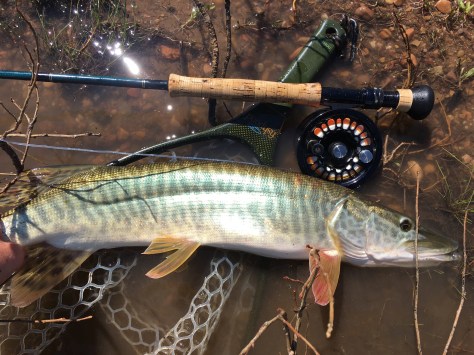
With clear conditions and very little wind, day one consisted of dark and natural patterns. Black, purple, tan, and off-white flies (Buffords, Hangtimes) fluttering through the water as if they were asking to get killed. I swear that just watching the flies swim when musky fishing is a sight to behold in itself. After a couple of nice follows to the boat, we arrived along a stretch of some wood cover that looked more than fishy. A throw tight to a shelf and WOOSH! A musky storms over and inhales the fly. After a chaotic fight, we had the musky in the boat and the weekend had truly began.

With one fish in the boat on the first day (we also had three more eats/strikes, unfortunately just weren’t able to stick), we decided to do river floats on days two and three. In my opinion this is probably the most fun way to fly-fish more muskies in my opinion: dark water, fast riffles, structure everywhere. You never know which pocket or stretch could potentially hold a fish of a lifetime.
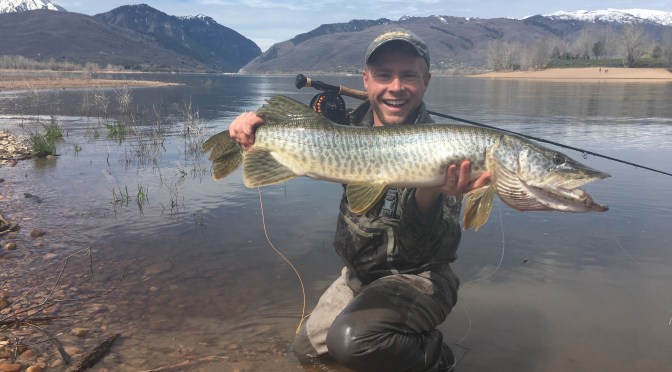
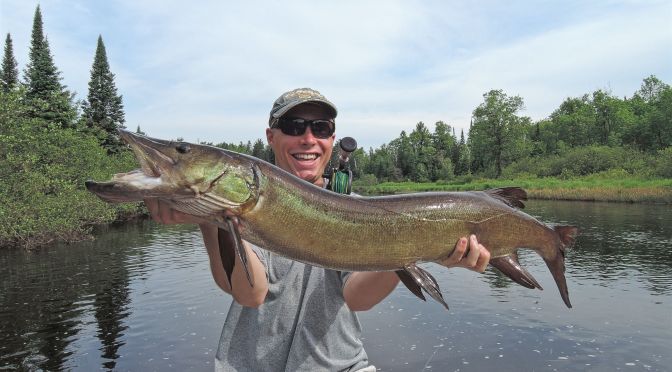
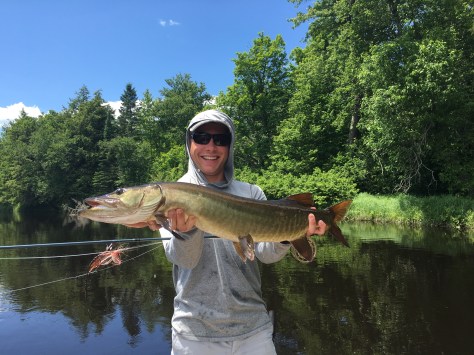
As for day two, the weather was cooler and there was rain upon us. However, prior experiences of fishing in the rain for musky have been positive, so to be honest I was glad to put on the raincoat! Clouds and the rain also provide opportunities to throw some bigger and flashier flies, especially in the tea-stained waters of northern Wisconsin. After about a hour of casting and casting, we arrived to a faster stretch of river with a good amount of cut bank. I was throwing about a 14-inch creamsicle fly (orange and white), and had a gut feeling that something special was about to happen. After slinging this big ol’ creamsicle into a pocket right along the bank, I stripped twice, paused, then another strip…all of a sudden the fly disappeared, and a gold flash like no other erupts the water. Big musky on. Being in the fast moving water, this musky had plenty of spunk and kept dodging the bow of the boat methodically. After a couple of jumps and one flop out of the net boat side, we finally got the fish in the net and celebrated like no other. After a couple of pictures, we released this beauty (below) back into the dark underworld it came from, and a huge sigh of relief occurred. It’s not every day you get to see (let alone) catch a fish like that on a fly. What a sweet life this really is.
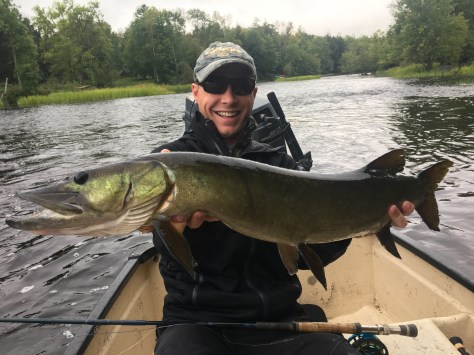
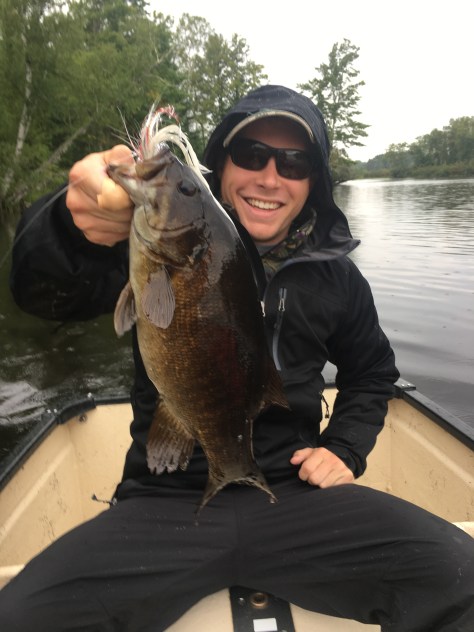
As for the rest of the day (and ALL of day three), the muskies did what they usually do. Stayed hidden and made us seem crazy to be out there blind-casting massive flies into the dark water. However, this is part of what makes fly fishing for these fish an unforgettable experience. There are no guarantees, and more often than not you are going to get humbled. They also reward you for remaining focused and attentive; they will finally decided to cooperate the minute you lose focus or don’t watch the fly come all the way in. As for us, we find that when we begin to have some doubt, it’s a good idea to tie on a bass popper and catch some smallmouth to keep the brain wired! Although putting in the time and energy is only way to have a chance of catching a musky on the fly, seeing big smallmouth crash a frog or gurgler provides a well needed spark (below).
I still am chasing a 45″+ monster, but I know that with diligence and with effort, any opportunity with these fish is possible. I’m itching to get back up to the North Woods as soon as possible, and who knows…maybe we have one more long weekend in us before winter comes in full force!
Tight lines as always,
Joe
























 joepetrowflyfishing